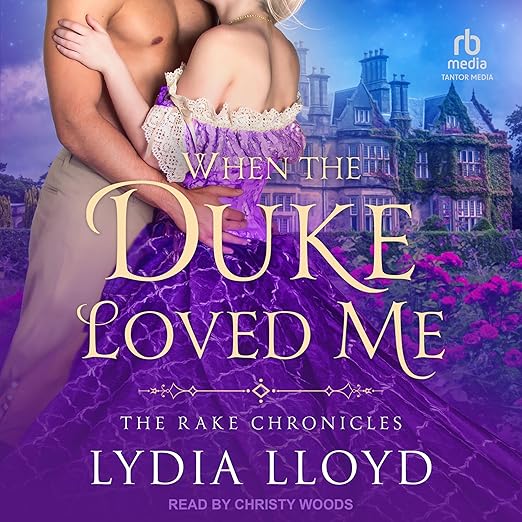
Quick Take
- Narration: Christy Woods brings period-appropriate warmth to the Regency setting, handling the enemies-to-lovers emotional arc with skill and clear character differentiation.
- Themes: Inherited enmity and forgiveness, class obligation versus personal desire, secrets concealed across generations
- Mood: Lush and romantic, with a persistent undercurrent of historical grievance
- Verdict: A well-constructed Regency debut that delivers the expected pleasures of the genre with more genuine complication than many of its competitors manage.
I put this one on during a long afternoon of household tasks that needed doing but did not need thinking about. Twelve hours of Regency romance is exactly the right company for that kind of day, and When the Duke Loved Me delivered what I was looking for: a story with real structural bones, a central relationship that has actual reasons for its difficulties, and a narrator who understands the period and the genre.
The setup that Lydia Lloyd has constructed here is more architecturally sound than the back cover suggests. Catherine Forster and John Breminster do not simply dislike each other because of a misunderstanding that will be resolved by the third act. Their families are genuinely, historically entangled in a way that has real stakes for both of them. Catherine’s family was ruined by John’s father. That is not a small thing, and the book does not treat it as one.
The Tremberley Gardens Meeting and What It Sets in Motion
The novel opens with one of the genre’s classic set pieces: a stolen moment in a garden that goes further than it should before identities become clear. What makes this version work is the immediate, genuine horror of recognition on both sides. Catherine is not simply embarrassed. She is terrified of what this encounter means for her already compromised position. John is not simply charmed into compliance. He walks away because he has no other choice, and he does not pretend otherwise. That honesty in the early pages establishes a foundation for the rest of the relationship that makes the eventual thaw feel earned rather than convenient.
The central plot mechanics, which involve Catherine agreeing to help John solve a problem created by his father’s death in exchange for something she needs, give the book’s second act a structure beyond the romance itself. A journey taken together under conditions of negotiated mutual assistance is a productive container for enemies-to-lovers tension, and Lloyd uses it well. One reviewer described the story as having many secrets finally being revealed, and that layering of historical disclosure across the narrative keeps the momentum from relying entirely on romantic anticipation.
Christy Woods and the Sound of Regency England
Narrating historical romance requires a specific tonal calibration. Too stiff, and the intimacy of the romance evaporates. Too contemporary in register, and the period setting stops feeling real. Christy Woods finds the middle ground consistently well. Her handling of Catherine is particularly strong: a woman who is intelligent, financially vulnerable, and determined not to be defined by either of those facts. The emotional conversations between Catherine and John, which become more frequent as the journey progresses, benefit from Woods’s ability to carry subtext without telegraphing it.
At twelve hours, the runtime is generous, and the book does occasionally expand into territory that a tighter edit might have compressed. The secondary characters who populate the supporting cast vary in their distinctness on the page, and some blur together in the audio format in a way that print might handle more cleanly. But the central relationship sustains the length, and the resolution of the family history beneath the romance is satisfying in a way that pure romantic plots often are not.
What the Mature Content Rating Means for This Book
Several reviewers noted surprise at the heat level, which sits at the more explicit end of traditional Regency romance. One reader described finding it unexpectedly forthcoming for the period setting. The intimate scenes are written with contemporary directness rather than the euphemistic restraint associated with classic Regency, which is a choice some listeners will welcome and others will find tonally inconsistent with the historical framing. Christy Woods handles these sections with matter-of-fact professionalism, and the content feels integrated into the relationship arc rather than appended for genre box-checking.
This is the first entry in The Rake Chronicles series, and it establishes the world and the author’s voice with enough confidence to make the second book a reasonable bet for readers who engage with this one. The book is labeled romance first and historical fiction second, which is the correct ordering: the period setting is vivid and reasonably researched without being a scholarly exercise, and the emotional payoff of the central relationship is clearly the priority.
Who Will Enjoy This and Who Should Probably Skip It
Listeners who read primarily for historical accuracy will likely find things to quarrel with in the heat level and some of the character psychology. Listeners who read historical romance for the pleasures of the genre, which include period atmosphere, a well-constructed obstacle between protagonists, and an emotionally satisfying resolution, will find When the Duke Loved Me a reliable and sometimes genuinely moving example of what the form can do. It is a solid debut, and Lloyd has clearly thought about structure rather than relying entirely on the formula to carry the weight.
Frequently Asked Questions
Is When the Duke Loved Me appropriate for listeners who prefer less explicit Regency romance?
Probably not. Several reviewers noted that the heat level is higher than traditional Regency conventions, with contemporary directness in the intimate scenes. The book carries a mature themes notice and delivers on it.
Is this a standalone or do I need to read the rest of The Rake Chronicles series?
When the Duke Loved Me is the first book in the series and tells a complete story with a satisfying resolution. The world and secondary characters are set up in ways that suggest future entries, but the central romance concludes here.
How significant is the family feud backstory to the overall plot?
Central to it. The Forster-Breminster history is not a superficial framing device. Catherine’s family was genuinely ruined by John’s father, and the uncovering of what actually happened across generations drives much of the book’s second half.
Does Christy Woods differentiate between the secondary Regency characters in the audio version?
For the major characters, yes. The supporting cast is large enough that some secondary figures blend together in audio, but the central relationship between Catherine and John is voiced with real distinction and emotional clarity.