Quick Take
- Narration: Bryant Walker handles a comedic military hero with ease, finding Bernie’s self-deprecating humor without losing the emotional undercurrent.
- Themes: Survivor’s guilt, chosen versus inherited life paths, military-to-civilian culture clash in a rural setting
- Mood: Warm, funny, and genuinely tense in its second half. The rodeo setting earns its keep
- Verdict: The strongest installment in the Anchors and Eagles series according to its own readers, and an effective standalone military romance.
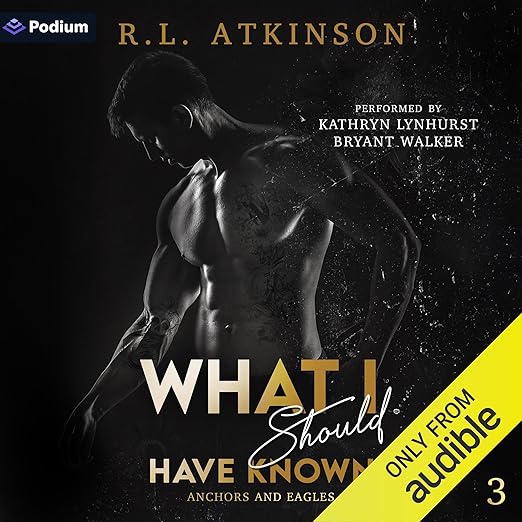
I tend to be skeptical of series romances that claim to work as standalones. The marketing pitch is usually more optimistic than the reading experience, particularly when there are two prior books worth of character shorthand and unresolved backstory in play. What I Should Have Known is the third book in R.L. Atkinson’s Anchors and Eagles series, and the author makes the standalone claim. I decided to test it cold, without reading the prior two books, and I can confirm the claim holds. Bernie Phillips’s story is complete on its own terms, though readers who arrive with Griffin and Mikey’s histories in hand will catch additional resonances.
The setup involves a Navy SEAL named Bernie whose first encounter with Katalina Fisher involves accidentally hitting her in the head with a bottle cap while drunk. He assumes he will never see her again. Fate has other plans in the form of a funeral in her small town, where he subsequently turns up in her volunteer shift at the animal shelter. The meet-disaster premise sounds broad on paper, and it is, but Atkinson writes Bernie with enough specificity that the comedy lands rather than overwhelms. He is funny in ways that are consistent with his damage, which is the more demanding trick.
Our Take on What I Should Have Known
What distinguishes this entry from the standard military romance formula is the dual-crisis structure. Bernie is working through survivor’s guilt following the death of a brother-in-arms named Duncan, and Katalina is trapped in an arranged engagement to a man she cannot stand, a path her parents mapped out for her. Neither character is in a position to absorb another complication. That mutual precariousness makes the attraction feel genuinely risky rather than inevitable, which is the emotional gambit that military romance lives or dies by.
Bryant Walker’s narration catches the tonal range Atkinson requires: Bernie’s humor is self-protective rather than breezy, and Walker distinguishes between the moments when Bernie is performing ease and the moments when the performance slips. That distinction matters for the book’s second half, when the stakes become literal rather than romantic. Reviewers described the shift into action territory as exciting, and in audio the transition between the comedic rodeo sequences and the genuine danger of the book’s climax is handled without jarring gear changes.
Why Listen to What I Should Have Known
The reader responses to this book are notably specific in their affection. One reviewer described squealing like a school girl at a boy band concert, which is obviously a compliment, but the more substantive praise focused on Bernie’s characterization: he is described as wonderfully flawed and genuinely wanting to grow. That is the reading of a character who is doing something beyond the archetype. Atkinson has written a SEAL who is not competence personified but grief-personified, whose recklessness is a symptom of guilt rather than bravado.
Kat is equally well constructed. Several readers noted her cluelessness, which in lesser romances would be a way of keeping the female lead passive. Here it is Kat’s inexperience with her own desires, a woman who has followed someone else’s map so long she does not know her own preferences. The moment she begins choosing differently is one the book earns through accumulation rather than declaration. Reviewers across multiple entries in this series described the couples as progressively better written, with Bernie and Kat as the peak of the series so far.
What to Watch For in What I Should Have Known
The cattle drives and rodeo settings are atmospheric rather than merely decorative, but listeners unfamiliar with rural ranch culture may occasionally miss the texture that Atkinson is building. The branding day sequences and bucking bronc scenes are specific enough that they reward some basic familiarity with what they are describing. This is not a barrier to entry, but it does mean city-set readers may experience this backdrop more as a mood than as a world.
The third-book placement also means that some side characters arrive with established histories the narrative does not fully stop to explain. The series ensemble that previous readers know by name shows up, and while their functions in this story are clear, their emotional weight for new listeners is more muted than it would be for readers who followed them from book one.
Who Should Listen to What I Should Have Known
This audiobook is a natural fit for military romance listeners who want their heroes complicated and their love stories grounded in something more than attraction. The survivor’s guilt thread is handled with more care than the subgenre’s average, and Atkinson’s humor never undercuts the emotional weight when the book needs that weight to land. Listeners who came to the series for the first time here will likely go back to Griffin and Mikey’s stories.
Those who find military settings alienating or who prefer their contemporary romances in urban contexts may struggle with the small-town ranch world of Creek’s Cause. But within its genre, What I Should Have Known does what the best series romance does: it makes you care about characters who are walking toward each other despite every good reason to walk away.
Frequently Asked Questions
Do I need to read the first two Anchors and Eagles books before listening to What I Should Have Known?
No. The author confirms it works as a standalone, and readers new to the series report following the story without prior knowledge of Griffin and Mikey’s storylines. That said, recurring characters carry more weight for listeners who know their history from the earlier books.
How does Bryant Walker handle the balance between Bernie’s humor and his grief over losing Duncan?
Well, according to the reviews. Walker distinguishes between Bernie’s performed ease and his genuine emotional state, which matters for a character whose comedy is a coping mechanism rather than a personality trait. The narration earns the tonal shift when the book moves into its more serious second half.
Is What I Should Have Known more romance-forward or action-forward?
The first half is primarily comedic romance with a rodeo and ranch setting. The second half introduces genuine life-threatening stakes that reviewers described as exciting. The balance tips toward romance overall, but the action elements are substantive rather than decorative.
How explicit is the romantic content in this book?
Reviewers described the spicy content as present and effective without being the book’s primary focus. It fits in the mainstream military romance range rather than the explicit end of the spectrum. The emotional dynamics and the action sequences share roughly equal billing with the intimate scenes.