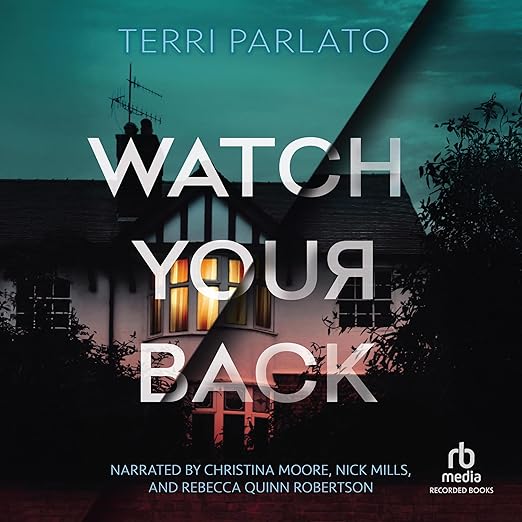
At a Glance
- Narrator: Christina Moore brings a measured anxiety to Eve's first-person perspective that tracks the slow revelation of suburban threat without tipping into hysteria.
- Subjects: Domestic paranoia, unreliable normalcy, secrets inside a marriage
- Tone: Eerie and slow-burning, with a climax that arrives abruptly
- Bottom line: A competent domestic thriller that builds atmosphere more successfully than it resolves it, best suited for listeners who enjoy the mounting dread phase over the payoff.
I listened to Watch Your Back in two sittings, which is probably the ideal pace for this kind of novel. It is designed to accumulate rather than sprint, and the atmospheric dread of its Boston winter setting benefits from extended immersion rather than occasional dipping. The second sitting took me to midnight, which tells you something about how the book performs in its second half even if the first half is more deliberate about revealing what it is.
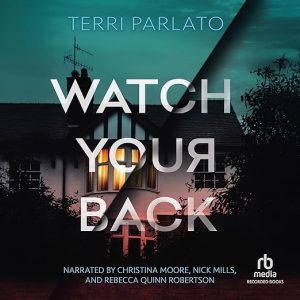
Watch Your Back follows Eve Thayer, a psychiatrist whose marriage to Nathan and settled suburban life are gradually revealed to be less stable than they appear. The clinic where she works has a history as an institution for the criminally insane that still seems to echo through its corridors. A nearby break-in and shadowy figure watching the house compound the mounting unease. Detective Rita Myers is watching Eve, unable to determine if she is a target or a suspect. And then the ice storm arrives, and everything that was holding comes apart.
How Watch Your Back Holds Up
The novel's strongest asset is its setting. Boston in a bleak winter, the psychiatric clinic's institutional history pressing against its renovated surfaces, the suburban street that performs normalcy with slightly too much effort. These elements are rendered with the kind of environmental specificity that makes domestic thrillers feel genuinely ominous rather than merely plotted. One reviewer described the hospital setting as giving off a rather creepy vibe, and the book knows how to use that quality. The architecture of paranoia is well constructed even when the plot mechanics beneath it are more conventional.
Christina Moore's narration sustains the appropriate register throughout. Eve is a woman who is professionally trained to read other people and finds herself unable to accurately read her own life, and Moore plays that irony without underlining it. The performance is internally consistent, which matters for a novel where the listener's orientation toward the protagonist needs to shift gradually rather than abruptly.
Why Listen to Watch Your Back
The atmospheric building phase of this audiobook, roughly the first two-thirds, is where the novel is at its most effective. The slow accumulation of wrong details, a neighbor whose interest feels performative, a husband who leaves the house at suspicious hours, a babysitter who is a little too perfect, creates genuine suspension. Moore's pacing serves this accumulation well, neither rushing the revelation nor allowing it to stall. If you are a listener who enjoys the dread buildup more than the payoff resolution, this book is optimized for you.
The multiple-perspective structure, with Eve's first-person account alongside Detective Myers's investigation, also works more effectively in audio than it might on the page. The shifts in perspective feel like natural cuts rather than chapter divisions, which keeps the listener inside the story's momentum.
What to Watch For in Watch Your Back
The ending has divided readers, and the division is understandable. Several reviewers noted that after a slow, careful build, the resolution arrives and ties up its threads faster than the pace of the preceding narrative warrants. One book club found the consensus that the ending was rather abrupt with too many loose ends tied up too neatly in one or two chapters. That critique reflects the novel's structural imbalance rather than a failure of the thriller mechanics per se: the atmosphere is built at a different pace than the resolution is delivered.
This is also a novel where some earlier chapters can feel slow. Reviewers consistently noted that it takes time for the pace to pick up, and listeners who need immediate propulsion may find the first quarter of the audiobook requires patience before the guessing games that the novel does well come fully online.
The Right Listener for Watch Your Back
Readers who enjoy domestic thriller atmosphere, unreliable suburban settings, and the specific anxiety of a protagonist who cannot trust her own perceptions will find this a satisfying listen through its strongest section. Those who prioritize tight resolution and payoffs that match the complexity of the setup may be frustrated by the ending. Fans of Liane Moriarty's domestically paranoid register, or of thrillers that use institutional settings like psychiatric facilities to amplify ordinary dread, will find familiar pleasures here. At nine hours, Moore's consistent narration keeps the investment manageable.
Frequently Asked Questions
Does Christina Moore differentiate clearly between Eve and Detective Myers in the narration?
Yes, though the distinction is more tonal than dramatically different. Myers's sections have a more detached investigative quality while Eve's chapters carry more emotional interior texture. The shifts are legible without being exaggerated.
Is Watch Your Back connected to any other Tate James series or is it a standalone?
Based on the available information, this appears to be a standalone domestic thriller rather than part of an established series. The synopsis and reviews do not reference prior installments or ongoing characters from other James novels.
How does the psychiatric clinic setting factor into the mystery?
The clinic's history as an institution for the criminally insane is a persistent atmospheric presence rather than a central plot mechanism. It functions as environmental texture that compounds Eve's professional unease rather than providing explicit plot revelations.
Does the ice storm climax deliver on the tension that builds throughout the first two-thirds?
Reviewers are divided. The ice storm sequences are generally described as effective, but the resolution that follows is considered by several listeners to arrive and conclude more abruptly than the careful setup warranted.