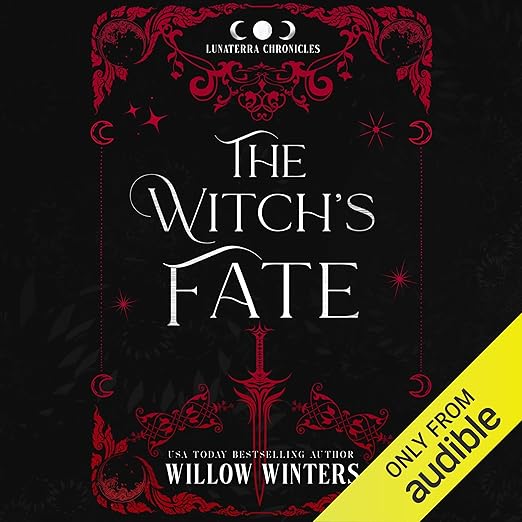
Quick Take
- Narration: Zair Jordan brings a measured intimacy to Idalis and Ryker’s forced proximity, matching the novella’s quiet emotional register without overperforming the heat.
- Themes: Solitude chosen versus solitude endured, fate as both trap and gift, the risk of desire after grief
- Mood: Cozy and charged, the emotional temperature of a candle-lit evening with something dangerous just outside
- Verdict: A tight, emotionally honest novella from Willow Winters that delivers on the one-bed promise without sacrificing the grief underneath the attraction.
Short-form romantasy has a particular discipline problem. Five hours is not enough time to build a world, develop two protagonists, establish why they resist each other, and then pay off the tension credibly. Most novellas in the genre solve this by skipping one or more of those steps, usually the world and usually the grief. Willow Winters, who has built a reputation for understanding what romance actually requires emotionally, does not skip the grief in The Witch’s Fate. That decision is what elevates it above the crowded field of spicy paranormal novellas, and Zair Jordan’s narration understands the choice and honors it.
Idalis is a moon witch living alone after her coven died. She makes her living creating and casting spells for others, maintaining her garden, and keeping the world at a careful distance. Ryker is a wolf shifter who despises the thought of love and finds himself stuck on her land after picking flowers and having the portal back to his realm break in a storm. The forced proximity premise – one bed, one storm, no quick exit – is as old as the romance genre itself, and Winters knows better than to pretend otherwise. What she does instead is use the familiarity of the setup as permission to go deeper on what the setup actually means for these two specific people.
Our Take on The Witch’s Fate
Idalis’s solitude is not simply personality – it is grief. Her coven is dead, and she has organized her entire life around the absence of connection as a form of protection. Ryker’s resistance to love is similarly specific rather than generic bachelor reluctance: he despises it, which is a stronger and more interesting word than fears it. When Winters brings these two people into proximity, the attraction is inevitable but the emotional stakes are real. One reviewer described the progression from loneliness and guilt and grief to trepidation and curiosity to longing and passion and joy, and noted that a few tears slipped free before the ending. That emotional range in under five hours is a significant achievement.
Why Listen to The Witch’s Fate
Zair Jordan narrates with a measured intimacy that suits the novella’s rhythm. He does not push the heat sequences toward performance or undersell the quieter moments of Idalis and Ryker finding unexpected ease with each other. The Lunaterra Chronicles world, which serves as the setting for this novella, is established enough that Jordan can move through its terminology without explanation – this is a companion novella for readers already familiar with the world, though it is designed to work for newcomers to Winters’s work as well. Several reviewers came to this title as a palate cleanser between larger series, and the listening experience rewards exactly that use: it is complete and self-contained, spicy without being excessive, and emotionally satisfying without requiring prior knowledge.
What to Watch For in The Witch’s Fate
At under five hours, this is genuinely short for the price point of a standalone audiobook purchase. Readers who need extended world-building, extensive backstory, or a slow accumulation of romantic tension may find the pace of development here faster than they prefer. The one-bed trope, the storm that traps them, the portal magic breakdown – these are genre conventions deployed openly rather than subverted, and Winters is counting on readers who enjoy the conventions executed well rather than readers who need them reworked. The spice level is noted by reviewers as three out of five, which means it is present and meaningful but not the kind of explicit content that dominates the narrative. The emotional content is the primary register, with the heat serving it rather than the other way around.
Who Should Listen to The Witch’s Fate
This is excellent audiobook listening for exactly the use case reviewers identified: a palate cleanser between longer series, an introduction to Willow Winters’s emotional register, or a short listen for an evening when you want something complete and warming. Readers who have followed the Lunaterra Chronicles will find the world familiar and the novella’s tone consistent with Winters’s broader work. Those new to Winters will get a fair sample of what she does well – emotional honesty, grief treated as real rather than decorative, desire as something that costs – before committing to a longer series. Those who want extended slow burn or complex world-building should look to Winters’s full-length novels instead.
Frequently Asked Questions
Do I need to have read other Lunaterra Chronicles books before The Witch’s Fate?
The novella is designed to work as a standalone entry point. Winters provides enough context for Idalis and Ryker’s world that new readers can follow the story. Existing Lunaterra readers will have additional texture from their familiarity with the world’s mythology, but it is not a prerequisite.
Is four hours and fifty-six minutes enough time for Winters to build a satisfying emotional arc?
Based on reviewer response, yes. Multiple readers specifically praised the emotional range Winters achieves within the novella format, with one noting that a few tears slipped free before the ending. The constraint appears to have focused the emotional work rather than abbreviated it.
How does Zair Jordan handle the transition between Idalis’s lonelier early sections and the charged atmosphere once Ryker arrives?
Jordan’s approach is measured rather than theatrical. Reviews describe the emotional progression as feeling natural rather than rushed, which suggests his narration tracks the story’s gradual thaw rather than anticipating it. The restraint in the early sections makes the eventual heat more credible.
What is the spice level – is this primarily a romance with some heat, or heat-forward?
Reviewers consistently pegged the spice at three out of five, and described the emotional content as the primary register with the heat serving it. This is not a heat-forward novella – the grief and loneliness and desire are all given weight, and the physical content emerges from the emotional arc rather than driving it.