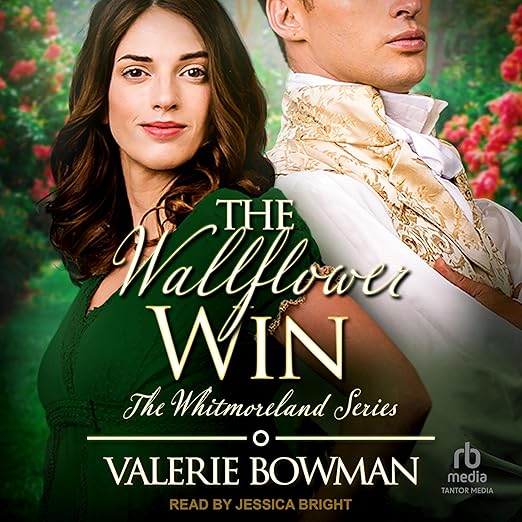
Quick Take
- Narration: Jessica Bright handles Lady Eliza’s dry wit and Christopher’s bluster with clear differentiation. Her delivery suits the comedic register of Bowman’s Regency world without becoming broad.
- Themes: intelligence as romantic currency, fake courtship as emotional revelation, social performance versus private self
- Mood: Playful and warm, with a sharper edge than the genre average
- Verdict: A smart-heroine Regency with genuine comedic timing, though Eliza’s stubbornness will test some listeners’ patience.
I started The Wallflower Win on a Sunday morning with no particular expectations. Regency romance is a genre I return to when I want pleasure without effort, and Valerie Bowman has a reputation for delivering exactly that. What I found was slightly more complicated than I anticipated, which I mean as a compliment, at least mostly. Lady Eliza Whitmoreland is not a standard wallflower. She is formidably good at chess, deeply resistant to marriage, and entirely willing to use a rakish marquess as a strategic pawn to get her mother off her back. That premise is considerably more interesting than a shy girl hoping to be noticed, and Bowman earns points for constructing a heroine with actual agency from the first chapter.
The setup is this: Eliza encounters Christopher St Clare, the Marquess of Claremont, at her twin sister’s wedding. He is insufferably confident. She challenges him to chess, wins, and claims as her prize a season of fake courtship that will satisfy her mother’s demands while allowing her to pursue her own plans in peace. Christopher, humbled and intrigued in equal measure, agrees. What follows is the gradual dismantling of both characters’ certainty about who the other is.
Our Take on The Wallflower Win
Bowman is working in a well-established tradition here, and she knows it. The fake-courtship structure, the rake forced to confront genuine feeling, the bluestocking heroine who challenges every expectation: none of these are new. What she does with familiar materials is sharpen the comedic timing and give both leads enough genuine flaw to keep the dynamic interesting. Christopher is arrogant in ways that are more than posture; Eliza is clever in ways that sometimes tip into manipulation. One reviewer specifically said they did not like Eliza, finding her too self-serving. I think that is a fair reading, and also, paradoxically, the reason the book is more interesting than the average entry in this genre. Heroines who want things and pursue them with strategic cunning are more engaging than passive recipients of male attention, even when their methods are not entirely admirable.
Why Listen to The Wallflower Win
Jessica Bright’s narration is well-calibrated for the material. Regency comedy depends on timing, and Bright has it. The witty exchanges between Eliza and Christopher land as they should, and she renders the secondary characters, including Eliza’s mother and the broader ton society that forms the comic backdrop, with enough variety to keep the ensemble distinct across eight hours. The book’s pacing is brisk in the way good Regency romance tends to be: never slow enough to lose momentum, never so fast that the emotional beats feel unearned.
What to Watch For in The Wallflower Win
This is book four in The Whitmorelands series, but Bowman has constructed it to work as an entry point. Eliza is not the protagonist of the earlier volumes, and her story does not depend on prior knowledge of the series. That said, the twin sister’s wedding that opens the story will carry more weight if you know the sister’s own novel. The mature content is real but not explicit in graphic detail; listeners who prefer their Regency on the cleaner end of the spectrum should note the publisher’s warning. And if a heroine who schemes and manipulates with cheerful conviction is not a type you enjoy, Eliza will wear thin before the midpoint.
Who Should Listen to The Wallflower Win
Regency romance listeners who are tired of passive heroines will find Eliza a refreshing alternative. If you have enjoyed Julia Quinn’s sharper heroines, or Courtney Milan’s women who want things and pursue them, Bowman is working in compatible territory. This is also a good choice for listeners who want the genre’s pleasures without extended angst; the tone stays playful even when the emotional stakes rise. Skip it if you want your fake-courtship romance to be warm and uncomplicated, because Eliza’s brand of cleverness keeps things slightly prickly right up until the resolution.
Frequently Asked Questions
Do I need to have listened to the earlier Whitmorelands books before starting The Wallflower Win?
No. Bowman has written the fourth entry to function as a standalone. Eliza’s story has its own complete arc, though listeners who know the earlier books will get additional texture from references to her twin sister’s romance.
How explicit is the content in The Wallflower Win?
The publisher notes mature themes, and there is romantic content that is more than implied. It sits in the moderate range for the genre, closer to Julia Quinn than to more explicit historical romance. It is not graphic, but it is not entirely closed-door either.
Does the fake-courtship plot feel fresh or tired in Bowman’s hands?
Fresh enough. The chess-match premise as the mechanism for the fake betrothal is distinctive, and Bowman leans into Eliza’s strategic nature rather than treating the courtship as simply a device to get the leads together. The comedy of the deception being discovered by various parties is well-managed.
Is Christopher St Clare a compelling hero, or does he fade beside Eliza?
He holds his own. Christopher starts as a caricature of rakish confidence and gradually reveals a man more interesting than that. His arc is less dramatically drawn than Eliza’s, but Bowman gives him enough interiority to make his change of heart convincing rather than convenient.