Quick Take
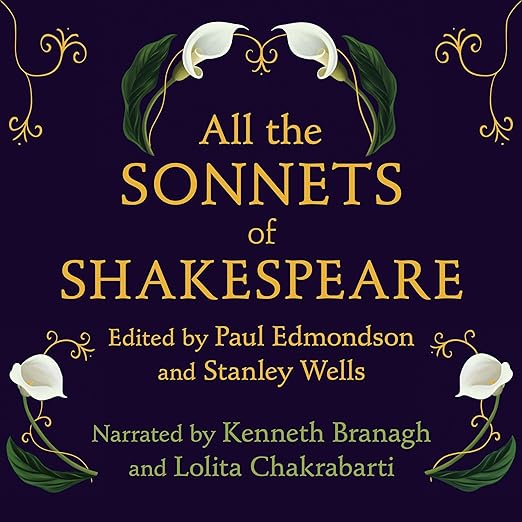
- Narration: Kenneth Branagh reading Shakespeare’s sonnets is an event rather than merely a service. His command of the verse is absolute, and his interpretive choices are bold enough to constitute genuine critical readings.
- Themes: love and time, beauty and its decay, the nature of poetic immortality
- Mood: Rich and intimate, oscillating between tenderness and melancholy
- Verdict: The finest available audio version of Shakespeare’s sonnets. Branagh’s performance transforms these poems from texts to be studied into experiences to be felt.
I grew up with the sonnets in the way that most literature students do, which is to say I understood them intellectually long before I felt them. My copy of the complete works from graduate school has marginalia about the Fair Youth sequence and the Dark Lady and the debates over biographical interpretation, and none of that annotation tells you anything about what it’s like to hear Sonnet 18 read aloud by someone who actually knows what to do with a volta. Hearing Kenneth Branagh read Shakespeare’s sonnets for the first time was, for me, the experience of finally understanding what all those annotations were circling around without quite touching.
This Cambridge University Press edition takes the interesting editorial approach of assembling Shakespeare’s sonnets in their probable order of composition rather than the traditional 1609 Quarto ordering, accompanied by an introduction that Branagh doesn’t narrate but that frames the listening experience as an engagement with Shakespeare’s career and inner life rather than as a collection of individual poems. That reordering is itself a critical interpretation, and listeners who have encountered the sonnets in their traditional sequence may find the compositional ordering illuminating or disconcerting depending on how attached they are to the familiar arrangement.
Our Take on The Sonnets
Branagh’s interpretive authority is the central fact of this audiobook, and it’s worth being specific about what that means. He is not reading the sonnets neutrally, which would be both impossible and counterproductive. He has opinions about what each poem is doing emotionally and technically, and those opinions are present in every line reading. His Sonnet 29, the one about being in disgrace with Fortune and men’s eyes, is one of the more psychologically acute readings I’ve encountered in any medium. His pacing of the couplets, where Shakespeare so often concentrates his reversals, reveals a consistent understanding of how the form’s architecture creates meaning.
The edition’s claim that it debunks long-established biographical myths about Shakespeare’s sonnets and proposes new insights reflects the scholarly apparatus around the recording. That apparatus is worth acknowledging even if, in the audio format, the introduction is a separate element from the sonnets themselves. The compositional ordering is the place where the scholarly argument is most audible, and listeners who have thought about the Fair Youth sequence in relation to the Dark Lady sonnets may find that the probable chronology suggests a different emotional arc than the traditional sequence implies.
Why Listen to The Sonnets
The answer is Branagh, and I want to resist understatement here. There are professional narrators who read poetry competently. Branagh reads Shakespeare’s sonnets as an actor who has spent his entire career inhabiting this playwright’s language from the inside, and that difference is audible in every line. His breathing is correct. His pauses fall where the sense demands them rather than where a lay reader would naturally pause. His emotional register shifts between poems in ways that map the Fair Youth sequence’s movement from idealization through jealousy to something more complex and ambivalent.
At four hours and thirty-five minutes, this is an audiobook that rewards different kinds of listening. I’ve used it as background for reading, as focused listening while following the text, and as a kind of meditation on language in which the poems arrive sequentially and the accumulation is the point. All three modes work. The focused listening with a text in hand is probably the richest experience, but the ambient version, letting the sonnets wash over you while you’re doing something that doesn’t compete for linguistic attention, has its own kind of value. Several reviewers describe it as perfect for bedtime, which captures the combination of pleasure and accessibility it offers at low attention levels.
What to Watch For in The Sonnets
Branagh’s interpretive boldness means that his readings are not neutral. His Sonnet 116, the one beginning Let me not to the marriage of true minds admit impediments, carries a weight and urgency that some editors and scholars would consider an over-reading. His choices about the relationship between the speaker and the subjects of the Fair Youth sequence are present in his performance without being announced, which means listeners who arrive with a strong prior sense of how to read these poems may find themselves in productive disagreement with him.
The compositional ordering is a real departure from what most readers know. Listeners who want the 1609 Quarto sequence, the one that opens with Sonnet 1 urging procreation and builds toward the closing paired sonnets about the little Love-god, should be aware that this edition presents a different experience. Whether you find the probable compositional order illuminating or disorienting will depend partly on how familiar you are with the traditional arrangement and partly on how open you are to the scholarly argument the Cambridge edition is making.
Who Should Listen to The Sonnets
Literature students who want to hear the formal architecture of the sonnets made legible through performance will find Branagh’s readings more instructive than any annotation. Listeners who love Shakespeare’s plays and have always felt slightly outside the sonnets will find Branagh’s authority over the material a way in. General listeners who enjoy poetry in audio form and want to hear what skilled verse performance sounds like at its highest level will find this a reference experience. Those who specifically want the traditional Quarto ordering should verify that this edition suits them before purchasing, as the compositional arrangement is a real editorial choice with consequences for how the sequence reads. And anyone who has ever had Shakespeare’s sonnets assigned without having them read aloud first should understand that this is a fundamentally different encounter with the same texts.
Frequently Asked Questions
Does this edition present the sonnets in the traditional 1609 order or a different arrangement?
This Cambridge edition presents the sonnets in their probable order of composition, which differs from the familiar 1609 Quarto sequence. Listeners who know the sonnets in the traditional order may find the compositional arrangement illuminating or disorienting depending on their attachment to the familiar sequence.
How does Branagh’s theatrical background shape his reading of the sonnets?
Centrally. His decisions about pacing, emphasis, and emotional register reflect decades of inhabiting Shakespeare’s language as an actor and director. His readings of individual sonnets are interpretive acts, not neutral deliveries, and his choices about where to place weight in a couplet constitute genuine critical positions.
Is this appropriate for a listener encountering Shakespeare’s sonnets for the first time?
Yes, and it may be the best possible introduction precisely because Branagh makes the formal architecture audible. The difficulty many readers have with the sonnets on the page, the inversions, the compressed arguments, the density of the metaphors, is considerably reduced when a skilled performer unpacks them in real time.
What is the scholarly introduction in this edition, and is it included in the audio?
The Cambridge edition includes an introduction that addresses biographical myths and proposes new insights about compositional history. Whether this introduction is narrated as part of the audio or exists only in the accompanying text should be verified before purchase. The compositional ordering of the sonnets is where the scholarly argument is most directly audible in the recording itself.