Quick Take
- Narration: Amanda Dolan handles the dual timeline structure with precision, differentiating the younger Elizabeth’s academy years from her century-later singer self without losing the emotional thread connecting them.
- Themes: forbidden love between Fae, identity in exile, the danger of returning to a first love
- Mood: Lush, nostalgic, and bittersweet
- Verdict: The strongest entry in the Curse of the Fae series according to most readers, the slow-burn second-chance romance earns its runtime, though the timeline transitions may frustrate some listeners.
I started this on a weeknight fully expecting to put it down after an hour and come back to it later. I did not put it down. The Prince from a Cruel Summer does what the best romantasy manages: it builds a world with enough texture to feel real without overwhelming the emotional story at its center. Anya J. Cosgrove uses the Royal Academy setting, a school full of vicious Fae, arranged marriages, and forbidden attachments, not as decoration but as the pressure that makes the central romance impossible and therefore inevitable.
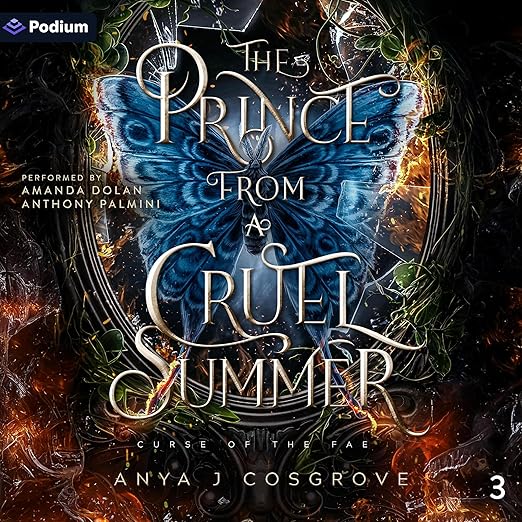
This is Book 3 in the Curse of the Fae series, and it functions as Elizabeth Snow’s story, the woman readers have glimpsed in previous volumes. The novel moves between two timelines: Elizabeth as a young woman at the Academy, falling for Aidan Summers, Crown Prince of the Summerlands, in a relationship both forbidden and discovered; and Elizabeth a century later, famous and powerful and still not over it, receiving an invitation to sing at Aidan’s wedding. The question the novel poses is simple and brutal: does he want to destroy what is left of her, or does something else survive from what they were?
Our Take on The Prince from a Cruel Summer
What elevates this above standard second-chance romantasy is the weight Cosgrove gives the first chance. The Academy sections are not a preamble to the reunion story, they are the story, the place where the relationship is built and broken with enough care that the century of separation feels genuinely costly rather than convenient. One reviewer, who identified this as the best book in the series so far, noted that the stakes feel real because Elizabeth’s exile in the new world is shown to have shaped her into someone specific, someone with accomplishments and losses that matter independently of Aidan.
The twist involving Elizabeth’s mother’s identity adds a layer to the forbidden relationship that goes beyond simple court politics, and without spoiling it, the revelation recontextualizes much of what has come before in ways that feel earned rather than mechanical. Cosgrove clearly planned this.
Why Listen to The Prince from a Cruel Summer
Amanda Dolan narrates with a sensitivity to the material’s emotional demands that makes the dual timeline structure workable. The younger Elizabeth has a different quality of voice, not in pitch but in feeling, a kind of unprotected openness that the older Elizabeth has learned to guard against, and Dolan maintains that distinction across the full 14 hours without making it mechanical. The spice arrives early, as noted by readers, and is present throughout the novel without becoming the primary concern.
At 14 hours and 29 minutes, this is substantial for a single volume. The pacing is deliberate, particularly in the Academy sections, and Cosgrove uses that deliberation to accumulate emotional evidence rather than to delay. By the time the reunion storyline arrives in full force, the reader has been equipped to feel it properly.
What to Watch For in The Prince from a Cruel Summer
One thoughtful reviewer who gave the book three stars noted that the transition between past and present did not work for them, a structural instinct they connected to the technique feeling more natural in mystery or thriller narratives. That is a legitimate observation. The dual timeline requires trust that both threads are equally worth inhabiting, and if the past sections feel like delay rather than investment, the entire architecture of the novel suffers.
The novel is also described by its publisher as part of an interconnected series where each book features a different couple, meaning listeners can technically start here without prior context. That claim holds, but reviewers who have read the earlier books clearly find Elizabeth’s story richer for the prior exposure. Starting from Book 1 remains the stronger choice.
Who Should Listen to The Prince from a Cruel Summer
Ideal for romantasy listeners who want emotional depth alongside their Fae worldbuilding, and who find second-chance romance compelling when the first chance is rendered with real care. Those already invested in the Curse of the Fae series will find this the most satisfying entry. New listeners to Fae romance looking for a starting point with academy elements, forbidden love, and genuine stakes will find this rewarding, though beginning from Book 1 provides a richer experience. Listeners who struggle with dual timelines or who prefer a linear narrative should proceed with that awareness.
Frequently Asked Questions
Can The Prince from a Cruel Summer be listened to without reading the earlier Curse of the Fae books?
The publisher says yes, and structurally it holds as a standalone, but reviewers consistently report a richer experience when they arrive with knowledge of Elizabeth from earlier volumes.
How does the century gap between the two timelines affect the story, does Elizabeth age or change significantly?
She is substantially transformed by her exile: from a young academy student to a famous singer with real power and real loss behind her. Cosgrove uses that transformation to make the reunion meaningful rather than just nostalgic.
Is the spice level consistent with other books in the series, or does this entry push further?
Reviewers describe it as consistent with the series standard and note it arrives earlier in the narrative than previous entries. It is described as genuinely present rather than perfunctory throughout.
Does Amanda Dolan’s narration distinguish clearly between Aidan’s and Elizabeth’s perspectives in the dual POV sections?
Yes, Dolan handles the alternating perspectives with enough tonal differentiation that the POV shifts are clear without chapter heading reminders, which is one of the more technically demanding aspects of the narration.