- Voice: Ulka Simone Mohanty delivers the Little Blue Engine's famous refrain with genuine conviction, giving the story's central emotional moment real weight without overdramatizing it.
- Big ideas: Perseverance and self-belief, kindness, the value of trying
- Atmosphere: Warm and gently triumphant
- Worth it?: The 90th Anniversary Edition audiobook is the right way to share this story across generations, with a narration that honors the original without becoming precious about it.
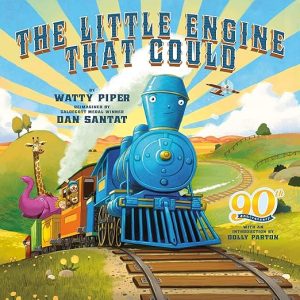
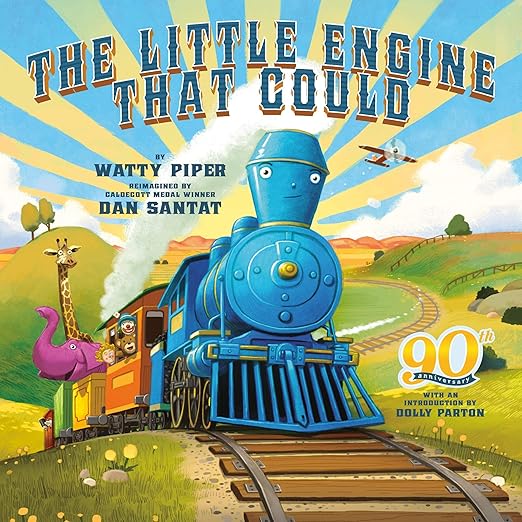
What does it mean for a children's story to last ninety years? The Little Engine That Could: 90th Anniversary Edition audiobook, narrated by Ulka Simone Mohanty, arrives as both a celebration and a test of that durability. Watty Piper's little Blue Engine has been pulling that train over the mountain since 1930, and the question any new audio production has to answer is whether the story still earns its emotional payoff when stripped of the illustrations and read aloud by a voice the child has never met before. At fourteen minutes, this audiobook gives itself almost no time to fail, and it does not fail.
Mohanty's narration is warm without being saccharine, and her reading of the famous refrain, the engine's repeated insistence that she thinks she can, lands with the kind of earned conviction that the phrase requires. The story depends entirely on that moment. If the narration does not make the engine's self-belief feel real and costly, the whole thing collapses into a slogan. Mohanty holds it together with a steadiness that serves the text's rhythmic design rather than imposing anything onto it. The special edition context adds weight too: an introduction from Caldecott Medal-winning illustrator Dan Santat and a letter from Dolly Parton, who founded Dolly Parton's Imagination Library and has made children's literacy her primary philanthropic mission, frame the story as something worth marking rather than just consuming.
A Single Virtue Told Through Rhythmic Repetition
The story Piper wrote belongs to a tradition of American children's literature built on direct moral instruction through narrative. The Little Blue Engine does not model perseverance as one value among many; the book is specifically and entirely about that single virtue. That directness is what has made the story durably useful across ninety years of childhood, and it is why Dolly Parton's association with this edition feels genuinely appropriate rather than merely promotional. Parton's Imagination Library has distributed millions of free books to children in underserved communities, and this story is exactly the kind of material that project was built to deliver.
Reviewer JustDanae noted that bold color illustrations and the timeless tale make the anniversary edition something both children and adults can be encouraged by. The audiobook naturally cannot deliver the visual dimension, but Mohanty's performance compensates by giving full attention to the text's rhythmic structure. The repetitions in the story, the train's attempt, the engine's refrain, the final triumph, are musical in their design, and the audio format reveals that structure more clearly than silent reading does. This is a story that was always meant to be heard aloud, and the anniversary edition honors that origin.
Grandparents and Grandchildren Share the Same Story
The audiobook format serves this specific story well for several reasons. At fourteen minutes, it is self-contained in a way that allows it to function inside a bedtime routine, a short car trip, or a moment of deliberate story time without the demands of a longer production. Young children who are learning to listen rather than look will find the pacing accessible, and the simplicity of the plot means there are no comprehension barriers to navigate. The story rewards attention without demanding it.
The anniversary framing also makes this a meaningful context for sharing across generations, which several reviewers noted. Sharing a ninety-year-old story with a grandchild, or revisiting it with a child who is the same age you were when you first heard it, is an experience the audiobook format enables in a specific way. The story belongs to collective memory, and hearing it narrated by a new voice is a way of confirming that it survives translation across generations and formats. Reviewer Amater noted that grandchildren enjoyed listening together, which speaks to the shared-listening appeal of the format at this length.
Fourteen Minutes Without Its Illustrations
This is a fourteen-minute production based on a very short picture book. Listeners approaching it as a chapter-length audiobook experience will be disappointed by the runtime, which is appropriate for the source material but genuinely brief. The story has no subplots, no secondary characters with complex motivations, and no ambiguity in its resolution. That simplicity is the point, but it is worth naming clearly for anyone unfamiliar with what the format delivers at this scale.
The audiobook also lacks the visual component that is central to many children's experiences of this specific title. The illustrations have always been part of the story's emotional delivery, and while Mohanty's narration compensates for their absence, families who want the full anniversary edition experience will want to pair the audiobook with the physical book. Using the audio alongside the printed illustrations is a natural combination for families who read together, with one parent reading while the child follows the pictures.
A Fourteen-Minute Argument for Believing in Yourself
This audiobook is well-suited to young children between roughly two and six years old who are ready for short-form audio storytelling. It works particularly well at bedtime, during quiet activity periods, or in the car with a parent who can respond to the story's moments in real time. Families who grew up with this story and want to introduce it to a new generation will find the audiobook the most flexible format for that purpose. It requires no setup beyond pressing play, and no parental facilitation beyond choosing the moment.
The Little Blue Engine has been making children feel capable for nearly a century, and Mohanty's narration ensures that tradition continues. The anniversary edition, with its letters from Dan Santat and Dolly Parton, elevates the occasion without changing what the story fundamentally is: a fourteen-minute argument for believing in yourself when the climb looks impossible. That argument has not aged, and this production does not pretend it has needed updating. It just needs hearing.
A Few Questions About The Little Engine That Could: 90th Anniversary Edition
Is the 14-minute runtime of this audiobook long enough to make it worth purchasing?
Yes, for its intended purpose. The Little Engine That Could is a short picture book, and fourteen minutes is the appropriate audiobook length for the source material. It functions perfectly as a bedtime story, a short car ride companion, or a deliberate listening activity for young children.
How does Ulka Simone Mohanty's narration handle the story's famous repetitive structure in the audiobook?
Mohanty reads the engine's repeated refrain with genuine conviction rather than treating the repetition as rote. The audiobook reveals the rhythmic structure of Piper's text in a way that silent reading sometimes obscures, and the emotional payoff of the final summit landing feels earned.