Quick Take
- Narration: Lloyd James delivers a thoughtful, unhurried performance that suits the meditative nature of this literary history. His voice carries scholarly weight without becoming dry.
- Themes: faith and doubt in postwar America, the writer as moral witness, literature as spiritual pilgrimage
- Mood: Reflective and deeply serious, with passages of real warmth
- Verdict: An essential listen for anyone interested in how Catholic intellectual life shaped American literature in the mid-twentieth century.
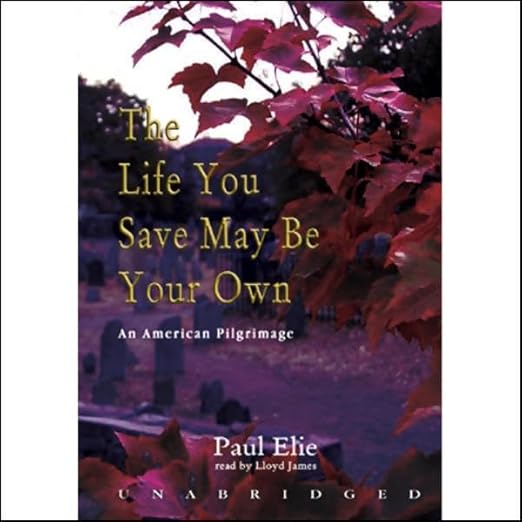
I remember the first time someone pressed a copy of The Moviegoer into my hands and told me Walker Percy had written it while in conversation with Thomas Merton. I did not entirely believe them. The books felt too different in temperament, too far apart in their concerns. Paul Elie’s The Life You Save May Be Your Own is the book that proved me wrong, and the audiobook version, narrated by Lloyd James across a generous twenty-two-plus hours, gave me an entirely new relationship with all four writers at its center: Merton, Dorothy Day, Flannery O’Connor, and Percy himself.
I listened to stretches of it on a long train journey from Paris to Lyon, which felt entirely appropriate. Elie frames the lives of these four writers as a pilgrimage, and there is something about moving through landscape while someone talks to you about how people of faith move through history that sharpens the material considerably.
Our Take on The Life You Save May Be Your Own
What Elie accomplishes here is genuinely unusual in literary biography. Rather than writing four separate lives and arranging them in sequence, he weaves them into a single narrative fabric, so that the reader understands these writers as in conversation with one another even when they never met. They exchanged letters, read each other’s work with passionate attention, and grappled, as Elie puts it, with a predicament shared in common: how to be a person of faith in a secular modern world, and how to write honestly about that faith without becoming either sentimental or alienating. The comparison that came to my mind repeatedly was Louis Menand’s The Metaphysical Club, and I was pleased to find a reviewer had made the same connection. Both books illuminate an entire period of American intellectual life through a handful of specific lives.
Why Listen to The Life You Save May Be Your Own
Lloyd James is the right narrator for this material. He does not rush it, does not condescend to it, and does not try to dramatize what is essentially a work of careful, deeply researched cultural criticism with biographical strands running through it. His delivery is measured and clear, and at twenty-two hours the measured pace is a genuine asset. This is a book that asks you to sit with ideas rather than race through events, to follow arguments about faith and form across decades and across four very different temperaments. Listeners who come to it expecting narrative momentum of the thriller variety will find it slow. Listeners who want to understand how four complicated human beings made sense of God, art, and America will find it revelatory.
What to Watch For in The Life You Save May Be Your Own
Elie is a generous but not uncritical biographer, and he has clear favorites among his subjects. Merton and Day receive the richest treatment, and O’Connor is given her full strange brilliance. Percy comes off as the least compelling of the four in Elie’s hands, a point made by at least one reviewer. If Percy is your primary reason for picking this up, you may feel a mild imbalance. The book is also most rewarding for listeners who bring some prior acquaintance with the writers. You do not need to have read all four to benefit, but knowing The Seven Storey Mountain or any of O’Connor’s stories before you start will deepen the experience considerably.
Who Should Listen to The Life You Save May Be Your Own
Listeners who love literary history at its most ambitious, who are drawn to questions of faith and secular modernity, and who want to understand the mid-twentieth-century American Catholic intellectual world will get enormous value from this. It also works beautifully for anyone who has read one of these writers and wants the context that makes the work make sense. Skip it if you want biography in the conventional narrative sense; this is closer to cultural mind-mapping, as one reviewer memorably put it, than to conventional life-writing.
Frequently Asked Questions
Do I need to have read Thomas Merton, Dorothy Day, Flannery O’Connor, or Walker Percy before listening?
Prior familiarity helps significantly but is not strictly required. The book is most rewarding for those who know at least one of the four writers. If you come in cold, consider reading a short story by O’Connor or a chapter of Merton’s Seven Storey Mountain first.
Is this a biography or a work of literary criticism?
Both, in equal measure. Elie weaves biography with close reading and cultural history. It reads less like a conventional life story and more like an extended meditation on how these four writers made sense of faith and art simultaneously.
How does Lloyd James handle the more theological and philosophical passages?
With admirable restraint. He does not perform the ideas so much as present them, which keeps the denser sections from becoming lectures. His consistent tone across twenty-two hours is one of this production’s real strengths.
Is Walker Percy given equal treatment to the other three writers in the book?
Not quite. Merton and Day receive the most detailed treatment, and O’Connor’s singular voice comes through vividly. Percy is the least developed of the four, a point some reviewers have noted. If Percy is your primary interest, this imbalance is worth knowing about.