Quick Take
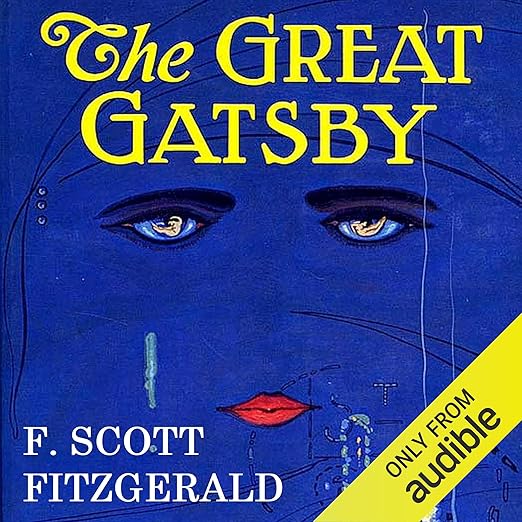
- Narration: Scott Baker’s reading is clean and competent, though some listeners have noted that other available recordings, particularly Anthony Heald’s, bring more interpretive richness to Fitzgerald’s prose.
- Themes: The illusion of the American Dream, class and aspiration, the impossibility of recovering the past
- Mood: Lush and melancholic, with the specific glitter-over-decay quality of Jazz Age New York
- Verdict: The novel remains one of the twentieth century’s most perfectly constructed, but listeners who care deeply about narration should sample multiple recordings before committing to this edition.
I first read The Great Gatsby in my third year of university, in a seminar on American modernism where the professor, a woman who had written her dissertation on Fitzgerald, spent an entire session on the novel’s first page alone. At the time I found this excessive. I have since reconsidered. Fitzgerald’s prose operates at a density that rewards the kind of attention most books don’t demand, and this is one of the novels where audio can either clarify that density or flatten it, depending entirely on who is reading.
The novel itself requires almost no summary for most listeners: Nick Carraway, newly arrived in West Egg, Long Island, rents a cottage next to the mysterious Jay Gatsby’s mansion and finds himself drawn into the orbit of his cousin Daisy Buchanan and her careless husband Tom. Gatsby’s obsession with Daisy, his invented history, his parties, and his refusal to accept that the past cannot be recovered drive the narrative toward its bleak and precisely measured conclusion. Published in 1925, it has been in print continuously since, taught in high schools and universities across the English-speaking world, adapted into films of varying quality, and debated as a document of the American Dream for a hundred years.
Our Take on The Great Gatsby
What the novel does that is genuinely difficult is make its moral critique inseparable from its beauty. Fitzgerald writes about wealth, illusion, and carelessness with language that is itself wealthy and illusory, green light at the end of a dock, parties that dissolve into arguments, the Valley of Ashes watching from below the highway. Nick’s voice is the hinge on which everything turns: an observer who is complicit, a moralist who is fascinated, a man who finds Gatsby both absurd and genuinely touching. The ambivalence is not a failure of nerve but the whole point.
The novel is short, four hours and fifty-five minutes in this edition, which means it has been compressed rather than expanded by Fitzgerald’s art. Every scene earns its place. The famous parties, the confrontation at the Plaza Hotel, the accident and its aftermath, the final pages with their image of boats against the current: these are among the most precisely placed narrative moments in the American literary tradition. One reviewer called it “a poetic masterpiece of tight storytelling” and was not wrong.
Why the Narration Choice Matters for This Text
This is where I need to be honest about the specific edition under review. Scott Baker reads cleanly and without obvious problems, but The Great Gatsby is a novel that lives in its language rather than in its plot, and the quality of the narration has an unusually large effect on the listening experience. One reviewer in these pages notes specifically that they prefer Anthony Heald’s recording, citing the way Heald paces the prose, speeding up and slowing down to convey the poetry rather than reading at a consistent pace, and his slight Midwestern inflection for Nick. These are not trivial differences with this particular text.
Baker’s reading is serviceable and does not actively harm the novel. But listeners who are encountering Gatsby for the first time in audio, or who want to hear Fitzgerald’s prose at its full capacity, should be aware that other recordings exist and that sampling before committing is worth the effort on this title specifically. The novel is in the public domain, which means multiple editions are available at various price points.
What to Watch For in This Edition
One reviewer flagged annotations and formatting issues with the Kindle version of this edition, this is not relevant to the audio, but the publisher (Hexagon Tech) appears to be a smaller outfit releasing public domain titles, which means production standards may vary. The audio quality of the recording itself should be checked with a sample before purchase if you’re listening on good equipment.
For listeners who are returning to Gatsby after having read it in school and found it dull, the audio format often works as a revelation. The novel was written by someone who heard the prose as much as he saw it, Fitzgerald read aloud while writing, and the rhythms that can feel mannered on the page often feel inevitable spoken. If school killed Gatsby for you, audio may resurrect it.
Who Should Listen to The Great Gatsby
Every serious reader of American fiction should have spent time with this novel, and audio is a legitimate way to do that. The short runtime makes it genuinely accessible as an evening listen. Listeners who want to revisit a book they studied in school without the pressure of literary analysis will find the audio format strips away some of the academic overlay and returns the story to something more direct.
Listeners who care deeply about the specific qualities of their narration should sample this and at least one other recording before committing. The Anthony Heald version mentioned in the reviews is one to investigate. And listeners approaching Fitzgerald for the first time who want context about the Jazz Age, about Fitzgerald’s biography, or about the novel’s literary reputation should consider a version with supplementary material, what’s reviewed here is the text alone.
Frequently Asked Questions
Is Scott Baker’s narration significantly inferior to other recordings, and should I seek out a different edition?
Baker’s narration is clean and competent but does not bring the interpretive richness that this particular prose rewards most. A reviewer in the product comments specifically recommends Anthony Heald’s recording for its pacing and characterization of Nick. For a novel where language is everything, sampling multiple recordings before committing is genuinely worthwhile, all versions of Gatsby are public domain, so alternatives are widely available.
Is this a good first encounter with Fitzgerald, or should a reader start with his short stories?
Gatsby is the right starting point for most readers, it is the most concentrated and accessible distillation of Fitzgerald’s strengths. The short stories have their admirers, but the novel’s four-hour runtime makes it manageable as an introduction, and its cultural centrality means you’re also engaging with something that has shaped how Americans talk about wealth and aspiration for a century.
The novel is only about five hours long, does it feel rushed or too compressed in audio?
No. Fitzgerald’s compression is the achievement, not a limitation. Every scene is doing significant work, and the brevity is part of why the novel has lasted. If anything, the audio format benefits from the tight runtime, it’s completable in one or two sessions, which suits the way the atmosphere accumulates and the way the ending needs to arrive with the rest of the novel fresh in mind.
For listeners who found this novel boring in school, is there a reason to try it again as an adult?
Yes, and specifically in audio. Fitzgerald wrote while reading aloud and the prose was designed to be heard. The rhythms that can feel mannered or overwrought on the page often feel inevitable when spoken. Adult listeners also bring a different relationship to Nick’s complicity, Gatsby’s delusion, and the novel’s moral ambivalence than a high school reading can produce. It’s a different book at a different age.