Quick Take
- Voice: Julia Whelan is the essential reason to seek out this particular audiobook edition, her pitch-perfect timing and atmospheric pacing match the Alaskan landscape in ways that elevate the already-strong source material.
- Big ideas: Domestic violence and survival, the psychology of isolation, the cost of loving someone who is dangerous
- Atmosphere: Enveloping and emotionally heavy, with the Alaskan wilderness as both backdrop and active force
- Worth it?: The Great Alone is exactly as devastating as its reputation suggests, and in Whelan's hands it becomes one of the rare audiobook experiences where narration and story feel genuinely inseparable.
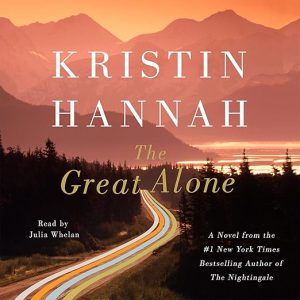
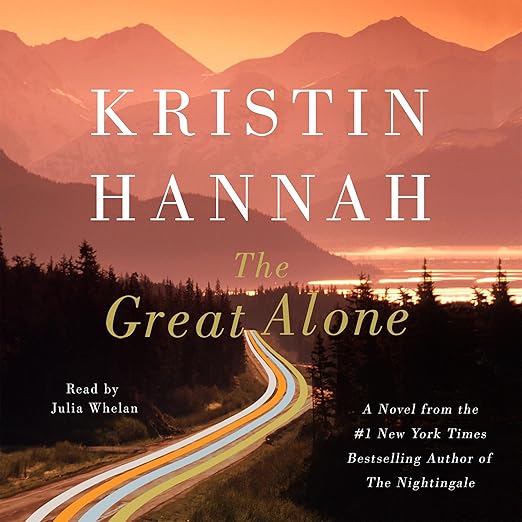
Kristin Hannah's The Great Alone arrived already carrying significant narrative weight before it reached the ears of listeners: a bestselling novel about Alaska, family, violence, and survival, marketed to fans of The Nightingale but operating on different emotional frequencies. The audiobook in question is not just a recorded reading - it is a specific artistic object in which Julia Whelan's narration is so integral to the experience that AudioFile Magazine specifically cited it in their review as creating an enveloping atmosphere of foreboding that's difficult to turn away from. At 15 hours and 3 minutes, this is a full immersion, not a weekend's background listening.
The setup is 1974 Alaska: Ernt Allbright, a former POW returned from Vietnam changed and volatile, moves his family north to America's last true frontier on an impulsive decision after losing another job. His wife Cora follows because she loves him. Their thirteen-year-old daughter Leni goes because she has no choice. The Alaskan winter, when it comes, makes visible what the family has been carrying all along. Hannah's narrative is structured so that Alaska itself functions as both setting and character: its summer generosity is real, its winter cruelty is structural, and the community the Allbrights find in that remote corner of Alaska proves as capable of sustaining life as it is of failing to protect it.
Cora's Choices Made Legible, Ernt Made Human
What separates The Great Alone from comparable domestic violence narratives in fiction is Hannah's willingness to make both sides of the Allbright marriage legible without making Cora's choices incomprehensible. Ernt is not simply a monster. He is a man broken by something real - the Vietnam War, captivity, whatever happened to him there - and the tragedy of the marriage is that the man Cora loves is sometimes still inside the man he has become, and she cannot stop looking for him. Hannah does not moralize about this or offer a clean analysis of why women stay. She dramatizes the texture of it with the granular attention it deserves, which is what makes the novel genuinely difficult and genuinely worth the difficulty.
Leni is the character through whom we experience most of the story, and she is one of Hannah's most carefully drawn protagonists. At thirteen, she is old enough to understand what is happening and young enough to be powerless against it. Her relationship with Matthew, the son of a local family, provides the only counterweight to the domestic horror - and Hannah uses it wisely, not as easy escape but as a thread of possible alternate futures that the novel keeps tightening and releasing.
Whelan's Pitch-Perfect Timing Builds the Foreboding
Julia Whelan's performance here has been cited repeatedly in critical contexts for specific reasons worth naming. The foreboding she builds is not generic thriller tension - it is atmospheric and slow-burning, calibrated to the specific dread of watching a family in a remote location with no help available. AudioFile noted her pitch-perfect timing, and the precision of that observation is legible in practice: Whelan knows when to let a sentence breathe and when to press forward, and those choices make scenes that might read as melodrama on the page feel devastating in audio.
The Alaskan descriptions, which The New York Times noted as rapturous and the Washington Post called both gorgeous and treacherous, are the other reason the audiobook format suits this story specifically. Hannah writes landscape with a specificity that wants to be experienced at something close to real-time, and fifteen hours gives the Alaskan wilderness the space to accumulate into something felt rather than just described. Reviewer Vicki J. O'Grady-Longo said she could almost feel the bite of the winter wind - and that physical response is Whelan delivering Hannah's prose with the appropriate unhurried attention.
No Fairytale Ending, Then Hannah Reads the Acknowledgements
This is not a comfortable listen. The domestic violence at the center of the Allbright family escalates progressively across the audiobook's runtime, and Hannah does not soften the content or time-cut around the worst of it. Reviewer ChristiAnne67 noted that no fairytale happy ending arrives - the novel's resolution is real and hard-won rather than cathartic in the conventional sense. Listeners who need clear narrative redemption to feel the emotional investment was worthwhile should approach cautiously.
Hannah herself reads the acknowledgements at the end, which creates a small but notable tonal shift from Whelan's narration back to the author's own voice. It is a brief section but worth staying through - the context Hannah provides for her research into the Alaskan community and the period adds something to the experience that a conventional credits note would not.
Nightingale Fans Will Recognize This Register
Listeners who have responded to other Kristin Hannah novels, particularly The Nightingale, will find The Great Alone operating in a similar emotional register while covering very different territory. The two books are not connected in plot, but they share a structure: female survival at the center, male violence or male failure as context, and the specificity of a particular historical and geographical setting given full attention. Readers who prefer literary fiction with genre propulsion - books that read as carefully made but still compel you forward - will find Hannah's balance between those impulses working at its best here. For listeners who want drama without difficulty or resolution without cost, The Great Alone offers neither. For those who can sit with the weight of it, Whelan's narration makes the experience one of the more fully realized audiobooks in contemporary fiction.