Quick Take
- Narration: AI-generated (Virtual Voice) narration. The romantic and literary dimensions of this Austen-Bronte mashup suffer without a human performance.
- Themes: Jane Austen and Jane Eyre crossover, class and independence, romantic defiance of social convention
- Mood: Nostalgic and romantic, with occasional tonal unevenness from the genre blending
- Verdict: An inventive mashup that will delight dedicated fans of both source texts, though the execution has rough patches that a human narrator might have smoothed.
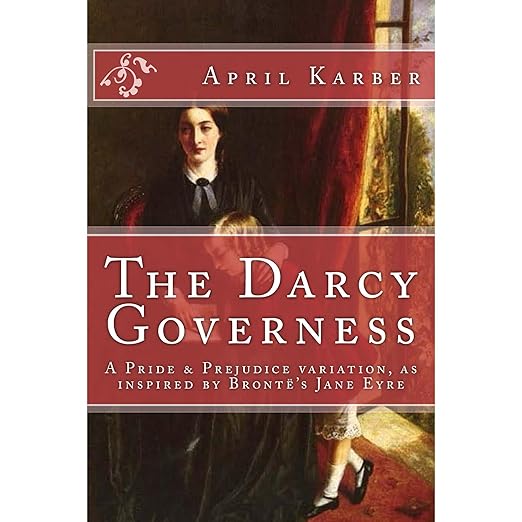
I came to The Darcy Governess already having opinions about both Pride and Prejudice and Jane Eyre, which is probably the exact reader April Karber had in mind when she wrote it. The premise is one of those that sounds like it should not work and then mostly does: Elizabeth Bennet, widowed of her father and left without prospects, becomes governess in the Darcy household, placing herself in the structural position of Jane Eyre opposite a Mr. Darcy who has now acquired the gothic mystery and hidden depths of Rochester. The dog, one reviewer delighted in noting, is named Rochester. That level of self-aware playfulness runs through the book at its best moments.
A note for listeners considering the audio version: this title uses Virtual Voice AI narration rather than a human performance. For a novel that blends the formal registers of two beloved nineteenth-century texts, the AI delivery is a significant limitation. Austen’s irony and Bronte’s emotional intensity are both style-dependent in ways that a human narrator would navigate with vocal shading. The Virtual Voice handles the text without error but without nuance, which flattens some of what makes the mashup work in prose.
Our Take on The Darcy Governess
Karber’s most successful choice is the structural logic she applies to the premise. Elizabeth arriving as a governess rather than as a social equal reshapes the power dynamics between her and Darcy in ways that create genuine new tension. The familiar beats of Pride and Prejudice, the initial misunderstanding, Wickham’s manipulation, the slow recognition of Darcy’s character, are all present but refracted through Jane Eyre’s framework of a woman navigating subordinate employment in a house full of secrets. One reviewer who loved the book noted that both Mrs. Reynolds and Georgiana immediately take to Elizabeth in a way that feels emotionally right for this particular fusion.
The parallel storylines were described by one reviewer as well thought out, and this is accurate. Karber has clearly spent time mapping the correspondences between the two source texts rather than simply imposing one plot on the other’s setting. The Wickham figure carries the gothic menace that Bronte’s darker elements suggest, and the resolution of his storyline is the novel’s most dramatically satisfying sequence.
Why Listen to The Darcy Governess
The readership this book is built for, devoted readers of both Austen and Bronte who have already consumed the major fan fiction and adaptation space around both authors, will find it engaging for its premise alone. Karber shows real affection for both source texts and does not use the mashup as an excuse to do anything cynical with characters that readers have strong feelings about. Elizabeth is still recognizably Elizabeth, even in circumstances that Austen never imagined for her, and Darcy’s hidden depths are given enough room to develop rather than simply being asserted.
The tonal balancing act between Austen’s social comedy and Bronte’s romantic intensity is not always successful, but when it works, it produces scenes that neither source text could have generated alone. The novel is at its best when it leans into the discomfort of Elizabeth’s class position in the Darcy household, a dynamic that Austen’s original deliberately avoids by making Elizabeth a gentlewoman whose social status makes her a plausible match.
What to Watch For in The Darcy Governess
Several reviewers noted problems that the book’s mixed ratings reflect. The dialogue can be difficult to follow in places, with one reviewer describing it as disjointed. There are also plot logic issues, particularly around travel times between Derbyshire and London, that break the period verisimilitude. A reviewer who noted that horses do not move at automobile speed was identifying a real problem: Karber occasionally rushes plot movement in ways that the historical setting cannot support.
Elizabeth’s willingness to believe Wickham’s account despite everything she knows about him is another structural weakness that multiple readers flagged. In Austen’s original, this credulity is earned by social context. In Karber’s version, Elizabeth’s experience as a governess should have sharpened her judgment rather than left her equally vulnerable. The AI narration, which cannot add vocal skepticism or irony to problematic moments, makes these weaknesses more visible rather than less.
Who Should Listen to The Darcy Governess
This is a title for committed readers of Austen and Bronte fan fiction who are willing to accept rough edges in exchange for a genuinely inventive premise. It is not an entry point to either author, and it rewards listeners who know the source texts well enough to appreciate the specific choices Karber makes. Listeners who expect the polish of the original novels will be disappointed. Those who approach it as an extended fan fiction exercise with real structural ambition will find more to enjoy.
Frequently Asked Questions
Do I need to have read both Pride and Prejudice and Jane Eyre to follow The Darcy Governess?
Familiarity with both is strongly recommended and will significantly enrich the listening experience. Karber assumes knowledge of both plots, character relationships, and thematic concerns. Listeners who know only one of the two source texts will miss many of the specific parallels and inversions that drive the novel.
How does the AI narration affect a novel with the formal language of nineteenth-century fiction?
The Virtual Voice delivers the period register accurately but without the vocal personality and tonal shading that Austen and Bronte adaptations particularly benefit from. Austen’s irony in particular is largely a matter of vocal delivery, and the AI cannot replicate it. The print edition will likely provide a more satisfying experience for readers who respond strongly to narrative voice.
Does the novel resolve the Darcy-Elizabeth romance fully, or does it end on a cliffhanger?
Based on the reviews, the novel functions as a complete romantic arc rather than a series opener. The resolution of the Wickham storyline and the Darcy relationship is the narrative destination Karber is building toward throughout, and readers report a satisfying conclusion to those threads even if minor plot details are rushed.
How faithful is the characterization of Elizabeth Bennet to Austen’s original?
Reviewers are divided on this. Some found Elizabeth entirely recognizable in her new circumstances. Others felt her credulity toward Wickham was less defensible in this setting than in the original and that her emotional reactions occasionally served the plot more than the character. The consensus is that Karber has genuine affection for Elizabeth but takes some liberties that dedicated Austen readers will notice.