Quick Take
- Narration: The narrator credited in Arabic script renders the text with fluency, though this edition’s language will limit the audience to Arabic-speaking listeners rather than the English-language readership of the original.
- Themes: The danger and necessity of words, finding your voice under authoritarian silence, community as both constraint and sustaining force
- Mood: Lyrical and searching, with a quiet grief underneath the coming-of-age story
- Verdict: Lynn Joseph’s poetic novel deserves to be heard, but listeners seeking the original English-language edition should verify they are accessing the correct version before purchasing.
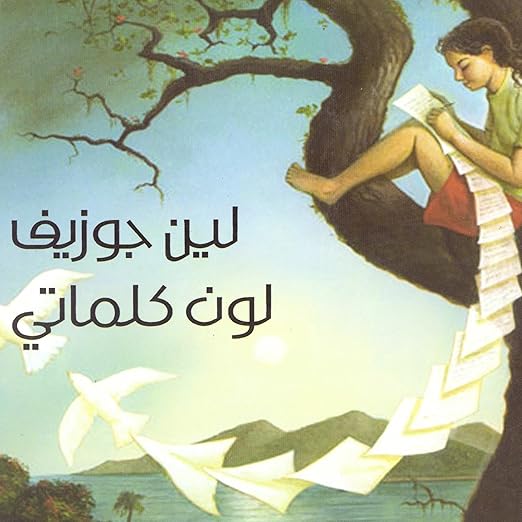
I want to be upfront about something before getting into this review: the edition catalogued here appears to be an Arabic-language audiobook. The narrator’s name appears in Arabic script, and the synopsis provided is entirely in Arabic, describing a story about a young writer named Ana Rosa coming of age in the Dominican Republic, a country where words are feared. That is Lynn Joseph’s novel, but this is not the English edition. If you have arrived here looking for the original text as Joseph wrote it, you may be looking at the wrong listing.
With that clarification made, the novel itself is worth discussing in full because it is a genuinely remarkable piece of writing that has somehow remained less widely known than its quality warrants. The Color of My Words was published in 2000 and won the Américas Award among other honors. It follows Ana Rosa, a twelve-year-old in a Dominican coastal village who desperately wants to be a writer in a country where writing the wrong thing, or writing at all with too much visibility, can bring government violence down on a family.
What the Prose Sounds Like as Poetry
Joseph writes this novel in a form that hovers between prose and verse. The chapter-vignettes have the rhythmic precision of poetry while carrying enough narrative to function as chapters, and the language describing Ana Rosa’s relationship with words, with the sea, with her brother Tomás, has a compression that makes every sentence dense with meaning. The opening chapter, in which Ana Rosa describes telling stories at the river’s edge to her mother, sets the novel’s essential tension: language as life force and language as dangerous contraband. That duality runs through every chapter.
Tomás and the Story It Becomes
I will avoid specific spoilers for listeners coming to the novel fresh, but it is worth knowing that this is not simply a coming-of-age story about a girl finding her voice. There is a sequence late in the novel involving Tomás and the village’s attempt to resist a developer’s bulldozers that changes the emotional architecture of everything that came before it. It is the kind of ending that makes you want to start over from the first chapter, because every small detail of the sibling relationship has been building toward a moment the novel has been hiding from you. Joseph earns that ending completely.
The Political Context and Why It Matters
The Dominican Republic setting is not merely atmospheric. Joseph is writing about a specific political history, the legacy of Trujillo’s dictatorship and the culture of silence it created, that informs why Ana Rosa’s desire to write is both her defining characteristic and her potential downfall. For young readers, this is an introduction to the concept of literary and political censorship as lived experience rather than historical abstraction. The novel does not explain the political context didactically; it renders it through the behavior of adults who have learned to stay quiet and a child who has not yet accepted that lesson.
Who Should Listen and Who Should Skip
This note applies particularly to this catalogued edition: Arabic-speaking listeners seeking a lyrical Dominican Republic coming-of-age novel will find this a moving listen. English-speaking listeners seeking the original Lynn Joseph text should search for the English-language edition specifically. The novel is appropriate for ages eleven and up in any edition; its handling of loss and political violence is serious but not graphic. Those who respond to novels written in a prose-poetry hybrid register, readers of books like Jacqueline Woodson’s Brown Girl Dreaming or Thanhha Lai’s Inside Out and Back Again, will find this one of their kind. Those who prefer conventional narrative structure may find the vignette form initially disorienting.
Frequently Asked Questions
Is this the English-language edition of The Color of My Words, or another language?
Based on the narrator credit appearing in Arabic script and the synopsis being written entirely in Arabic, this appears to be an Arabic-language edition. Listeners seeking the original English text by Lynn Joseph should verify the language of their edition before purchasing.
What age is The Color of My Words appropriate for?
The novel is typically recommended for ages 11 and up. It deals with political violence, grief, and the suppression of free expression in terms that are emotionally serious, and the late-novel loss sequence is genuinely affecting. The poetic language and compressed structure also suit readers with some experience of literary fiction rather than straight plot-driven reading.
Is this novel related to any series, or is it a standalone?
It is a standalone novel. Lynn Joseph has written other books set in the Caribbean, and The Color of My Words is related to that body of work in sensibility, but it does not belong to a series and can be read independently.
How closely does the story draw on Dominican Republic history and culture?
Very closely. The culture of silence the novel depicts is rooted in the specific legacy of Trujillo’s dictatorship, and the coastal village setting draws on Joseph’s own Caribbean background. The Américas Award, which recognizes literature authentically portraying Latin America and the Caribbean, reflects the seriousness with which the novel engages its cultural source.