At a Glance
- Narrator: Jeremy Irons carries the entire four hours, and the only entry that discusses the recording calls his voice excellent from start to finish.
- Subjects: personal legend and destiny, intuition over calculation, pilgrimage across Spain and the Egyptian desert, treasure that turns out to be internal
- Tone: Serene and instructive, a proverb stretched to novel length
- Bottom line: Very well cast and mercifully brief, provided you are willing to be told the moral rather than left to find it.
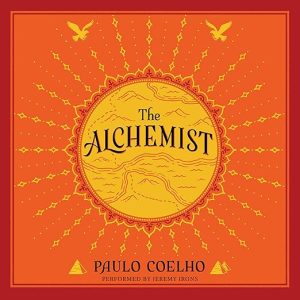
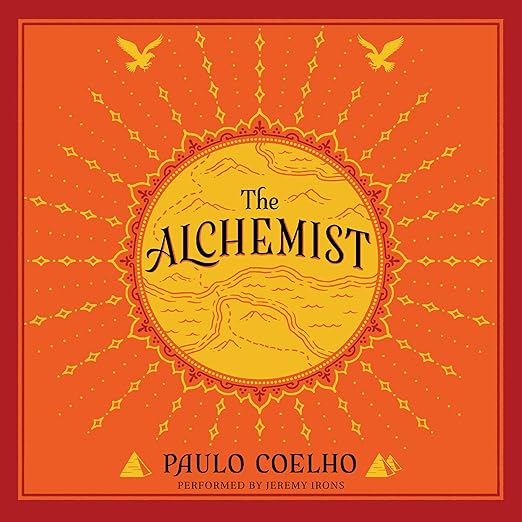
Four hours is all this audiobook needs, and the brevity is part of why Paulo Coelho's fable has traveled as far as it has. Santiago, an Andalusian shepherd boy, leaves Spain for the Egyptian desert chasing a treasure said to be buried near the Pyramids. On the road he meets a Gypsy woman, a man who calls himself a king, and an alchemist, each of whom points him further along a route whose real destination nobody can name in advance.
A Fable States Its Lesson Upfront
Mary E. Trimble, in an October 2025 response, gets closer to the truth of the book than the publisher's copy manages. That entry describes hours of magical reading, notes that this is not a plot-driven novel but one that offers a quiet sense of purpose, and observes that the period is never made clear beyond the Spanish opening. The same response picks up the small detail that Santiago trained for the priesthood before choosing the flock instead.
Jeremy Irons is the name the description leads with, ahead of everything except the sales figures, and the recording comes from HarperOne with a date at the end of December 2004. The whole of it fits a single afternoon, or two commutes, or one long stretch of household work. For a fable that has been handed between readers for decades, that accessibility is not a small part of the appeal.
Most of the buying decision comes down to knowing what kind of book this is. A fable states its lesson rather than concealing it, and Coelho states this one repeatedly and without embarrassment. Listeners who want ambiguity, psychological interiority or a plot that resists summary will find the machinery too visible. Listeners who want a story shaped like a proverb will find it doing exactly the job it set out to do. The distinction is worth settling before purchase, because almost every complaint this novel attracts comes from readers who expected the first thing and were handed the second.
One Reviewer Calls Irons' Narration Excellent
Exactly one entry here addresses the recording directly, which makes it the most valuable thing on the page. A five-star listener writing in June 2025 says the audio version was the one experienced, and describes the voice as excellent throughout the whole book. Worth flagging that the same entry spells the reader's first name as Jeromy, so anyone searching the page for the credit by name will miss it.
Casting logic is sound here in a way that goes beyond a famous name on a cover. Fables belong to the spoken tradition before they belong to print, and a story built from encounters on a road, each carrying a piece of advice, sits naturally in a listener's ear. The description calls the writing powerful in its simplicity, and simple declarative prose is precisely the kind that survives being read aloud.
Length works in the book's favor here too. The recording is short enough that the parable structure never wears through, which is a real risk with material this direct. A longer version of this book would grind, and readers would arrive at the moral exhausted by it. This one ends while the story is still working, and it invites a return in a way that heavier literary fiction rarely does.
Sheer portability counts as well. The publisher claims a hundred and twenty million copies across eighty-nine languages, and whatever one makes of that figure, a book people press on each other tends to be a book that can be finished. This is the most giftable form the story has ever taken, and the recording's age works for it rather than against it, since nothing about a fable set between Andalusia and the Pyramids dates the way a contemporary novel would.
Highlighting a Quote Means Stopping to Rewind
A lone four-star entry, posted in April 2025, identifies the format's real cost. That reader found the novel short but full of inspiration, and singles out the many lines worth highlighting and remembering for moments when motivation runs low. Highlighting is a page activity. A listener who wants to keep those sentences has to stop, rewind and write, and a book built to be quoted loses something when the quotations cannot be marked.
Apparatus rather than information is what this description mostly supplies. Sales totals, language counts, a magazine's self-help ranking, an endorsement from a musician and a long passage of Coelho quoted back at the reader occupy more space than any account of what happens in the story. Buyers should read past all of it to the paragraph about Santiago, which is the only part that describes the book. That paragraph is short, accurate and buried near the middle, which tells you how the page has been built and for whom.
Note the dating problem underneath that copy. The recording carries a December 2004 date while the marketing wrapped around it cites much more recent endorsements, which means the page you are reading was assembled long after the session was recorded. The apparatus is current; the audio is twenty years old. Neither fact is a defect, but conflating them will give you the wrong idea of what you are buying.
Weigh the aggregate last. A 4.5 average over 136 ratings for a book of this stature reflects a genuine split, and the written entries show where it lies. The split runs between readers reporting transformation and spiritual insight and a cooler assessment calling the book motivating, fun and easy. Both are accurate. The book rewards a reader who arrives receptive and frustrates one who arrives skeptical, more than most novels do.
Four Hours Is Enough If You're Ready
Skeptics of inspirational writing should save the time, because the book will not meet them halfway and does not try. Readers hunting for a conventional adventure will also be disappointed, since the desert crossing exists to deliver lessons rather than incident. Anyone who needs their fiction morally complicated should note that this one is not built to be argued with, and that the desert, the king and the alchemist are all positioned to agree with each other by the final hour.
Everyone else has an easy decision, and one small warning is worth passing on. A December 2025 entry filed from the United Arab Emirates loved the book but admitted to expecting something physically bigger, which is a print buyer's disappointment appearing on an audio page. In this format that expectation reverses into an advantage: the story is compact by design, and this recording is the whole of it.
If four hours of fable in that voice sounds like enough, it is.
Questions Listeners Ask
Is the four-hour audiobook a complete recording of the novel?
The listing carries no abridgement notice anywhere, and four hours is a plausible running time for a fable this short rather than evidence of cuts. Since the page does not address the question directly, treat the absence of a label as the only signal available and buy accordingly if completeness is essential to you.
Does the audiobook assume any background in alchemy or Coelho's other work?
None at all. The alchemist of the title is a character Santiago meets rather than a subject to be studied, and the book stands alone completely. The description positions it as an entry point for readers at any stage of life, which is one of the few claims in that copy the story actually supports.
What does the story promise a listener?
One May 2024 reader puts it cleanly: a timeless fable about self-discovery, adventure and the pursuit of destiny, following a shepherd who sets out for treasure in Egypt and finds the value sitting in the journey itself. That summary matches the book, which is more than can be said for the marketing around it.