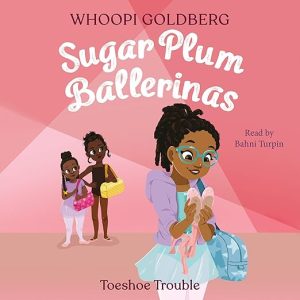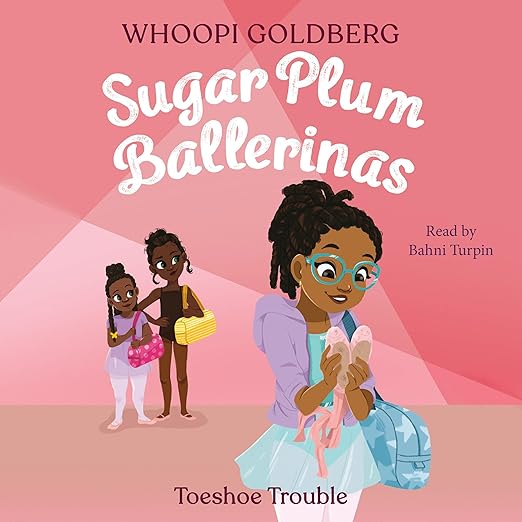
The craft accomplishment that Whoopi Goldberg's Sugar Plum Ballerinas series has pulled off across its run is making ballet feel like a community rather than an elite. In Sugar Plum Ballerinas: Toeshoe Trouble, the second book in the series and now an audiobook featuring Bahni Turpin's narration, that community is centered on Brenda Black, a twelve-year-old who idolizes Leonardo da Vinci, studies anatomy books with real devotion, and is just beginning to find her footing at the Nutcracker School of Ballet in Harlem. She is, in other words, precisely the kind of character who will resonate with young listeners who feel like they do not quite fit the standard image of what a ballet student looks like. The audiobook gives that character a performance that does her justice.
The audiobook runs two hours and thirteen minutes, well-calibrated for the early chapter-book audience this series is aimed at. The plot, in which Brenda tells a lie about owning an autographed pair of toeshoes that actually belong to the school's headmistress Ms. Debbe, is the kind of scenario that young listeners will recognize immediately: the small lie that spirals into an impossible situation, the scramble to escape it, and the moment when the only way out is honesty and the help of friends. It is a narrative structure with ancient roots because it works, and Goldberg handles it with enough specific detail and real warmth to make it feel fresh rather than formulaic.
An Anatomy-Loving Ballerina Who Idolizes da Vinci
The central character is the book's best decision. Brenda is a logically-minded anatomy enthusiast in a ballet school, which creates genuine internal tension rather than simply placing a fish out of water in an amusing setting. Her admiration for da Vinci is not a quirk for comic effect; it is a genuine character trait that shapes how she approaches problems and how she relates to the Sugar Plum Sisters who help her through the mess she creates for herself. Reviewer E.A. Poe noted that this second book lives up to the charm of its predecessor, and that Brenda gets goaded by her spoiled cousin Tiffany into claiming ownership of the autographed toeshoes, which is an accurate description of a dynamic that Goldberg renders with real comic timing and genuine understanding of how twelve-year-olds make terrible decisions under social pressure.
Turpin is one of the most skilled narrators working in children's audiobooks, and her work on this series reflects that reputation. The character differentiation between Brenda, the spoiled cousin Tiffany, and the various Sugar Plum Sisters is clear and consistent throughout, which matters enormously for young listeners who are tracking a cast of characters they cannot see on a page. Tiffany's bragging register and Brenda's dry, analytical voice are distinct from first appearance, and that distinction holds across the two-hour runtime without Turpin having to exaggerate either performance into caricature or signal to the child which characters they should be laughing at.
Turpin's Earnest Delivery Makes the Disaster Funnier
The audiobook format rewards this particular story because so much of it depends on tone. Brenda's internal logic, her genuine belief that each step in her escape plan is reasonable, is funnier in audio than on the page because Turpin delivers it with exactly the right quality of earnest determination that makes the disaster more sympathetic and the eventual resolution more satisfying. The scenes where Brenda is digging herself deeper into the lie are genuinely funny rather than simply cringe-inducing, which is a difficult tone to maintain and one that Turpin manages without apparent effort throughout.
Reviewer Grace Ibomu described reading these books to her five-year-old and noted that the child really related to the book one character because she did not love ballet but now wants to go back. This captures something important about what the series does: it approaches ballet from the outside rather than the inside, through characters who are finding their relationship to it rather than characters who were always destined to be prima ballerinas. That perspective is rare in children's content about dance, and it makes the audiobook more genuinely accessible to children who are not already passionate about the art form and might not otherwise pick it up.
Brenda's Lie Resolves Through Honesty, Not Preaching
The resolution of the toeshoe situation requires Brenda to both admit her lie and rely on her friends, which is a double lesson in honesty and community that the audiobook handles without being preachy about either. Goldberg earns the resolution through plot rather than stating it as a moral, which is the correct approach and the harder one. Young listeners who are paying attention will get the point without being told they are supposed to get the point, which is the mark of children's writing that respects its audience.
The Harlem setting and the diverse cast of characters at the Nutcracker School are presented as simply the world of the story rather than as a message the reader is meant to notice and approve. Representation done well does not announce itself, and the audiobook delivers a world that reflects the genuine diversity of its setting as background reality rather than foreground lesson. Turpin's narration supports this naturalness throughout, treating every character with the same quality of attention rather than signaling which ones are there for variety and which are the real story.
A Second Visit to the Nutcracker School
This audiobook is for early chapter-book listeners roughly in the seven to ten age range, with particular resonance for those who have recently discovered either ballet or the experience of getting themselves into a situation they need friends to help them out of, which covers most of them. Parents and caregivers looking for audiobook content that models both honesty and the value of female friendship without being instructional about either will find Goldberg's series among the better options available in this category. New listeners to the series can start with Toeshoe Trouble as a standalone entry, though beginning with book one provides useful character context that enriches Brenda's arc here. For children who have already visited the Nutcracker School once, this second audiobook is the natural next listen.
Questions Listeners Ask
Does this audiobook work as a starting point for the Sugar Plum Ballerinas series, or is book one required first?
It works as a standalone entry with enough character introduction to follow the story without prior context. However, beginning with book one adds meaningful character background for Brenda and the Sugar Plum Sisters that makes their dynamic in this second entry richer. Either approach is viable.
Is this audiobook appropriate for listeners who are not interested in ballet?
Yes, and this is by design. The Sugar Plum Ballerinas series is built around characters who come to ballet from the outside, including one in book one who initially does not enjoy it at all. The story here focuses on honesty, friendship, and a comedic predicament rather than on ballet technique, making it accessible for children with no interest in dance.
How does Bahni Turpin handle the different character voices in this audiobook?
With considerable skill. Turpin gives Brenda a thoughtful, analytical vocal quality that suits her da Vinci-admiring character, while Tiffany's bragging comes through as a distinct register that young listeners will recognize immediately. The differentiation is clear without being exaggerated, which helps children track the cast across the two-hour runtime.
What age range is this audiobook best suited for, and can parents listen alongside younger children?
The series targets roughly ages seven to ten for independent listening, but reviewer Grace Ibomu reports successfully sharing the books with a five-year-old during story time. The audiobook works well for shared listening between adults and younger children, and the plot is engaging enough that adults will find it pleasant rather than simply endurance.