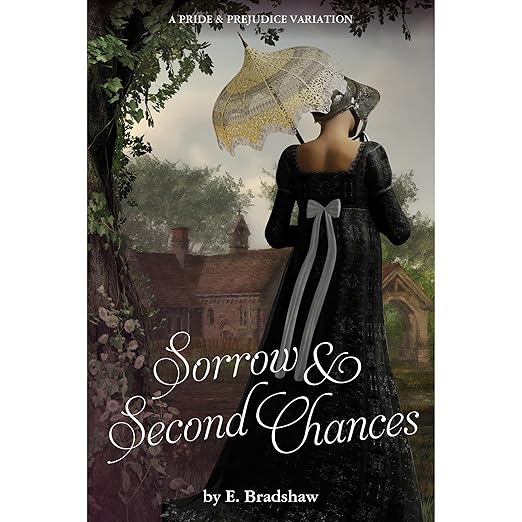
Quick Take
- Narration: Virtual Voice AI narration is present here; the delivery is functional but lacks the interpretive warmth the Darcy-centric material requires
- Themes: grief as a catalyst for change, the redemption of pride through loss, Darcy’s perspective on a story we already know
- Mood: Low-angst and contemplative, with domestic warmth at its core
- Verdict: A thoughtful Pride and Prejudice variation that prioritizes emotional authenticity over plot drama; the Darcy POV is handled with real care, though the AI narration is a significant caveat.
I have a particular relationship with Jane Austen variations. I have read enough of them to know that the genre has a quality spectrum wider than almost any other literary derivative form, running from careful novelistic work to thinly veiled fan fiction that borrows Austen’s character names without engaging her actual concerns. Sorrow and Second Chances falls toward the more serious end of that range, and it does something specific enough with its premise to be worth discussing honestly.
The central departure from Pride and Prejudice is the death of Mrs. Bennet. That event, which the synopsis frames as a sudden loss that changes the fate of the whole family, is a structurally intelligent choice. Mrs. Bennet’s anxiety about her daughters’ marriages has always been the comedic and thematic engine of Austen’s novel, and removing her forces the remaining characters to redistribute those anxieties and take them more seriously. Darcy’s redemptive arc, here told predominantly from his own point of view, is given new texture by a situation in which his desire to help the Bennet family must navigate the genuine grief of the people he loves rather than the social comedy of Austen’s original.
The Darcy Perspective and What It Reveals
E Bradshaw’s choice to tell this story primarily through Fitzwilliam Darcy’s point of view is not novel in the variation genre, but it is executed here with a discipline that many such attempts lack. Darcy after his rejection at Hunsford is a man in whom pride and genuine feeling are fighting each other, and Bradshaw keeps that tension alive rather than resolving it too quickly. The excerpt included in the synopsis, in which Darcy reflects on how far he and Elizabeth have already traveled from proper conduct, captures the book’s register: formal in language but emotionally direct in what it allows its characters to feel.
One reviewer specifically praised the relationship between Darcy and Mr. Bennet that develops as a result of the bereavement premise, calling it uniquely beautiful and unlike other variations. This thread carries real weight. A friendship between these two men, who share an ironic intelligence and a genuine love for Elizabeth even if they express it entirely differently, is one of the book’s most interesting developments and something the original novel has very little room for. Bradshaw uses the changed circumstances of the plot to open up a dynamic that Austen only gestured at, and the result is genuinely satisfying for readers who have always wanted more of that relationship.
Low Angst as a Deliberate Structural Choice
Several reviewers noted both the appeal and the limitation of the book’s low-angst design. In a genre that often manufactures misunderstandings to delay the inevitable happy ending, Bradshaw chooses instead to let Darcy and Elizabeth move toward each other with relative directness once the circumstances change. For some readers, particularly those who read Austen variations for the pleasure of sustained dramatic tension, this will feel like the book lacks propulsion. One reviewer described the last quarter as insufficient in angst, while another found the absence of villains and major obstacles refreshing and a rare restraint in the genre.
I lean toward finding the restraint admirable, with the honest acknowledgment that it does make the book feel longer than its pacing strictly requires in the final sections. The writing sustains itself for three-quarters of its length with genuine interest, and then the arrival of the ending feels somewhat foregone. That is a structural issue in the variation genre broadly, not a specific failing of this title, but it is more visible here because the book has deliberately removed the obstacles that usually delay resolution. Readers who know what they want from their Austen adaptations will know which side of this debate they are on before they begin.
The Virtual Voice Narration Question
This audiobook uses Virtual Voice AI narration, which is a significant factor in the listening experience and worth addressing directly. The AI delivery is functional at the sentence level but lacks the interpretive warmth, the subtle adjustments of pace and tone that a skilled human narrator brings to emotionally complex material. The period formality of Austen-derived prose is one of the formats where human narration matters most, because the irony and the emotional undercurrent of that register require a voice that understands what it is performing. Virtual Voice gets through the text without errors, but it does not bring Darcy’s interiority to life in the way that a narrator who understood the character could. Listeners who are sensitive to AI narration will find this a real limitation that affects nearly every scene where the emotional stakes matter most.
Austen Readers Who Will Find This Worth the Time
Sorrow and Second Chances is for readers who love Jane Austen variations and have a specific appetite for Darcy-POV retellings that prioritize emotional depth over dramatic tension. If your ideal Austen variation is more domestic novel than romantic thriller, this is well suited to your tastes. The friendship between Darcy and Mr. Bennet alone is worth the listen for those who engage deeply with the source material. Skip it if AI narration is a barrier for you; the format genuinely limits what the material could achieve with a skilled human reader. Also skip it if you need your variations to generate consistent anxiety; this one provides very little of that, and whether that is a strength or a weakness will depend entirely on what you came to the genre looking for.
Frequently Asked Questions
Does Sorrow and Second Chances require familiarity with Pride and Prejudice to follow the plot?
Deep familiarity with Austen’s novel is assumed throughout. The variation works by departing from a known text, and readers who do not know the original will lose most of the emotional resonance of those departures. This is firmly a book for Austen readers rather than a standalone entry point.
The narrator is listed as Virtual Voice. How significantly does the AI narration affect the listening experience?
It is a meaningful limitation. The Regency period formality and the emotional subtlety of Darcy’s interiority are formats where human interpretive skill matters significantly. The AI narration delivers the text accurately but without the warmth and irony the material requires. It is the book’s most significant drawback for audio listeners.
This is described as a V2 re-edited version. What changed from the original?
The synopsis notes the book was re-edited and re-released in June 2024. Several readers noted issues with paragraph formatting in earlier versions, specifically the lack of consistent indentation that disrupted the reading experience. The V2 release addresses those production issues.
Is the Lydia subplot handled differently given that Mrs. Bennet is no longer present?
Reviewers have noted that Lydia’s characterization is one of the more nuanced elements of the variation. Her arc changes in interesting ways once the social pressure of her mother’s anxiety is removed, and the book treats her with more complexity than Austen’s original plot allowed.