Quick Take
- Narration: Kevin Pierce brings steady reliability to Joe’s first-person voice, keeping the survival action moving without overreaching into dramatic territory the prose doesn’t invite.
- Themes: community building after collapse, the moral slide toward violence and authoritarianism, ordinary people as reluctant leaders
- Mood: Gritty and utilitarian, with warmth in the relationship threads
- Verdict: A competent third entry in a post-EMP survival series built around average people rather than special forces heroes – best appreciated by readers already invested in Joe and his group.
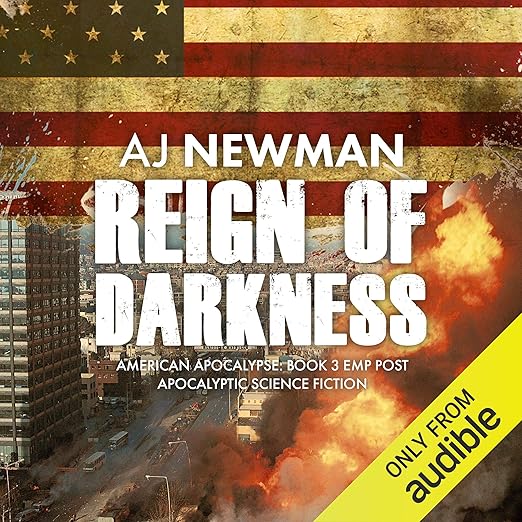
I have a specific fondness for post-apocalyptic fiction that insists on ordinary protagonists. The genre has a tendency toward chosen-one heroes with military backgrounds and superhuman endurance, and AJ Newman’s American Apocalypse series makes a deliberate counter-argument. Joe, as one reviewer memorably describes him, is an “overweight and slightly under-motivated mechanic.” That choice of protagonist is one of the series’ genuine contributions to the genre, and Reign of Darkness, the third book, continues to build on that foundation.
The premise is familiar territory for EMP fiction: a coordinated attack has knocked out modern infrastructure, and the survivors are learning how to exist without electricity, digital communication, or supply chains. What Newman does with that premise is focus less on technical survival detail and more on the social dynamics of collapse: who claims authority, who uses crisis as cover for cruelty, and how a group of ordinary people develops the norms it needs to function. Reign of Darkness adds a villain layer to the complications from earlier books: criminals and “traitors in the band” who want to establish themselves as local dictators rather than contribute to community.
Our Take on Reign of Darkness
The book’s emotional anchor is Joe’s grandmother Agnes, specifically her letters, which continue from earlier installments to motivate Joe’s leadership development and guide his search for a promised treasure. One reviewer described loving Grandma Agnes and wanting to meet someone like her, which tells you something about how effectively Newman has built this secondary character. The letters function as a structural device, connecting the pre-collapse world to the post-collapse present, while also developing Joe’s backstory more warmly than the action sequences alone could.
Newman is explicit about his interest in average protagonists, and the comparison drawn by one reviewer to having “no Navy Seal super heroes here” is meant as praise. Joe’s credibility as a survival protagonist comes from practical competence and stubborn persistence rather than from elite training. That choice produces a different kind of tension than most post-apocalyptic fiction: Joe is visibly figuring things out, not executing a plan. The losses he sustains in this installment, people close to him who don’t make it, feel heavier because the group is built on genuine human attachment rather than tactical utility.
Why Listen to Reign of Darkness
Kevin Pierce is a sensible narrator for this material. Newman’s prose is functional rather than literary, and Pierce matches that register without trying to elevate it beyond what the writing supports. His reading of Joe’s practical, low-key voice keeps the story moving through its five and a half hours without demanding more interpretive work from the listener than the book invites. The audiobook moves quickly, which suits the genre’s emphasis on event rather than interiority.
The book’s attention to weapons and preparedness hardware, which one reviewer flagged as detailed to the point of richness for readers who are into that material, is specific enough to feel researched rather than generic. Newman knows the preppers and survivalists in his audience, and he writes for them without alienating listeners who are primarily interested in the human drama. The EMP attack’s mechanics are handled competently rather than obsessively, keeping the focus on what the collapse produces socially rather than technically.
What to Watch For in Reign of Darkness
The book has acknowledged weaknesses that appear consistently in the review record. Foul language is flagged by one reviewer as pervasive and worth noting for listeners who find that a barrier. The female trafficking content, described as “a little TMI” by one reviewer, adds darkness to the villain’s establishment that some readers found excessive. The similar names Cobie and Chloe create confusion for listeners in a way that might not register as strongly in print, and the two characters don’t contribute enough to justify the investment the book expects in them. These are craft-level issues rather than fundamental problems, but they’re real enough to affect enjoyment for some listeners.
The series’ third book also carries the burden of being mid-series: it doesn’t have the novelty of setup and doesn’t have the resolution of an ending. Newman keeps things moving enough that the middle-book problem doesn’t bite hard, but listeners who prefer their audiobooks to be fully self-contained stories will find this one less satisfying than readers who have followed Joe from the beginning.
Who Should Listen to Reign of Darkness
Primarily for listeners who have read the first two American Apocalypse books and are invested in Joe’s group and the Grandma Agnes letters. More broadly, this works for EMP and post-collapse fiction readers who are tired of super-competent military protagonists and want their survival stories to feel more humanly scaled. The weapons and preparedness content will appeal to readers in that community. Listeners who are new to the series should start at book one. Adults who are interested in the social and community-building aspects of collapse fiction rather than the action elements will find Newman’s approach more satisfying than many genre contemporaries.
Frequently Asked Questions
Is Reign of Darkness accessible as a standalone, or is knowledge of the earlier American Apocalypse books necessary?
The earlier books are important for full context. The Grandma Agnes letters that run through book three build on an established emotional history, and the losses Joe sustains carry more weight if you know the characters from earlier installments. That said, the plot is functional enough that a newcomer can follow the action. But the emotional investment the book is reaching for requires the series foundation.
How does AJ Newman handle the EMP premise compared to other books in the subgenre?
Newman’s EMP fiction is more interested in social collapse than technical survivalism. The attack’s mechanics are mentioned but not dwelt upon. The focus is on how communities form, how authority gets claimed or refused, and how individuals like Joe develop into reluctant leaders. This makes the series more accessible for readers who aren’t deeply invested in preparedness culture while still including enough hardware detail to satisfy readers who are.
The synopsis mentions Muslim terrorists as an ongoing plot thread – how centrally does this figure in Reign of Darkness?
Based on the synopsis and review record, the Muslim terrorist plotline is part of the broader geopolitical collapse background rather than a central character-level conflict in book three. It’s present as an unresolved question rather than the primary antagonist force, which in this installment is the local criminal element trying to establish dictatorship within the survivor community. Listeners sensitive to how this storyline is handled should be aware it exists in the series’ premise.
Kevin Pierce has narrated extensively in the thriller and post-apocalyptic genres – does his style fit the American Apocalypse series specifically?
Well enough. Pierce’s utilitarian delivery suits Newman’s functional prose, and his handling of Joe’s first-person voice keeps the character’s practical, low-key personality intact. He doesn’t add texture the writing doesn’t invite, which is the right call for this material. Series fans seem satisfied with his consistency across installments rather than specifically enthusiastic about the narration itself.