Quick Take
- Narration: Aure Nash voices Dahlia with warmth and resolve, and handles the cultural texture of the fictional Zamibia with care rather than caricature.
- Themes: Second-chance romance, royal duty versus personal love, African diaspora identity and belonging
- Mood: Emotionally rich and culturally immersive, with enough heat and heartbreak to keep the pages turning
- Verdict: Delaney Diamond brings genuine world-building ambition to a royalty romance setup that rewards it, Zamibia feels like a place, not a backdrop.
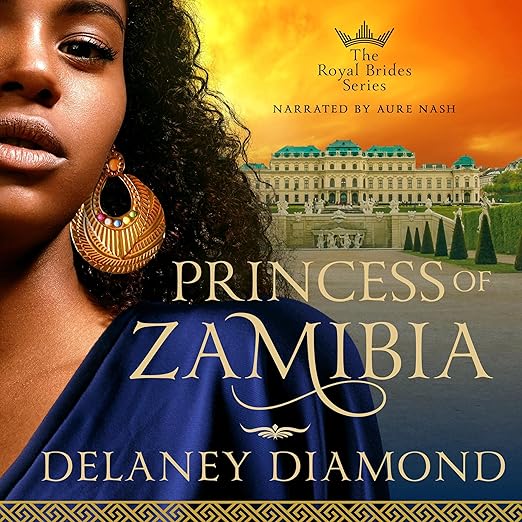
I started Princess of Zamibia on a Saturday afternoon with low expectations and no plan to finish it that day. Eight hours later I had cooked dinner listening to the final act, which tells you most of what you need to know about how effectively Delaney Diamond held my attention. This is a royalty romance that takes its fictional African setting seriously, and that seriousness is what elevates it above the category average.
The setup follows Dahlia, who three years earlier gave Prince Kofi everything after a whirlwind romance, then found herself without him when it ended abruptly. Kofi has since discovered he has a son he didn’t know about, and when he returns, he’s not the man Dahlia fell for, he’s bitter, certain she betrayed him, and determined to bring his heir back to Zamibia even if it means a marriage built on mistrust. Dahlia must now raise her son in a culture she doesn’t fully understand, navigating royal expectations she wasn’t raised for, while both she and Kofi work through what actually happened between them.
The Fictional Kingdom That Earns Its Geography
What makes Princess of Zamibia stand out in a genre crowded with throne rooms and royal obligations is the specificity of its fictional West African setting. Diamond incorporates Yoruba language elements and actual West African naming conventions rather than reaching for a generic fantasy royalty aesthetic. One reviewer who is of African descent noted the accuracy and care with which the cultural elements are rendered and praised Diamond specifically for using real linguistic details rather than invented exotica. That attention to specificity, the traditions, the family dynamics, the expectations placed on a woman who has entered a royal household without being born to it, gives the romance its unusual texture.
The fictional Zamibia functions as more than backdrop. It shapes the conflict in concrete ways: Dahlia’s difficulty navigating a culture she doesn’t fully understand isn’t a vague feeling but a series of specific situations where the rules she knows don’t apply. Diamond resists the temptation to resolve this too neatly, integration is partial and ongoing, not achieved in a single triumphant moment of belonging.
Kofi’s Bitterness and What Dahlia Is Asked to Bear
The emotional complexity of the central relationship is where the book earns the most credit. Kofi is described by multiple reviewers as the typical alpha male who expects things to go his way, which is accurate, but Diamond doesn’t excuse his behavior as romantic. The anger and mistrust he brings back to Dahlia are genuine obstacles, not superficial misunderstandings resolved in a single conversation. The book takes seriously what it costs Dahlia to remain in a marriage with someone who doesn’t trust her, in a country that isn’t hers, for the sake of a son who needs both his parents.
The child Noel is handled well, he functions as an emotional center without being deployed cynically as a manipulation device. His presence raises the stakes in ways that feel organic to the story rather than sentimental, and his relationship with both parents illuminates the central conflict more effectively than most of the dialogue between the adults.
Aure Nash and the Sound of a Woman Holding Her Ground
Aure Nash’s narration brings Dahlia’s resilience forward without making her seem unaffected by what she’s enduring. The voice is warm and grounded, this is a character who has decided not to collapse under pressure, and Nash conveys that decision as an ongoing choice rather than an innate trait. Her reading of the royal household scenes, where Dahlia navigates cultural expectations while processing her own emotional reality, is particularly strong.
The 6-and-a-half-hour runtime is well-paced for the story Diamond is telling. The romance builds at a speed that allows the distrust to feel genuinely present rather than a formality; the resolution, when it comes, earns its warmth. A nightmare that strikes the royal family in the final third adds tension without derailing the emotional arc, it arrives at the right moment to force a reckoning between the two leads.
The royal family nightmare in the final third deserves particular mention because it’s handled with more restraint than the premise might suggest. Diamond doesn’t use it as a melodramatic shortcut to force reconciliation between Kofi and Dahlia; she uses it as a situation that reveals what both characters are made of under pressure, which is the more interesting and more earned approach. By that point in the story you know both of them well enough that their reactions tell you something true about who they are and whether the relationship that emerges from the crisis is one that can actually sustain itself.
This attention to cultural specificity extends to the way Diamond depicts the emotional labor of being an outsider in a tightly structured royal household. Dahlia’s navigation of expectations she wasn’t raised to understand is portrayed with sympathy and without condescension toward either the culture she enters or the woman doing the entering, a balance that requires careful writing and that Diamond achieves.
Who This Audiobook Is For
Romance listeners specifically interested in royal settings with African representation will find this among the best executed examples of that subgenre currently available. The second-chance premise is executed with more emotional complexity than the description suggests, and the world-building ambition is genuine. Fans of Delaney Diamond’s other work will find her characteristic warmth and conviction in full evidence.
Listeners who prefer their royalty romances with a lighter, more confectionary approach may find the emotional weight here heavier than they’re looking for, this isn’t a breezy fantasy but a story about two people working through genuine betrayal and mistrust. And listeners who require the alpha hero to be unambiguously sympathetic throughout may find Kofi’s third-act evolution arrives too late in the story for their comfort.
Frequently Asked Questions
Is the West African cultural setting researched accurately, or does it feel invented for atmosphere?
Diamond incorporates actual Yoruba language elements and West African naming conventions rather than generic fantasy Africa. African readers have noted the care and accuracy of the cultural details, which distinguishes this from royalty romances that use African aesthetics without substance.
Does the story resolve fully in this first book, or does the Royal Brides series require reading multiple volumes?
Princess of Zamibia resolves Kofi and Dahlia’s arc completely. It functions as a standalone within the series, subsequent books follow other characters in the same world rather than continuing this couple’s story.
How does Aure Nash handle the emotional complexity of Dahlia’s situation, particularly the scenes of marital mistrust?
Nash plays Dahlia’s resilience as an active ongoing choice rather than passive endurance, which gives those scenes genuine emotional weight. The narration doesn’t soften the difficulty of Dahlia’s position while also conveying her agency within it.
Is this suitable for readers who don’t typically read royalty romance, but are interested in the African setting?
Yes, with the caveat that the genre conventions, alpha hero, second chance, forced proximity, are present and central. Readers new to romance who come for the cultural setting will encounter standard genre mechanics alongside the world-building, which may delight or frustrate depending on their tolerance for those conventions.