Quick Take
- Narration: Narrator not confirmed in available data; check the Audible listing for full production credits.
- Themes: Polyamorous love without competition, secrets and return, chosen family over convention
- Mood: Emotionally intense, sensual, and series-finale satisfying
- Verdict: A confident series conclusion for BLP Breeds fans that handles a non-conventional romantic dynamic with genuine care.
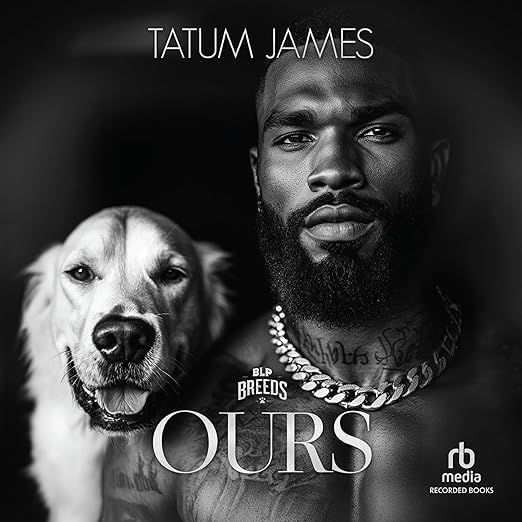
I started Tatum James’s Ours on a Friday evening with no particular expectations about where it would go, and I found myself reconfiguring those expectations fairly quickly. This is the fourteenth and final book in the BLP Breeds series, which means it arrives with considerable accumulated context and the narrative pressure of an ending, and James uses both of those resources deliberately. The story of Harper, Jordy, and Jase, a woman returning to her hometown after eight years to face the two brothers she never stopped loving, is told with the particular confidence of a writer who has spent thirteen books earning the reader’s trust before delivering this one.
The narrator field in the metadata is blank, which means this review must work around that absence. What is present is a story that reviewers describe with consistent energy: complicated, scorching, emotionally honest about what it means to love two people simultaneously without reducing any of the three to a simple function.
Our Take on Ours
James constructs the central dynamic around a love triangle that is not, structurally, a triangle at all. Jordy St. John is Harper’s safe place, the man who made her believe in the possibility of unconditional love. Jase is the steady protector, the one whose presence made the world feel manageable. They are brothers who loved the same woman and, critically, respected each other’s love rather than competing for exclusive claim. The story that emerges from Harper’s eight-year absence and return is not about choosing between them but about understanding why she left, what she kept secret, and whether the family they almost built can be rebuilt on the truth rather than on avoidance.
A reviewer described Jordy and Jase as “the most intriguing” part of the dynamic because their differing personalities are reflected in their “individual type of unstable” where Harper is concerned. That observation captures something precise: the brothers are not interchangeable versions of the same protective impulse. Their love for Harper expresses itself differently, which means their reactions to her return, her secret, and her ongoing presence are different, and those differences drive the plot rather than the external obstacles the synopsis might suggest.
Why Listen to Ours
Series readers arriving at book fourteen will bring fourteen books of accumulated investment, and James rewards that investment with a finale that takes the emotional weight seriously rather than providing quick resolution. The reviewer who described James as having “done her big one with this story” is pointing at exactly that: the book delivers on the promise of the series rather than coasting on existing goodwill.
For readers new to the BLP Breeds series, Ours can be approached as a standalone in terms of plot, since the essential context is established within the book itself. However, the emotional resonance of the finale is considerably amplified by familiarity with Harper’s world and the people in it. This is the kind of series-concluding book that functions better as a conclusion than as an entry point, even if the mechanics allow for entry.
What to Watch For in Ours
The relationship structure, two brothers sharing one woman with full knowledge and mutual respect, is not a conventional romance configuration, and James does not soften it or treat it as incidental. One reviewer described needing “a while to understand” what the title was signalling before the full dynamic became clear. Readers who are not comfortable with polyamorous or non-traditional romantic structures should know that this is central to the book rather than a subplot or a briefly visited scenario.
The secret Harper has been holding for eight years is the plot engine, and its revelation involves Cameron, her son, whose parentage complicates the emotional landscape in ways one reviewer found they had opinions about that the book does not fully satisfy. Without revealing the specifics, the resolution of that particular thread requires accepting some emotional ambiguity rather than a clean answer, which may frustrate readers who want every element of the dynamic resolved neatly.
Who Should Listen to Ours
Established BLP Breeds readers are the natural audience, and for them this book represents the series finale they have been building toward. Romance readers who enjoy polyamorous configurations and are specifically interested in stories where two male characters love the same woman without competing for exclusive claim will find this relatively rare in the genre and handled with genuine care. The six-hour-and-forty-minute runtime is efficient for the amount of emotional terrain the book covers, and the story does not waste its runtime on anything extraneous to the central dynamic.
Frequently Asked Questions
Is Ours accessible as a standalone, or is reading the previous BLP Breeds books necessary to understand it?
The essential context is established within the book, so new readers can follow the plot. However, the emotional payoff is significantly larger for readers who have followed the series and understand the world and relationships James has built across thirteen previous books. It functions as a standalone but rewards series investment.
The narrator is not listed in the metadata. Is there narration information available elsewhere?
The Audible listing is the best source for confirmed narrator information, as the data here does not include that detail. Given the publisher is Recorded Books, a professional narrator is standard for their releases, and the Audible product page should have full cast and production credits.
How does James handle the three-way relationship without reducing any of the three characters to a function in the other two’s story?
Reviewers consistently note that all three characters have distinct personalities and distinct relationships to each other. Jordy and Jase are differentiated not just by temperament but by the specific ways their love for Harper manifests, and Harper is an active agent in the story rather than a passive recipient of two men’s competing affections. The dynamic is shown as genuinely complex.
Is there a resolution to the mystery of Cameron’s parentage, and does it satisfy?
The question is addressed in the story, though some reviewers found themselves with lingering feelings about how it resolves. The emotional complexity of the situation, particularly the bond between Cameron and a specific character, is acknowledged but not entirely settled to everyone’s satisfaction. James prioritizes the central romantic resolution over a completely tidy handling of the parentage question.