Quick Take
- Narration: Jonathan Davis is a perfect fit for Molly Harper’s comedic rhythms, delivering Charlotte’s exasperated professionalism and Leonard’s wary charm with genuine comic timing.
- Themes: Fairy curses, supernatural midwifery, reluctant romance in a quirky supernatural town
- Mood: Warm, funny, and over before you know it
- Verdict: A breezy three-hour Audible Original novella that works beautifully as a reentry point to Mystic Bayou, though series newcomers will miss some of the town’s running jokes.
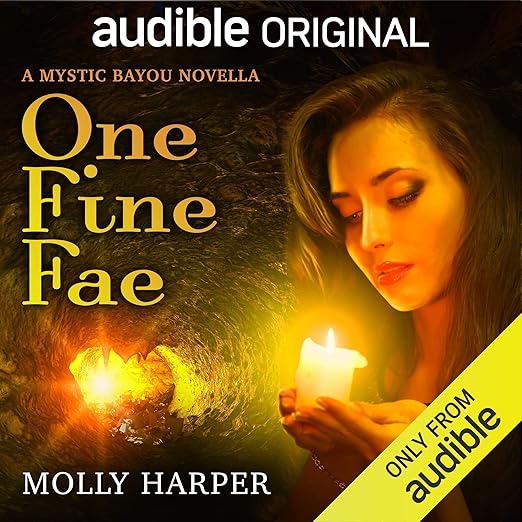
I finished One Fine Fae on a Sunday morning with a cup of coffee and almost no plans. It runs just over three hours, which is to say it is exactly the right length for a slow morning when you want story but not commitment. Molly Harper has been writing the Mystic Bayou series with obvious delight, and this sixth installment, designed as an audio-first Audible Original, shows all the confidence of an author who knows her town well enough to let a new character walk in and immediately feel at home.
Charlotte McBee arrives in Mystic Bayou as a midwife with a very specific challenge ahead of her: delivering the offspring of a dragon and a phoenix shifter. The logistics of a giant metal egg are treated with exactly the dry horror they deserve, and Harper uses Charlotte’s midwifery expertise as a genuinely funny lens on supernatural parenthood. Jillian, the anxious mother-to-be whose previous appearances in the series have endeared her to returning readers, is in full anxious mode here, and Charlotte’s professional composure in the face of genuinely unprecedented obstetric circumstances is the comedic engine of the first half.
Our Take on One Fine Fae
Leonard, the cursed town resident who catches Charlotte’s attention, is handled with more care than the novella’s brief runtime might suggest. Harper gives him a wariness that feels earned rather than arbitrary. An ancient fairy curse is not a throwaway plot device here; it is the specific mechanism through which Charlotte and Leonard’s proximity becomes both complicated and eventually meaningful. The resolution, which one reviewer accurately described as totally predictable but still smile-inducing, arrives at exactly the right moment. Harper knows the difference between predictability as failure and predictability as comfort, and in a three-hour novella the latter is a virtue.
Jonathan Davis narrates, and he is a consistent pleasure across the Mystic Bayou series. His Charlotte is efficient and slightly wry, his Leonard is careful in a way that suggests genuine feeling held at arm’s length. The supporting cast, including the recurring inhabitants of Mystic Bayou that fans of the series will recognize, gets differentiated treatment rather than generic voice-filling. This matters in a novella format where there is no room for slow character introduction; Davis has to establish personalities quickly, and he does.
Why Listen to One Fine Fae
The audio-first design is worth taking seriously. Harper wrote this specifically to be heard, and the comedic pacing reflects that. The dialogue lands differently in Davis’s performance than it would on a page, and the running gags about supernatural childbirth logistics have a rhythmic timing that audio serves particularly well. This is not a novelization of something that exists better in print form; it is genuinely shaped for the ear.
One caveat for new listeners: multiple reviewers recommend starting the Mystic Bayou series from the beginning, and that advice has merit. One Fine Fae works as a standalone story with a self-contained romance arc and a complete comedic premise, but the texture of Mystic Bayou’s humor, the way Harper has built up a specific town mythology and cast of recurring supernatural residents, is something you absorb gradually. Series newcomers will enjoy the novella; series fans will enjoy it more. There is a difference between following the plot, which any new listener can do without difficulty, and getting the full pleasure of the town’s accumulated jokes, which is a reward for continued reading.
What to Watch For in One Fine Fae
Harper has a gift for integrating professional competence into her heroines without making it feel like a character trait checklist. Charlotte’s midwifery knowledge is specific enough that it reads as actual research, and the way her expertise frames her response to supernatural situations, calmly professional where another character might panic, is one of the quieter pleasures of the novella. The fairy curse mechanics are also more cleverly deployed than they initially appear. Pay attention to what the curse actually does versus what Leonard assumes it means for his ability to connect with others.
Who Should Listen to One Fine Fae
This is the ideal listen for existing Mystic Bayou readers looking for a light, fun return to the town between longer installments, for anyone who wants paranormal romance that leads with comedy rather than heat, and for listeners who need something complete and satisfying that fits inside a morning. Skip it if you have never encountered the series and prefer to meet a world fully developed rather than in a short side-story format, or if you find novellas unsatisfying because of how quickly they end. The three-hour runtime is a feature for some listeners and a frustration for others, and that distinction will determine your enjoyment almost more than anything else about the book.
Frequently Asked Questions
Can One Fine Fae be listened to without having read the earlier Mystic Bayou books?
The romance plot and midwifery premise are fully self-contained, so new listeners will follow the story without difficulty. However, multiple reviewers note that the series rewards reading from the start, since Mystic Bayou’s humor and charm build across installments. You will enjoy One Fine Fae; you will enjoy it more with prior context.
What exactly does the fairy curse affecting Leonard do, and is it resolved by the end?
The curse creates a specific barrier to connection that Harper uses to generate the romantic tension between Leonard and Charlotte. The novella resolves within its own arc, which is one of the things the audio-first format gets right: this is a complete story, not a setup for the next book.
Is Jonathan Davis the narrator throughout the Mystic Bayou series, and does his performance carry over between installments?
Davis has been a consistent presence across the Mystic Bayou series, and listeners who have spent time with his narration in earlier books will find One Fine Fae immediately comfortable. His performance style suits Harper’s comedic rhythm particularly well, and the familiarity between narrator and material shows.
What does ‘audio-first’ mean for how One Fine Fae was written?
Harper developed the novella specifically for audio release through Audible Originals, meaning the comedic timing and dialogue pacing were shaped with listening in mind rather than reading. Several listeners have noted that the humor lands particularly well in Davis’s performance, suggesting the audio-first design is not just a marketing label but reflects real choices in how the material was written.