Quick Take
- Narration: Tommy Pico reading his own work is the only way this should exist in audio, his voice carries the bratty, tender, devastating rhythm of Teebs in a way no other reader could approximate.
- Themes: Indigenous identity and colonial violence, queerness and urban belonging, language as resistance
- Mood: Disruptive and funny and then suddenly devastating, the tonal shifts are the point
- Verdict: At just over an hour, Nature Poem is one of the most concentrated and formally intelligent pieces of audio poetry available, and Pico’s own narration makes it an experience that print cannot replicate.
I was not prepared for Nature Poem the first time I listened to it. I had it on during a walk, expecting something meditative, the title suggests open spaces and quiet observation, and instead got Tommy Pico’s voice arriving at full velocity, bratty and funny and furious and grief-stricken, sometimes within the same sentence. I stopped walking. I stood on a sidewalk for over an hour, until it was done.
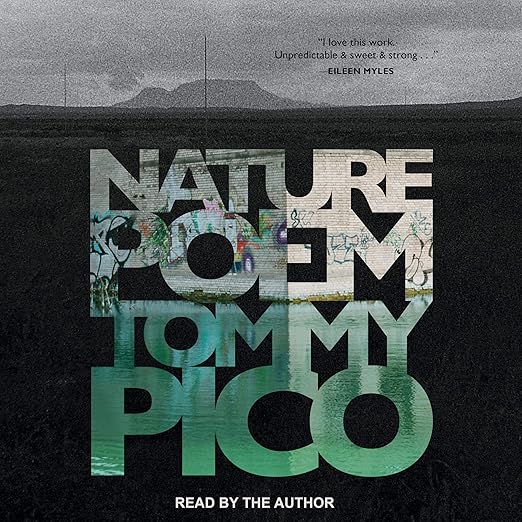
Nature Poem is the first book in Pico’s Teebs tetralogy, published in 2017 and brought to audio through Tantor. At one hour and nineteen minutes, it is the shortest entry in this batch, but length is irrelevant to density. This is a book-length poem, not a collection, and it functions as a sustained argument about identity, colonialism, and the politics of what Indigenous people are allowed to be in the American cultural imagination.
Our Take on Nature Poem
The premise is deceptively simple: Teebs, a young, queer, reservation-born, urban-dwelling NDN poet, refuses to write a nature poem. He hates nature. He would rather write about Aretha Franklin and give head in a pizza-parlor bathroom. He slaps back at every invitation to perform the natural Indian stereotype. But the poem is, of course, partly about nature, or rather, about what it means that his people were identified with the natural world precisely to make them easier to destroy. The closer NDN people were aligned with the natural, Teebs figures, the easier it was to mow them down like underbrush.
One reviewer who teaches Native American and Environmental Literature at university level described the poem as having so much packed into every section, the rejection of white stereotypes of Indigenous land relationships, the authentic reflection on ancestral connection, the queer experience, the digital and urban present all colliding at once. That density is real, and it does not thin out on re-listening.
Why Listen to Nature Poem
Tommy Pico narrating his own work is not a convenience, it is fundamental to how the poem works in audio. The Teebs voice is specific: digressive, sharp, self-deprecating in a way that suddenly turns serious, Twitter-fluent and also deeply read in poetic tradition. Reviewer Simon Crow wrote of the language being just the right mix of accessible and challenging, and that balance is what Pico’s own voice maintains. A third-party narrator would have to choose between the comedy and the devastation; Pico holds both simultaneously, which is what the poem requires.
The audio format also restores the oral dimension of poetry that print can only suggest. Pico’s line breaks become pauses; his pacing becomes rhythm; the enjambment that looks like one choice on the page becomes another choice in the voice. The poem is not quick to leave the mind, and part of that staying power comes from the audio experience specifically, the voice lodges in a different way than the words on a page.
What to Watch For in Nature Poem
At seventy-nine minutes, this is a book that demands full attention. Pico’s syntax is unconventional, fragments, interruptions, sudden tonal pivots, extended riffs that circle back to the argument from unexpected angles. Listeners who approach it as background audio will miss most of what makes it work. This is a sit-down, headphones-on, nothing-else-happening kind of listen. One reviewer described it as beautiful uplifting spirit alongside brutal fun and delicious melodies of human experience, which captures the tonal range you need to be ready for.
The poem also contains explicit content and frank discussions of sexuality, grief, and cultural trauma. None of this is gratuitous, it is structurally necessary to Pico’s argument about the whole person behind the stereotype, but listeners expecting conventional literary audio should know the register before they begin.
Who Should Listen to Nature Poem
This is essential listening for anyone interested in contemporary poetry, Indigenous literature, queer writing, or the formal possibilities of the book-length poem. Listeners who want to understand what contemporary American poetry is doing at its most formally adventurous should start here. It is not recommended as a passive listen or for listeners who prefer their literary audio comfortable and undemanding, but for those willing to meet it on its own terms, it is extraordinary.
Frequently Asked Questions
Do you need to know poetry to appreciate Nature Poem, or is it accessible to listeners who don’t typically read verse?
Multiple reviewers without academic backgrounds in poetry described being deeply affected by it. The language is accessible even as it is formally complex. What it requires is attention rather than prior poetic knowledge.
Is Nature Poem the right entry point into Tommy Pico’s Teebs tetralogy, or should listeners start elsewhere?
It is the first in the series and the most obvious starting point. The character and concerns introduced here carry through subsequent books, so reading in order provides useful continuity. That said, each book also works independently.
At just over an hour, is Nature Poem substantial enough to feel complete?
Yes. The brevity is part of the formal argument, Pico is writing against the expectation of lyric expansion, among other things. Reviewers consistently describe it as dense with meaning rather than thin. Length does not indicate weight here.
How explicitly does Nature Poem engage with colonial history and Indigenous trauma, is it something listeners need to be prepared for?
It engages directly and without softening. The poem’s central argument is about the use of the natural Indian stereotype as a mechanism of erasure. This is handled with Pico’s characteristic dark humor, but the underlying subject matter is serious and the emotional weight is real.