Quick Take
- Narration: Virtual Voice narrates this comedy-dependent title, flattening the timing and warmth that make the talking-fox premise work in print.
- Themes: Secret-keeping under social pressure, friendship loyalty, sibling-like animal bonds
- Mood: Silly and energetic, with a genuine tension thread underneath
- Verdict: The story itself has earned its following among reluctant readers aged seven to ten, but the Virtual Voice narration undercuts the comedy that is this book’s central appeal.
The My Fox series has a genuinely impressive track record as a gateway for reluctant readers, and the reviews for this second entry bear that out clearly. A ten-year-old writing a review by name, a six-year-old starting the book after his eight-year-old sister finished it, a child who dressed as Fox for a book-character Halloween complete with half-eaten paper in her mouth. That kind of reader loyalty is earned, not manufactured, and it reflects real qualities in David Blaze’s writing: accessible prose, a protagonist around the same age as the target reader, and a talking fox who is consistently funny without being exhausting.
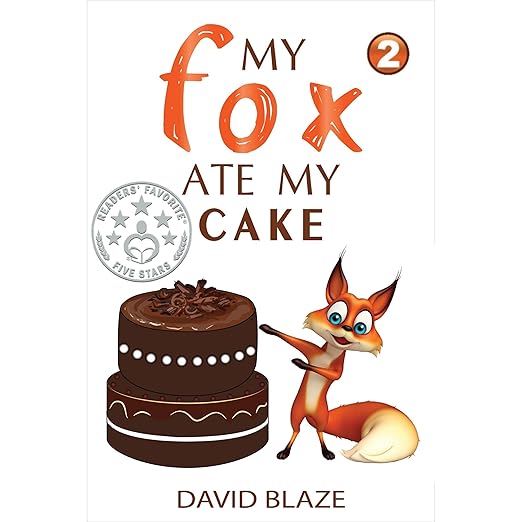
The setup for My Fox Ate My Cake begins after the events of the first book. Jonah Johnson, sixth-grader, is now best friends with a talking fox, which sounds like the kind of problem a lot of twelve-year-olds would welcome. The trouble arrives at Jonah’s birthday party, where the school bully Shane witnesses Fox actually talking. Now Jonah has to manage a secret that has gotten significantly harder to keep, while also dealing with Old Nelly’s rotten eggs, exactly the kind of additional complication that this series specializes in layering onto an already chaotic situation. The comedy is physical and situational rather than verbal, which matters for the audiobook format because it means the narration has to carry the slapstick without visual assists.
The Fundamental Problem With Virtual Voice and Comedy
I want to be direct about this. My Fox Ate My Cake is a comedy. Its appeal to children is built on funny situations, funny dialogue, and the inherently funny premise of a talking fox navigating sixth-grade social dynamics. Comedy in audio depends on timing: on the slight pause before a punchline, on the vocal quality that signals whether a character is hapless, scheming, or delighted by his own mischief. Virtual Voice narration cannot do any of this. The synthetic delivery flattens the registers that make the comedy land, and for a book whose primary appeal is its humor, that is a significant limitation worth knowing before purchase.
The existing reviews, all enthusiastic, appear to be print-book reviews rather than audiobook reviews, parents and children responding to the text itself rather than to this specific production. That distinction matters. The text is genuinely funny and age-appropriate. But listeners who come to this audio edition expecting the comedy to land in the same way it lands on the page will find the Virtual Voice delivery working against it rather than with it.
The Series and Its Genuine Strengths as a Text
Blaze designed the My Fox series with the reluctant reader explicitly in mind: accessible vocabulary, fast pacing, chapters short enough that a child can finish one before their attention drifts, and a protagonist whose problems are scaled to feel genuinely important without being adult-weighted. All of that is visible in the text of this second volume, and it carries over into audio even through the narration limitations. A child who has been read to rather than expected to listen independently, or who follows along with a print copy while the audio plays, will likely get more out of this than a child listening on their own in the car. The story’s energy is there. The voice to deliver it is not.
Frequently Asked Questions
Why is this comedy audiobook narrated by Virtual Voice rather than a human narrator?
Virtual Voice is Amazon’s AI-generated narration system, used for some titles in the Audible catalog where a human narrator recording was not produced or licensed. Whether a human-narrated version of this specific entry exists would require checking current Audible listings. For a comedy-dependent title like this, a human narrator would serve the material significantly better.
Do I need to read My Fox Ate My Homework first, or can I start here?
The books are largely self-contained, and reviewers report that children pick up the series at various points. That said, the first book establishes Jonah and Fox’s relationship in ways that add depth to the situations in this second entry. Starting from the beginning is recommended if it is accessible, but not strictly required.
The age range says 7-10, would a twelve-year-old find this too simple?
Almost certainly yes as a solo read. My Fox is pitched squarely at elementary ages and does not have the additional layers that keep older readers engaged. It is an excellent read-aloud for a younger sibling, or a comfort read for a child who wants something lighter, but not a primary title for middle schoolers.
Is there anything in this book that might concern parents, content, themes, or scary elements?
The series is clean and family-friendly throughout. The threat comes from a school bully and the risk of Fox’s secret being exposed, neither of which involves genuine danger. Old Nelly’s rotten eggs are played for comedy. Parents of sensitive children should note that the bully dynamic involves coercion, handled lightly but present in the narrative.