Quick Take
- Narration: Lily Reynolds handles both the male first-person narration and the emotional register of a romance built on delayed confession — her performance is fluid and appropriately charming.
- Themes: Professional loyalty versus personal desire, the bet as narrative engine and moral complication, celebrity isolation and its costs
- Mood: Warm, funny, and emotionally generous — contemporary romance that does not mistake lightness for shallowness
- Verdict: A satisfying standalone in the Morgan Brothers world, best appreciated by listeners already familiar with Lauren Rowe’s series and its established affections.
I have a complicated relationship with the bet-as-romance-device. In lesser hands, it reduces the love interest to the object of a wager, and the moment of revelation — when the person who has been bet upon discovers the truth — becomes the narrative’s central moral liability rather than its dramatic engine. Lauren Rowe is not writing with lesser hands, and Mister Bodyguard is a useful example of how to deploy a familiar romance mechanic without allowing it to cheapen the emotional investment the reader has made in the central relationship.
I listened to this one over two days during a work trip, which is the correct format for this kind of romance: airplane, hotel room, time when you want company that is warm and guaranteed not to disappoint. Lily Reynolds’ narration is a significant contributor to that effect. She is narrating from Zander Shaw’s first-person perspective, which is an interesting choice for a romance audiobook — male protagonist, female narrator — and she handles the gender-voice question with enough confidence that it stops being a question fairly quickly into the first chapter.
Zander Shaw and the Problem of Professional Ethics
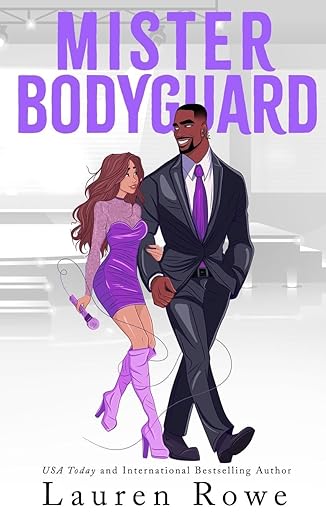
The setup is economical and openly comedic: Zander has been hired by his new boss not merely as bodyguard to a world-famous pop star, but as babysitter, bodyguard, and her human Valium, in the book’s own gleefully undignified characterization. His friends bet him he will not last a month without acting on his attraction. He bets they are wrong. The bet functions not as a deception of the female lead — she is not the object of the wager and does not know it exists — but as a way of externalizing the internal conflict that the professional arrangement creates for Zander independently of what anyone else knows about it.
This is a meaningful structural choice that Rowe makes deliberately. In romances where the love interest is the target of the bet, the third-act revelation forces a moral reckoning that the narrative has to work very hard to resolve in a way that feels honest rather than convenient. Here, the bet is between Zander and his friends, and the female lead’s agency is consequently preserved in ways that make the eventual relationship feel less compromised by the game-playing that preceded it. Rowe has been navigating the Morgan Brothers series for multiple books, and the craft visible in Mister Bodyguard reflects someone who has thought carefully about how these mechanics work and where they break down.
The Tour as Container
The three-month tour format is one of romance fiction’s reliable closed-system devices: forced proximity, physical intensity, professional constraints, and a built-in expiration date that pressures characters toward honesty before the container dissolves. Rowe uses the tour container well. The pop star setting, which could tip easily into the tabloid satire that a lesser version of this story would attempt, is handled with genuine interest in what celebrity isolation actually costs — the inability to move through public spaces freely, the management of image versus authentic self, the difficulty of trusting that attraction to a person who works for you is real rather than professional obligation performing as feeling.
The synopsis notes that the story moves from fun and games to dead serious, and that tonal shift is where Rowe’s skill is most visible. The comedic register of the early chapters is not abandoned but deepened as the tour progresses, and the emotional stakes that accumulate justify the shift without making it feel abrupt or tonal jarring. Reynolds’ narration tracks this progression well — the warmth she brings to the lighter early passages is the same warmth that makes the more serious passages land, because it was never just comedy warmth, it was character warmth throughout.
The Morgan Brothers Series Context
Zander Shaw is positioned in the series as Keane Morgan’s best friend and honorary Morgan brother, which means existing fans arrive at this book with pre-existing affection for the character from his appearances in earlier volumes. Rowe is writing for that audience primarily, and the payoff of Zander finally getting his own story is most fully available to readers who have watched him in supporting roles across multiple books and wondered about him. New listeners are not excluded — the book functions as a standalone — but the specific pleasure of an extended series character getting a full romantic arc is partly reserved for those who already know him.
At 10 hours and 20 minutes with a 4.7 rating across more than 1,200 listeners, the book’s reception confirms what the premise and execution suggest: this is a romance that delivers on its promises without surprising you in ways that require prior risk. That is not faint praise. In a genre where the contract between author and reader depends on reliability as much as craft, consistent delivery is exactly the right thing to be consistent about.
Who Should Listen and Who Can Skip It
Listen if you enjoy friends-to-lovers contemporary romance with a competent, funny male protagonist and a professional constraint that creates believable tension without requiring either party to behave in ways that damage them. Listen if you are already in the Morgan Brothers series and want Zander’s story — Rowe has set up this particular payoff across several volumes, and the delivery is clean. Lily Reynolds’ narration is warm and consistent throughout, which is the right quality for a book whose charm depends on sustained trust between narrator and listener. Skip it if you need complex moral ambiguity or narrative unpredictability — this is a comfort romance, and its pleasures are the pleasures of craft rather than risk.
Frequently Asked Questions
Does Mister Bodyguard work as a standalone or do I need to have read the Morgan Brothers series?
It functions as a standalone with a complete romantic arc. However, Zander Shaw has appeared as a supporting character in earlier Morgan Brothers books, and the specific pleasure of a beloved side character receiving his own story is most available to readers already familiar with the series. New listeners will not be lost, but existing fans will get more from the experience.
How does Lily Reynolds handle the first-person male narration — is it convincing?
Reynolds handles it with enough confidence that the gender-voice question fades quickly. Her approach is less about vocal impersonation of a male voice and more about inhabiting Zander’s emotional perspective, which is the right priority for romance fiction. The narration feels consistent and warm throughout.
Is the bet mechanic handled responsibly — does the female lead find out, and how is that handled?
The structural design places the bet between Zander and his friends rather than positioning the female lead as the object of the wager, which preserves her agency and avoids the moral liability that bet romances often create. This is a deliberate choice by Rowe that distinguishes Mister Bodyguard from less carefully constructed versions of the same device.
How explicit is the romantic content in this audiobook?
Rowe writes in the upper range of contemporary romance heat, and Mister Bodyguard is consistent with her typical approach. The physical relationship between the characters is described with some explicitness. Listeners who prefer fade-to-black romance should be aware of this, while readers comfortable with the genre’s standard heat level will find it appropriate.