Quick Take
- Narration: Lila Winters is a reliable match for Lucy Score’s comedic small-town voice, keeping the humor landing and the emotional beats grounded through seventeen-plus hours.
- Themes: commitment avoidance and its costs, small-town community as both trap and anchor, finding yourself in the wrong story
- Mood: Chaotic and warm, with genuine emotional depth underneath the comic surface
- Verdict: A Lucy Score novel that delivers on the author’s established strengths while giving Zoey enough interior complexity to elevate her above the standard fish-out-of-water heroine.
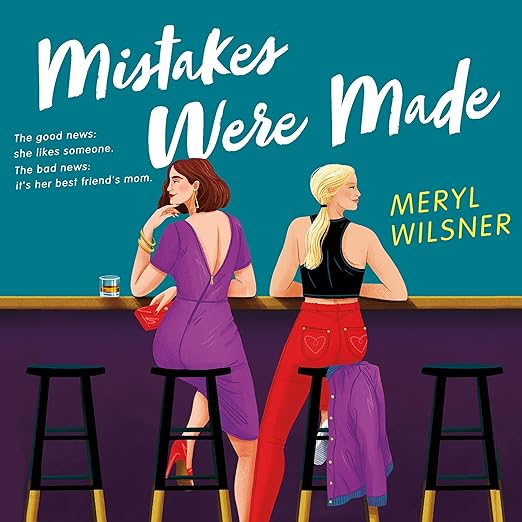
I started Mistakes Were Made on a Sunday evening with the intention of listening for an hour before going to sleep. Three hours later I was still on the couch, having completely lost track of time while Zoey Moody tried to make a life in a small Pennsylvania town she had not chosen and a converted barn she absolutely had not imagined. Lucy Score writes romantic comedy the way good comedic writers handle the form: the laughs are real, but they are not the whole point, and the characters underneath the comedy are specific enough to carry weight when the story needs them to.
The Gilmore Girls meets Schitt’s Creek framing that the synopsis offers is accurate in spirit if not precise in specifics. Zoey is a Manhattan literary agent who has been effectively exiled from the publishing world she built her identity around, forced to relocate to Story Lake with her best friend and only remaining client. The circumstances that produced the exile are not the book’s primary concern; what Score is interested in is who Zoey is when the professional armor is stripped away and she has to figure out what she actually wants. That is a more interesting question than the surface setup suggests, and Score stays with it throughout rather than using it as a pretext for the romance.
Gage Bishop and the Problem With Perfect
Gage is the kind of hero that contemporary romance has learned to write more thoughtfully in recent years. He is not a brooding mystery; he is a man who has thought clearly about what he wants from life and is now working his way toward it. He practices law part-time and does construction with his brothers, he lives in a converted barn with a golden retriever that does not understand personal space, and he is ready to settle down with someone who shares his values. When Zoey arrives in Story Lake, she is the opposite of what he has planned for. Score is careful not to make Gage’s certainty about his future a character flaw, which would have been the easy move. Instead, she makes it a genuine quality that gets tested by the reality of who he falls for.
The opposition between them is not simply opposites-attract chemistry, though the chemistry is present and effective. It is also a structural question about whether plans and people are always compatible, and what you give up and gain when you let the unexpected reconfigure your expectations. Score takes this question seriously without making the book heavy. The novel’s comic set pieces, Zoey and the town’s resident bald eagle being a particular highlight for multiple reviewers, maintain a tonal balance that keeps the emotional content from overwhelming the entertainment.
The Character Detail That Elevates This Entry
One reviewer flagged something in the book that deserves specific acknowledgment. Zoey’s chaos is not purely a personality quirk used for comic effect; it is written with an awareness that makes sense within a specific reading of her character that the book develops carefully. A reviewer who shared their own experience of discovering ADHD in their early forties connected with Zoey on that basis, and the connection reframes the character from lovable disaster to someone with a specific relationship with her own mind and her choices about how to manage it. Score does not frame this explicitly in clinical terms, but the portrait is specific enough to resonate with readers who recognize the experience.
This is the kind of characterization that separates Score’s best work from the standard romantic comedy formula. Zoey is not chaotic because chaos is charming; she is chaotic because of how her mind works and what she has found functional and dysfunctional over the course of her life. When the relationship with Gage forces a reckoning with what she has been avoiding, it does not read as a character flaw being corrected but as a person facing something real about themselves.
Seventeen Hours with Lila Winters
At seventeen hours and thirty-two minutes, Mistakes Were Made is a substantial audio commitment, and Lila Winters carries it. Score’s writing has a momentum that works particularly well in audio; the banter-heavy scenes have rhythm that benefits from performance, and the quieter emotional moments require a narrator who can slow down without losing the listener. Winters manages both. Multiple reviewers noted that the audio version enhanced the experience, which is not always the case with longer contemporary romances where the narration can feel like it is adding length without adding value.
This is book two in the Story Lake series, and one reviewer offered the sensible advice that reading Story of My Life first enriches the experience considerably because the main and side characters are all so lovable by the time you arrive at Zoey and Gage’s story. The book functions as a standalone in terms of plot, but the emotional payoffs are amplified by familiarity with the world Score has built around Story Lake and the Bishop brothers, who emerge as a genuinely charming ensemble in their own right.
For Fans of Score’s Work and Those Coming to It Fresh
Readers who have loved Score’s other small-town comedies will be in comfortable and generous territory here. Mistakes Were Made is among her better recent efforts, with Zoey in particular being one of the more fully realized of her heroines. New readers have an argument for starting here: the writing quality is high, the comic timing is strong, and the emotional depth is present enough to make this more than a light listen. It is a seventeen-hour audiobook that does not feel seventeen hours long, which is perhaps the best thing you can say about a book of this length and genre.
Frequently Asked Questions
Does Mistakes Were Made work as a standalone, or is Story of My Life required reading first?
It works as a standalone in terms of plot, since Zoey and Gage’s story is fully contained here. However, reading Story of My Life first adds considerable emotional texture, since the side characters from book one appear throughout and their established relationships with Zoey enrich the reading experience.
How does the book handle the Gilmore Girls and Schitt’s Creek comparison made in the synopsis?
The comparison is accurate in spirit: fish-out-of-water protagonist, small community with distinct personalities, comedy generated from the collision of different worldviews. Score is not derivative of either show but occupies a similar tonal territory, where warmth and sharp writing coexist without either undercutting the other.
At seventeen and a half hours, does the pacing stay consistent throughout, or does the middle section sag?
Multiple reviewers noted being hooked immediately and unable to stop, which suggests Score maintains momentum throughout the runtime. The comedic set pieces are distributed throughout rather than front-loaded, and the emotional development builds steadily rather than stalling in the middle. It is a long audiobook that does not feel its length.
Is Lila Winters’ narration a good match for Lucy Score’s style, and does it hold up across the full runtime?
Winters narrates with a style that suits Score’s comedic voice well, delivering the banter with timing that works in audio and managing the emotional beats with enough restraint to make them land. For a seventeen-hour listen, her consistency is genuinely important, and reviewers specifically praised the audio version as enhancing rather than merely conveying the text.