Quick Take
- Performance: Troy Duran handles the bodyguard-romance register with appropriate warmth and keeps the thriller elements grounded, a solid match for Kenya Wright's pacing style.
- What it covers: Childhood connection rekindled, professional boundaries and desire, stalker threat as pressure test
- Feel: Slow-burn romantic with suspense undercurrent and Jamaican cultural texture
- Our call: A character-driven multicultural romance with a stalker-thriller framework, better for the relationship story than for the mystery, and honestly that is the right priority.
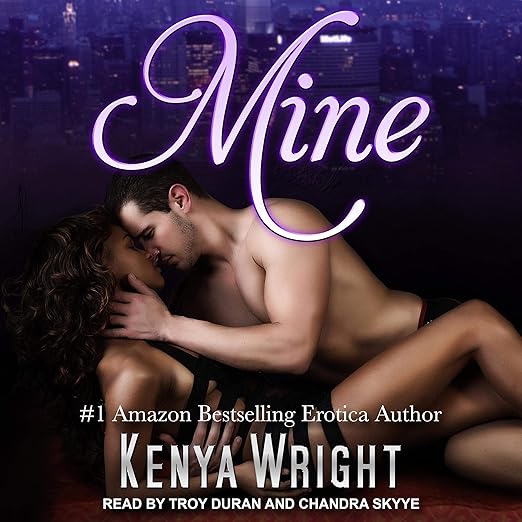
Mine came to me on a recommendation from a reader who described it as a bodyguard romance that actually cares about the bodyguard's psychology rather than just his presence, and that characterization is largely accurate. Kenya Wright has built a solid reputation in multicultural romance, and this standalone delivers what she does best: complex characters with specific cultural roots and a romance that develops from genuine history rather than plot convenience.
Hunter and Zola grew up together, lost contact, and are reunited under the most pressurized circumstances imaginable. He is now the best in the business as a protective detail specialist, and she is a runway model with a psychotic stalker who has been ransacking her apartment and sending threatening letters. The childhood-friendship-to-adult-desire dynamic gives the romance a different emotional register than the standard bodyguard setup, because there is actual loss to recover from alongside the new chemistry to navigate. That shared past is the engine of the book, not just context for the thriller plot.
Where This One Lands
The novel is upfront about its central tension: Hunter is supposed to be protecting Zola, and his desires for her are getting in the way of him doing his job. Wright does not romanticize this as pure tragic conflict. She allows it to be messy and occasionally embarrassing in ways that feel true to how attraction actually interferes with competence. Hunter breaks rules. He knows he is breaking them. The reader knows too. The question is whether the fallout justifies the breaking, and Wright earns the answer by keeping the stakes real throughout rather than manufacturing easy resolutions.
The stalker subplot exists to pressure this professional failure in specific ways. It is not the novel's most sophisticated construction, and at least one reviewer notes that the identity of the stalker is apparent fairly early if you are paying attention to narrative setup. Wright has a reputation, per one regular reader of her work, for enjoying throwing readers for a loop, but the plot twist here is described by that same reader as so ridiculous it was comical. That is an honest assessment. The stalker resolution prioritizes emotional impact over mystery rigor, which is a valid choice for a romance but worth knowing in advance.
What Makes Mine Worth Hearing
The Jamaican cultural texture in Mine is one of its strongest qualities, and one reviewer describes being personally moved by it precisely because of their own Jamaican background. Wright does not use cultural identity as decoration. It informs how Zola thinks about family, loyalty, and what she deserves from the people in her life, which in turn informs how the romance develops and what her eventual choices cost her emotionally.
Zola as a runway model navigating both professional aspiration and genuine physical threat is more carefully drawn than the synopsis suggests. Wright gives her a full internal life rather than positioning her primarily as someone who needs Hunter's protection. The scenes that build toward their eventual relationship work because Zola is making active choices rather than responding to Hunter's initiative alone. That dynamic is what lifts the book above genre standard, and it is what gives the emotional payoff its weight when it arrives.
What Gives Us Pause
Troy Duran handles the dual registers of Mine with competence. The suspense sections and the romantic sections ask for different kinds of tension, and he navigates the shifts without the transitions feeling jarring. The early sections of the book, which several reviewers note take time to build toward the central romance, benefit from his measured approach, though listeners looking for immediate heat should be aware that Wright is building toward her payoffs rather than opening with them.
At just under nine hours, Mine is a comfortable single-sitting listen for romance readers who have a full afternoon available, or a pleasant two-session experience for those with shorter windows. Wright delivers emotional range within that runtime, and the reviewers who describe crying, smiling, and frustration within the same listening experience are accurately capturing the ride. The ending is earned rather than convenient, which is the most important thing a romance novel can deliver.
Kenya Wright writes characters who feel like they have earned their happiness rather than simply been assigned it by genre convention. For readers interested in multicultural romance that centers Black characters with specific cultural identities and genuine psychological depth, Mine is a strong representative of what the genre can accomplish when its author takes both the characters and the cultural context seriously. Troy Duran's performance makes Hunter's internal conflict feel real across the full nine hours, which is the performance achievement the book requires most.
The Right Listener for Mine
Mine is a romance novel first and a thriller second. If you approach it with that hierarchy clearly in mind, you will finish it satisfied. Hunter and Zola's relationship is the book's primary achievement, and Wright gives it the space and emotional specificity it needs to land. The stalker plot is functional but not surprising, and the mystery resolution is more emotionally motivated than logically constructed.
The pacing before the central romance fully develops requires patience from listeners who prefer faster-burning stories. Several reviewers note the build takes time, and Wright is more interested in earning the desire than in manufacturing it quickly. That choice pays dividends in the final act but demands investment in the early chapters that some romance readers will find slow. If you have enjoyed Wright's other work, this pacing will feel familiar and welcome. If this is your first Kenya Wright novel, give it the full first third before deciding whether the story is for you.