Quick Take
- Narration: Julian Horeyseck handles the German text with natural rhythm and distinct character voices — he brings appropriate energy to the enemies-to-lovers banter without overplaying it.
- Themes: reluctant cohabitation and slow-burn attraction, emotional armor as defense mechanism, the comedy of enforced proximity
- Mood: Light and fast — a good-natured novella that knows exactly what it is
- Verdict: A fun palette cleanser for German-language CoHo fans, though the brevity leaves the character work thinner than a full novel could support.
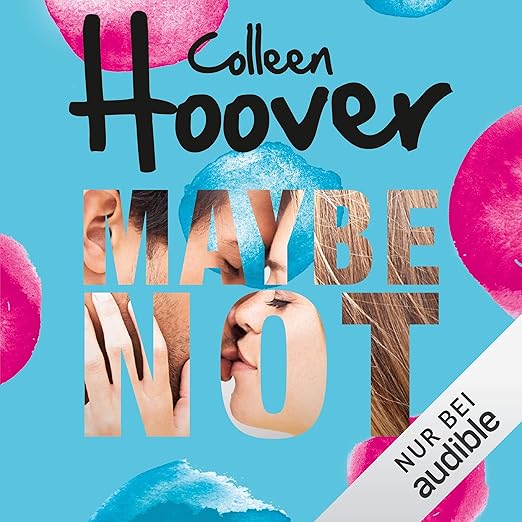
A quick note before anything else: this is a German-language Audible exclusive. The metadata confirms it, and at least one English-speaking reviewer received it with evident frustration — the review begins with the pointed observation that the audiobook is in German and that the English version was wanted instead. If you are looking for an English audiobook version of Colleen Hoover’s Maybe Not, this is not it. What this is, for German-speaking listeners, is a professional production of the Maybe-Reihe’s second installment — a novella-length spin-off from Maybe Someday centered on the side characters Warren and Bridgette.
I listened to this during a Saturday morning where I had about three and a half hours to spare before other obligations, which turned out to be ideal. Maybe Not is not a book that rewards deep attention or stretches over multiple listening sessions. It is brisk, deliberately light, and knows that its primary job is to deliver the enemies-to-lovers setup that the first book’s fans were clearly curious about. At three hours and thirty-nine minutes, it accomplishes exactly what it sets out to do — though what it sets out to do is more modest than some readers who loved the first book were expecting.
Warren and Bridgette: The Side Characters Get Their Turn
Colleen Hoover’s instinct for creating supporting characters who feel more interesting than their narrative function requires is visible here. Warren is the kind of charming-disaster male lead she does well — confident, funny, accustomed to getting what he wants, and genuinely surprised when Bridgette refuses to play along with his assumptions about how things work. Bridgette’s coldness toward him is established quickly and efficiently, and the book does not waste much time before making clear that the hostility is doing significant emotional work for both of them. The bathroom-sharing dynamic is played for comedy and for tension in roughly equal measure, which is the correct proportion for material of this kind.
German reviewers who engaged with the book noted that the CoHo writing style translates effectively into German — described by one reviewer as fluffy, flowing, and visually vivid, using exactly the same qualities that have made Hoover’s books so popular in the original English. The challenge the novella format presents is that it restricts how deeply the story can go into either character, and several reviewers expressed genuine disappointment that the book was over so quickly, having expected something closer to a full novel in length and depth. That expectation is fair to name as a potential frustration for readers arriving with the assumption that a book in a series would be a full-length book.
The Maybe Series in Context: Why This Gap Matters
It is worth situating Maybe Not within the broader pattern of how Hoover has used novellas and short spin-offs across her catalog. She has frequently returned to secondary characters from earlier books and given them their own shorter stories — it is a commercial strategy, certainly, but it is also evidence of genuine attachment to the people she creates. Warren and Bridgette are vivid enough in Maybe Someday that many readers arrived at this spin-off already emotionally invested, which is both what makes the novella work and what makes its brevity frustrating for those who wanted the full treatment. The enemies-to-lovers format compresses naturally into shorter forms; the character depth that makes those formats emotionally resonant requires time the novella format cannot always provide.
Julian Horeyseck’s Narration: Comedy and Chemistry
Horeyseck’s performance is a genuine asset to the audiobook. He manages the male perspective in a way that is charming without being smug, which is the key calibration challenge for a character like Warren whose appeal depends on him being genuinely likable rather than just confident. The banter between Warren and Bridgette requires timing — the moment either side of a comedy exchange lands too heavily, the whole thing deflates — and Horeyseck delivers that timing with what sounds like real enjoyment of the material. One reviewer in Germany observed that the series started strongly with the first book and that arriving at a second volume of significantly shorter length felt like a bait-and-switch. That criticism has real validity and is worth knowing about before purchasing. German-speaking CoHo fans who have already encountered Maybe Someday will find this a satisfying short addition to the world; those who are new to the series should start with the first book, which provides the context for why Warren and Bridgette as a pairing makes emotional sense.
Frequently Asked Questions
Is this audiobook in German or English?
It is in German. This is an Audible-exclusive German-language production. The English version of Maybe Not by Colleen Hoover is available on other platforms. At least one English-language reviewer received this and was confused, so confirming the language before purchase is strongly advisable.
Do I need to read Maybe Someday first to enjoy Maybe Not?
It helps considerably. Warren and Bridgette are introduced as secondary characters in Maybe Someday, and the emotional resonance of their storyline benefits from knowing the context of the friendship group. The novella can technically be read as a standalone, but some of the connective tissue between characters will be thinner without the first book.
How does Julian Horeyseck handle the German narration for a Colleen Hoover story?
Horeyseck is well-suited to this material. He brings natural timing to the comedic exchanges and differentiates Warren and Bridgette’s voices clearly in a way that makes the single-narrator format work. German CoHo fans who have heard other German productions of her work should find this consistent in quality.
Is the content appropriate for younger CoHo readers, or is it as explicit as some of her other work?
Maybe Not has some sexual content — it is not a fade-to-black novella. Reviewers describe it as intense rather than graphic. Younger readers in their mid-teens should check with a parent first, though the content is considerably less explicit than some of Hoover’s other work in the adult contemporary romance category.