Quick Take
- Narration: Virtual Voice (AI-generated narration). The absence of a human narrator is a real limitation for paranormal romance, a genre where emotional delivery matters.
- Themes: midlife paranormal romance, wolf shifters, secrets and trust
- Mood: Fast-paced and emotionally pressured, though the cliffhanger ending divides readers
- Verdict: Works well as a quick series continuation for invested readers of book one; the AI narration is the main obstacle for new listeners.
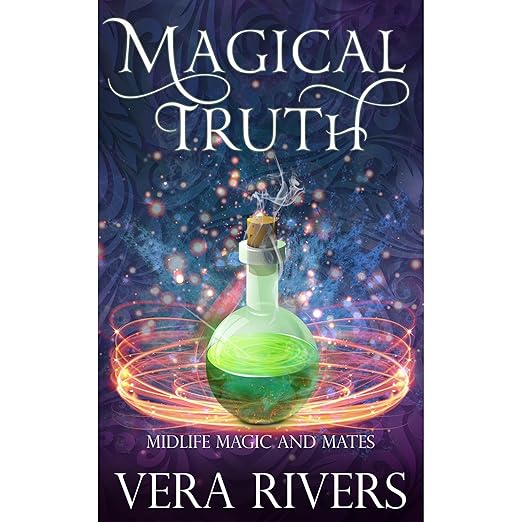
Magical Truth is the second book in Vera Rivers’s Midlife Magic and Mates series, and it arrives with the genre’s characteristic velocity. I went in having not read the first installment, and I will say upfront: that is not the recommended approach. Rivers picks up mid-story, drops you into Molly’s expanding powers and the growing hostility of the Ashpoint pack, and assumes you already understand why Ryker matters and what Molly is trying to protect. The synopsis itself notes the series is best read in order.
The midlife paranormal romance is a growing subgenre, and Rivers is one of its more prolific practitioners. The premise gives the romance a particular texture: Molly is not a twenty-something discovering her powers for the first time. She is navigating power, desire, and danger at a life stage where the stakes feel different, the patience for drama is shorter, and the value of the right partner is understood rather than idealized. When it works, that framing adds weight to the romance. When it does not, the familiar paranormal beats can feel hollow.
Our Take on Magical Truth
The narrative engine here is pressure. Something is always wrong. The Ashpoint pack escalates. A dark force works actively to separate Molly and Ryker. Her powers grow unpredictably. Her business is at risk. Her sanity is at risk. The four witches in her support circle are the closest thing to a stabilizing element, but even that support is tested. Rivers stacks complications efficiently, and for readers who are already invested in Molly’s arc, that stacking creates the page-turning urgency the genre promises.
Reviewers respond to the pacing with enthusiasm. One describes flying through the book without stopping; another calls it a wild ride. The central complaint from the more critical review concerns Molly’s choice to lie about a pregnancy, which the reviewer found frustrating enough to affect their rating. That kind of secret-keeping is a structural tool Rivers uses to maintain tension between Molly and Ryker, but it is the kind of device that requires the reader’s buy-in to succeed. If the secrecy reads as contrived rather than emotionally motivated, it pulls against the romance rather than feeding it.
Why Listen to Magical Truth
For series readers, the continuation of Molly and Ryker’s arc is the primary draw, and Rivers delivers more of what made book one work: fast pacing, an expanding magical world, and a romantic dynamic that has enough friction to stay interesting. The book does not coast on goodwill from its predecessor; it builds the stakes and moves the relationship forward even as it complicates it.
The six-hour runtime keeps the story from overstaying its welcome. Rivers writes efficiently within the episode structure, and the book functions well as a single installment of an ongoing series rather than demanding to be evaluated as a standalone.
What to Watch For in Magical Truth
The narrator listed is Virtual Voice, which is Audible’s AI-generated narration program. For paranormal romance, a genre where the emotional delivery of intimate scenes and high-tension confrontations is part of the product, AI narration is a genuine limitation. The text carries the story, but the vocal performance cannot provide the warmth or urgency that human narrators bring to this material. Listeners who are sensitive to AI narration quality should factor this in before purchasing.
The cliffhanger ending is noted by multiple reviewers and is explicitly flagged in the synopsis. This is a design choice rather than an accident, but it is worth knowing going in. Readers who prefer self-contained romantic arcs will find the ending unsatisfying. Those who are comfortable with episodic series structure will accept it as part of the commitment.
Who Should Listen to Magical Truth
This is for existing readers of the Midlife Magic and Mates series who want to continue Molly’s story. Also suited to paranormal romance listeners comfortable with AI narration and with series that use cliffhangers as a structural tool.
Not recommended as a series entry point. Also not recommended for listeners who find AI narration distracting in emotionally demanding scenes, or for those who prefer their romance arcs to resolve within a single volume.
Frequently Asked Questions
Can Magical Truth be listened to without reading the first book in the series?
Technically yes, but the book assumes familiarity with Molly, Ryker, the Ashpoint pack, and the established world-building. Starting here will leave significant gaps in context. The author recommends reading in order.
How significant is the cliffhanger ending?
Significant enough that the synopsis warns about it explicitly and multiple reviewers mention it. The central conflict with the dark force is not resolved, and the romantic tension is left open. If cliffhangers frustrate you, this series structure will be a recurring issue.
How does the Virtual Voice AI narration affect the listening experience for this genre?
Paranormal romance is a genre where vocal performance of emotional and intimate scenes matters. Virtual Voice handles the plot competently but cannot deliver the warmth and dynamism of a skilled human narrator. It is a noticeable limitation for this type of content.
Is the midlife romance framing a significant part of the story, or mostly background?
It informs Molly’s perspective and decisions throughout rather than being explicitly foregrounded in every scene. The midlife context shapes her relationship with her powers and her ambivalence about depending on Ryker, but the paranormal action takes up most of the runtime.