Quick Take
- Narration: Annalee Scott brings warmth and emotional range to Ava, capturing both the character’s anxiety and her growing strength without overplaying either quality.
- Themes: Found identity in a new world, slow-burn romance, destiny versus agency
- Mood: Immersive and romantically charged, emotionally satisfying with genuine stakes
- Verdict: An excellent second-book listen that deepens everything the first installment established, particularly for readers who want a romantasy with an adult, emotionally complex female lead.
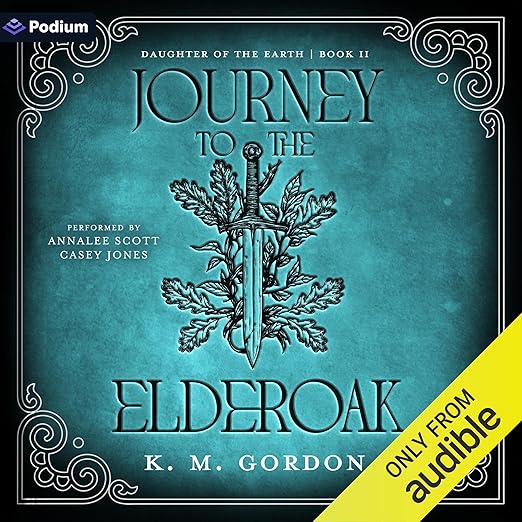
I came to this one having not read the first book in the Daughter of the Earth series, which is not how I would recommend approaching it, and I will say so clearly: Journey to the Elderoak is a sequel, and the story picks up mid-arc. Reviewers are consistent on this point, and one explicitly told new readers to go back and start with book one before opening this. With that caveat entered, I listened to enough of it to understand why readers who had made that investment were effusive in their responses. The world K. M. Gordon has built in the realm of Eorhan feels lived-in and layered in ways that take time to establish, and book two benefits enormously from that prior investment.
Gordon is writing a romantasy that takes its heroine seriously. Ava is in her thirties, which reviewers mention specifically and with genuine relief, because the romantasy space so frequently defaults to protagonists whose emotional immaturity is presented as an endearing quality rather than a problem to be addressed. Ava’s anxieties are real and adult; her courage is earned rather than innate; and her relationship with Casimir, the broody Earth Kingdom general assigned to train her for the journey to the Elderoak, develops with the kind of slow deliberateness that makes eventual payoff feel genuinely meaningful rather than manufactured.
Our Take on Journey to the Elderoak
Annalee Scott narrates, and she is genuinely well cast. Scott captures Ava’s combination of vulnerability and developing confidence without making either quality feel performed or overemphased. The anxious moments land because they are grounded rather than melodramatic; the moments of strength register because Scott has built the character’s voice steadily toward them over eleven hours and forty-three minutes. Sustaining that kind of tonal arc across a long audiobook is not easy, and Scott manages it.
The world-building in Eorhan continues to develop here, with the threat of the daemon queen and the significance of the Elderoak given proper narrative weight alongside the romantic tension. Gordon is not sacrificing plot for romance or romance for plot, the stakes feel genuine on both fronts, which is a harder balance to achieve in the genre than it looks from the outside.
Why Listen to Journey to the Elderoak
The slow burn. Multiple reviewers mention it, and it is earned rather than manipulative. Gordon builds Ava and Casimir’s dynamic through training, proximity, shared danger, and genuine conflict rather than manufactured misunderstandings, which means the tension never feels cheap or contrived. One reviewer described Ava as entering her villain era toward the end of the book, with tension described as deliciously teasing, a characterization that suggests the third book will take the series somewhere genuinely interesting and worth the wait.
The detail around Ava’s transformation to Fae, a development that allows her to finally stop being the clumsiest protagonist in recent romantasy memory, as one reader noted with considerable and affectionate humor, is handled with care. It represents genuine character change rather than a cosmetic upgrade, and it opens new dynamics in the world that Gordon seems fully prepared to explore in the next installment.
What to Watch For in Journey to the Elderoak
This is emphatically a series listen. Picking up here without book one means missing the context for Ava’s trauma, her discovery of her family’s origins in Eorhan, and the emotional weight of her arrival in the realm. The payoff in book two depends significantly on that earlier investment, characters and relationships that carry weight here are only carrying it because of what happened before. Listeners who prefer standalone fantasy romance rather than multi-book arcs will find the structure frustrating and likely confusing in the early chapters.
The content warnings note mature content, with a complete list available on the author’s website. Listeners who prefer their romantasy clean or with minimal darkness should check those warnings before starting, as the series does not position itself as light or closed-door.
Who Should Listen to Journey to the Elderoak
Readers who completed the first Daughter of the Earth book and want to know what happens next will find this a rewarding and emotionally satisfying continuation. For those new to the series, start at the beginning, this is not a review that will convince you to skip that step. This is particularly well suited to listeners who want a romantasy with a mature female lead, carefully developed romantic tension, and genuine world-building stakes, and who are prepared to invest in a multi-book arc rather than a self-contained story with tidy resolution.
Frequently Asked Questions
Can I listen to Journey to the Elderoak without having read or listened to book one?
Not advisably. This is a direct sequel, and the emotional and narrative context from book one is essential. Multiple reviewers specifically recommend starting the series from the beginning.
How slow is the slow burn in this book?
Very slow, by design. Reviewers praise this as a strength, the tension between Ava and Casimir builds through training and proximity rather than forced drama. If you prefer faster romantic resolution, this may test your patience.
Is Ava an unusual FMC for the romantasy genre?
Yes, she is in her thirties, which reviewers specifically flag as a refreshing change. Her anxiety and courage are framed as adult and earned, rather than as youthful impulsiveness.
Does Annalee Scott narrate the entire Daughter of the Earth series?
She narrates this second entry. Whether she continues across the full series would require checking the individual book listings, but her performance here is specifically praised by reviewers.