Quick Take
- Narration: Ramsey Faragallah reads with disciplined restraint, letting the density of Darwish’s prose-poetry land without interference.
- Themes: Exile and longing, mortality and self-witness, home as memory
- Mood: Still, luminous, and quietly devastating
- Verdict: One of the most serious and rewarding four-hour listens you will find anywhere.
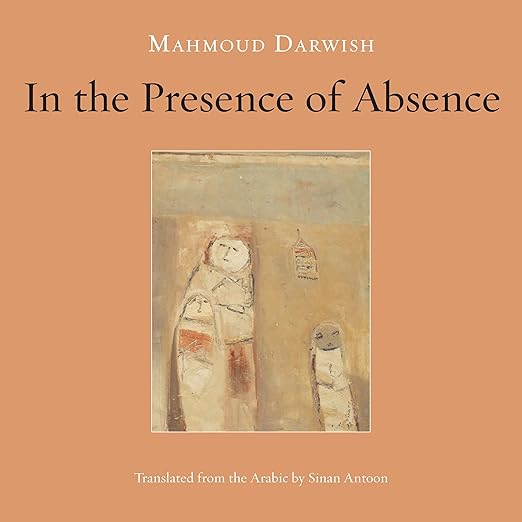
I was in the middle of a dense week of reviewing when I put on In the Presence of Absence, expecting a quiet interlude. Four hours and ten minutes later I sat still for a long time. Mahmoud Darwish composed this work knowing his death was approaching, and that knowledge saturates every sentence without ever tipping into sentimentality or despair. It is a self-elegy written in the second person, the poet addressing himself across a threshold he knows he is approaching.
Hearing it rather than reading it is a fundamentally different experience. The text is prose-poetry, which means its cadence matters enormously, and Ramsey Faragallah’s reading makes those rhythms audible in ways a silent page cannot fully convey.
Our Take on In the Presence of Absence
This is one of the stranger and more rewarding listening experiences I have written about on AudiobookDaily. Darwish won the National Translation Award in 2012 for the English-language version, translated by Sinan Antoon, and the quality of that translation is everywhere apparent. Antoon has rendered the original’s layering of formal Arabic literary tradition with modern lyric sensibility into English without flattening either register.
The book inhabits what the synopsis accurately calls a rare space where opposites bleed and blend. Prose and poetry refuse separation. Life and death occupy the same sentence. Palestine as lived geography and Palestine as memory and longing coexist without hierarchy. Darwish is not arguing for any political position; he is recording a consciousness aware of its own impermanence and finding that the two things most entwined in that consciousness are love and exile. Listeners who encounter it as a political document will miss the far more personal register that makes it extraordinary.
Why Listen to In the Presence of Absence
Ramsey Faragallah is the right reader for this text. He has the discipline to serve language this dense without ornament, and the patience to let Darwish’s repetitions and returns accumulate rather than rushing past them. The audio engineering credit to Sam Platt matters here too. The recording is clean and intimate, which suits material this private in its origins.
At four hours and ten minutes, the audiobook is brief by any commercial standard but demands a different quality of attention than most titles of that length. This is not background listening. It requires the kind of quiet and focus that most of us have to deliberately construct. That ask is worth honoring. One reviewer called it a masterpiece and noted the difficulty of description, which is an honest response to Darwish. Language about language this precise tends to fall short.
What to Watch For in In the Presence of Absence
The second-person address can initially disorient listeners unfamiliar with the mode. Darwish speaks to himself as if from outside, a distancing strategy that becomes moving rather than alienating once you understand its purpose. He is observing his own life the way a biographer would, with both intimacy and necessary separation.
The meditations on home and exile are among the most precise in any language, but they are not simple. Darwish does not give the reader comfortable resolution. The sense of belonging he describes is perpetually deferred, perpetually alive. Listeners expecting narrative progression through Darwish’s life will find instead a spiral structure, returning to the same themes from different angles of light. Lean into that structure rather than waiting for it to resolve.
Who Should Listen to In the Presence of Absence
This audiobook is for readers who come to poetry regularly and want to hear what that form sounds like at the edge of a life. It is for anyone interested in Palestinian literature, in the intersection of personal elegy and historical witness, or in what prose can do when writers refuse to separate it from verse. It is not for listeners seeking linear narrative or accessible entry points to literary nonfiction.
Go into it prepared for density, for beauty that requires effort, and for a voice saying goodbye so carefully that it refuses to make that goodbye feel like an ending.
Frequently Asked Questions
Is it necessary to know Darwish’s poetry before listening to this audiobook?
Prior familiarity helps with context, but In the Presence of Absence works as a standalone. Darwish is addressing his own existence rather than referencing specific earlier poems, and the audiobook is self-contained as a listening experience.
Does Ramsey Faragallah’s voice suit the formal register of Darwish’s prose-poetry?
Yes. Faragallah brings a measured, unhurried quality that honors the text’s density. He does not perform the emotion but allows it to surface through the language itself, which is the right choice for this material.
Is In the Presence of Absence appropriate for listeners new to Arabic literary traditions?
It is accessible but not easy. Sinan Antoon’s translation makes the language navigable, and the audiobook includes a PDF supplement in the Audible library. Some cultural and literary context enriches the experience but is not strictly required.
How does this compare to listening to Darwish’s shorter lyric poems?
This is longer, more meditative, and more sustained than his individual poems. It reads as one extended piece with recurring motifs rather than a collection, which makes the audio format particularly well-suited to it.