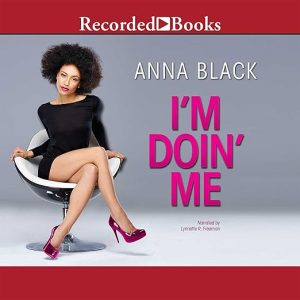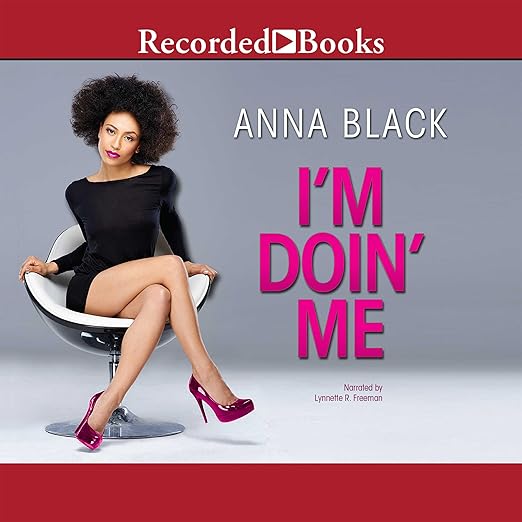
Anna Black knows exactly what the audience came for, and this audiobook delivers it without a word of apology: a woman at the top of her profession, a betrayal in her own bedroom, and a rival whose father owns a network. Tiffany Richardson is executive producer and head writer on a hit series called Boy Crazy when the show gets cancelled and her partner gets caught, both on the same day. Recorded Books released the reading in February 2015, with Lynnette R. Freeman on the credit.
Engineering rather than discovery produced this plot, and that is not a complaint. Tiffany takes her cancelled show around every network in town and gets nowhere until TiMax bites, a cable outfit run by Langley Green. Langley's daughter Tressa happens to be engaged to Kory Banks, who happens to be the high school crush Tiffany never resolved. Every element of the obstacle is now welded to every element of the opportunity, which is a piece of construction most literary novels would quietly envy. Nothing in the setup is subtle, and subtlety is not what the book is selling. What it sells is the pleasure of watching a competent person be systematically obstructed by people with better connections.
What Black does well is escalation. Tressa is described as the queen of Los Angeles and behaves accordingly, working to keep the wedding on schedule and the show off her father's network at the same time. Tiffany, meanwhile, chooses the career, and that is the decision that makes the book more interesting than its premise. Romance is the engine, but the professional stakes are real and never get resolved by somebody else's generosity. The professional plot is what separates this from most of the shelf around it, because books in this register usually treat the job as a costume rather than as a problem.
Hopal2003, five stars in September 2013, framed the central relationship in the terms the book actually uses: two friends who find each other again and then fight against giving in to a love they were too shy to claim when they were young. That response also names the thing keeping the pages turning, which is Tressa, and specifically the fact that what Tressa wants out of the reunion is not Kory at all.
Why I'm Doin' Me Works as an Audiobook
Contemporary drama of this kind is built for audio. Dialogue carries the plot, the emotional beats are announced rather than implied, and the scenes stay short enough that a listener never has to reconstruct a paragraph. Eight hours moves quickly when a book is arranged as a run of confrontations rather than as a slow accumulation, and this one is arranged exactly that way, each scene ending with somebody having decided something. What audio takes away is the ability to skim past a confrontation you can see coming, which in a book this reliant on them is occasionally a genuine cost.
Ms. Kelly, five stars in September 2013, supplied the best available evidence of how it plays. The reading happened alongside a partner who kept checking whether everything was all right, because the response involved shouting at the characters out loud, and Tressa provoked an urge to slap her for being so trifling. That is a book working precisely as designed, and it is the sort of reaction a recording amplifies rather than dilutes.
A sequel is clearly set up, and the audience noticed. Foxy brown, five stars in September 2022, finished a review of this book with an explicit request for part two, seven years after the recording appeared and nine after the earliest responses on the page. A book still generating that in 2022 has real word of mouth behind it, and the 127 ratings sitting under the displayed 4.7 point the same way.
Weak Spots in I'm Doin' Me
Errors in the description are worth flagging first, because I would hate anybody to judge the novel by the paragraph selling it. Tiffany seeks out every network on the roaster. TiMax is a cable network ran by Langley Green. Tressa is called the fiance of Kory Banks. Tressa's schemes and manipulative devices causes Tiffany to lose more than Kory. That is four mistakes inside one paragraph of marketing copy, on a page whose entire job is selling a novel.
Irony arrives from the pool itself, since the loudest note in it lands on exactly this subject. Betty Holloway, five stars in November 2015, called the book refreshing for having a great storyline, identifiable characters and, with a drum roll requested, grammatically error free prose. That praise is entirely about the novel and entirely at odds with the page selling it. Whoever wrote the description was plainly not the person being complimented.
Almost nothing on the page concerns the recording itself. Four responses describe reading or a screen outright, and a pair from September 2013 landed roughly seventeen months before the audio existed. The filing offers no help either: the genre line reads literature and fiction while the only tag is a demographic category, and between them they tell a browser nothing about whether this is a romance, a drama, or both at once.
The Right Listener for I'm Doin' Me
Listeners who want contemporary drama with a working woman at the center, and no apology for the melodrama surrounding her, are exactly who this is for. The industry setting is more than a backdrop, since Tiffany's professional problem drives at least half the plot, and the second-chance romance gets handled as a decision rather than as fate. Anyone who reads regularly in this space will recognize the shape immediately and will not mind recognizing it. It suits anyone who has ever been the most competent person in a room and watched somebody better connected take the meeting anyway. The pool's single four-star grade, from December 2015, offers exactly two words by way of explanation, and that terseness is its own kind of endorsement: nothing wrong enough to be worth writing about.
Skip it if you need a self-contained ending. The series line numbers this as the first entry, which tells you roughly where the resolution lands, and the copy promises outright that Tiffany loses more than Kory before the end. Anyone who wants antagonists with interior lives should pass as well, because Tressa is a machine for generating obstacles and the book has no interest whatsoever in complicating that.
Expect a soap opera delivered straight, with a heroine who keeps choosing her own work, and the running time will disappear faster than the description's grammar suggests.
Frequently Asked Questions
Is this audiobook a romance or a drama?
Both, with the drama load-bearing. The second-chance thread between Tiffany and Kory drives the emotional line, while the professional plot, a cancelled show hunting for a new network, drives the action. Neither half resolves without the other, which is exactly what keeps the story moving through the middle stretch.
Does the audiobook end on a cliffhanger?
Not quite a cliffhanger, though not a closed door either. It is filed as the opening book of a sequence, and the setup guarantees that Tiffany walks away from the last chapter having given up more than one thing, so the resolution is partial by design. Listeners who need everything settled inside one recording should know that going in.
How much television-industry knowledge does the plot assume?
Not at all. The professional side gets explained through what Tiffany needs at each moment: a network, a slot, a signature on a deal. Executive producer, head writer and cable network are the only terms doing real work, and the book defines each of them by consequence rather than by jargon.