Quick Take
- Narration: Amielynn Abellera captures Hernandez’s youthful energy and warmth without over-performing, though the absence of the author’s own voice is a mild loss given how personal the material is.
- Themes: Athletic sacrifice and identity, Latina representation in elite sport, the balance between individual achievement and family support
- Mood: Warm and upbeat with candid moments of real vulnerability, best listened to with a young athlete nearby
- Verdict: An honest and generously told memoir from an Olympic champion who was sixteen when she wrote it, with more emotional texture than you might expect from an athlete’s debut book.
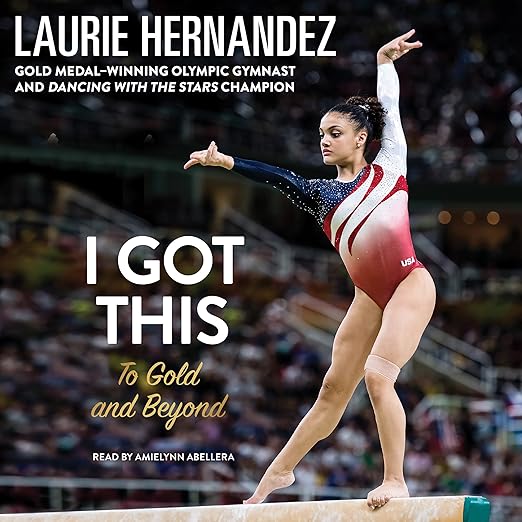
I listened to this one on a long train journey and ended up thinking about it more than I expected to. Laurie Hernandez was sixteen years old when she competed in the 2016 Rio Olympics and became one of the defining images of that Games: a beaming, animated teenager balancing on a four-inch beam in front of billions of viewers. She was also sixteen when this book was written, which gives it an unusual quality. It is a memoir by someone who is still in the middle of the story they are telling.
I Got This covers Hernandez’s path from her New Jersey childhood to Rio, through the grueling selection process that chose the Final Five, through the gold medal team competition and the individual silver on the balance beam, and then into the unexpected second chapter of that summer: winning Dancing with the Stars and becoming the youngest-ever Mirrorball Trophy champion. That is a genuinely extraordinary sequence of achievements for a teenager to narrate, and Hernandez does it with a lightness that never tips into bragging.
The Jersey Girl Behind the Medal
The most grounding sections of the audiobook are the ones about Hernandez’s family, particularly her parents and her older siblings, who made significant sacrifices to support her training. Gymnastics at the elite level requires a financial and logistical commitment that falls heavily on families, and Hernandez is honest about what that meant for the people around her. Her Latina identity is integrated naturally rather than displayed as a badge: her Puerto Rican heritage, her family’s bilingual household, and her sense of herself as a Latina girl representing something larger than just her own performance all surface in the narrative without feeling like they have been added for marketing reasons.
What a Sixteen-Year-Old Memoir Looks Like Honestly
There are genuine limitations that come with the age of the author. Hernandez is thoughtful for sixteen but she is still sixteen, which means some of the reflections on pressure, failure, and identity are less developed than they might be in retrospect. One of the most interesting passages involves her description of injuries and the mental management required to compete through pain, which suggests a maturity of athletic self-understanding that is more sophisticated than the cheerful public image she projects. The emotional honesty around a couple of difficult moments in her career is appreciated and real. One reviewer who is a gymnastics coach found it compelling enough to pass to the young athletes she works with, which is a meaningful endorsement from someone who can evaluate the sport-specific content critically.
Amielynn Abellera’s Casting
Amielynn Abellera is a good choice to narrate this book. She has the youthfulness the material needs and a warmth that is consistent with Hernandez’s public persona. The decision not to have Hernandez read her own book is understandable but does create a slight distance: you are always aware you are hearing a narrator performing a life rather than that life speaking directly. For a comparison, dePaola narrating his own childhood memoirs produces something qualitatively different. That said, Abellera is engaged and convincing, and she handles the tension between Hernandez’s exuberance and her moments of self-doubt with care.
Who Should Listen and Who Can Skip
Young athletes, particularly girls aged eight to fourteen, are the natural audience, and multiple reviewers who purchased it for daughters in competitive gymnastics report that the book resonated strongly. Coaches looking for inspiration material for young athletes will find it useful: Hernandez is specific about training, sacrifice, and the psychological management of failure in ways that generalize well beyond gymnastics. Adults without a young athlete in their life will likely find it too slight for a standalone listen, but paired with a child or used as a discussion prompt for young competitors, it earns its runtime comfortably.
Frequently Asked Questions
Does the book cover Hernandez’s career after the 2016 Olympics, including Dancing with the Stars?
Yes. The Dancing with the Stars chapter, including her Mirrorball Trophy win at sixteen as the show’s youngest-ever champion, is a significant section of the audiobook. It covers both the Olympics and what came immediately after.
Is this suitable for young gymnasts specifically, or will non-gymnast children find it relatable?
Multiple reviewers who are coaches or parents of competitive gymnasts found it particularly resonant. However, the themes of hard work, family support, identity, and managing pressure under competition apply to young athletes across sports. Non-athletes may find the technical gymnastics content less engaging but the personal story still worthwhile.
Why didn’t Hernandez narrate her own audiobook?
The book was written when Hernandez was sixteen, and the decision to use a professional narrator is common for first-time authors regardless of age. Amielynn Abellera was cast to match Hernandez’s energy and demographic. The absence of the author’s voice is a mild limitation given how personal the material is, but Abellera compensates well.
Does the book address the challenges and darker aspects of elite gymnastics culture?
To a degree. Hernandez discusses injury, pressure, and the difficulty of the selection process honestly. However, the book predates the broader public reckoning with abuse in US gymnastics that followed the Larry Nassar revelations, which occurred after this book was written. It should not be read as a full account of that culture.