Quick Take
- Voice: Donte Bonner brings energy and genuine warmth to Brad Meltzer's text, making Jackie Robinson's story feel immediate and personally addressed to each young listener.
- Big ideas: racial justice and courage, perseverance against unfair rules, heroism in everyday choices
- Atmosphere: Inspiring and direct, accessible without being simplistic
- Worth it?: This audiobook introduces Jackie Robinson to young listeners with the clarity and emotional honesty the subject deserves, making complex history feel both urgent and personal.
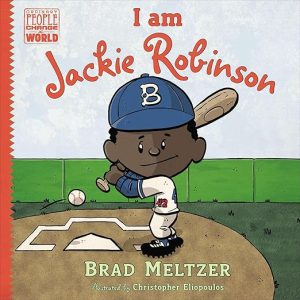
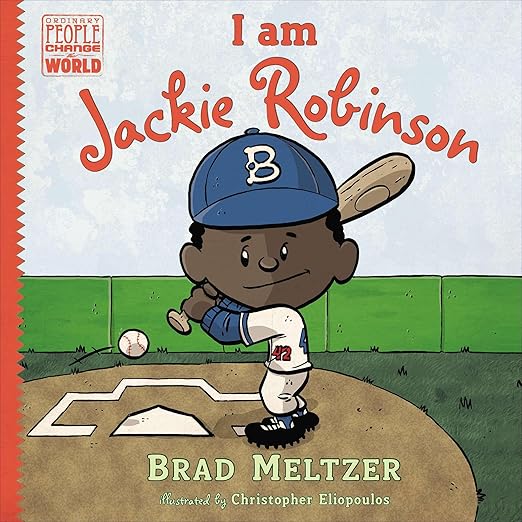
Picture a baseball diamond on a bright afternoon, the crack of a ball that everyone in the stadium can hear, and the knowledge that the player at the plate has already broken something far larger than any record, just by being allowed to step onto the field. That image is where I am Jackie Robinson begins its work. Brad Meltzer's biography, part of the Ordinary People Change the World series and narrated for this audiobook by Donte Bonner, brings that image and the full weight of its historical meaning to young listeners through the first-person voice that defines the series, clear, direct, and spoken as though Jackie Robinson himself is addressing every child who presses play.
At 18 minutes, this audiobook is designed as a complete experience rather than an excerpt. Meltzer's text covers Robinson's childhood love of sports, the structural racism that prevented him from playing on the best teams regardless of his talent, and his role as the first Black player in Major League Baseball, the decision that changed both sports history and the broader arc of American civil rights. Bonner's narration handles all of this without simplifying away the injustice or dramatizing it beyond what a young listener can hold comfortably in mind. The Ordinary People Change the World series has now produced dozens of these short biographies, and Robinson's entry belongs among its strongest because the story of his life maps so naturally onto the series' core argument about what heroism actually requires.
Bonner Sounds Grounded, Never Performed
Bonner is an outstanding choice for this material. The first-person structure of Meltzer's Ordinary People Change the World series places particular demands on narrators: they must inhabit a historical figure in a way that is simultaneously authentic and age-appropriate, neither distant nor presumptuous. Bonner achieves this with an authority that feels grounded rather than performed. His delivery of the biographical pivots, the moments when Robinson's exclusion from white-only teams is acknowledged, the moment he decides to step forward regardless of the personal risk, carries genuine emotion without tipping into melodrama.
The audiobook's brevity is a structural virtue. Many biography series for young readers suffer from the compression of complex lives into bullet-point summaries that leave no room for emotional resonance. Meltzer's approach is the opposite: he selects the moments that carry the most moral weight and dwells on them long enough for the listener to understand not just what happened but why it mattered. Bonner's narration sustains that dwelling without letting the pace drag. The result is an audiobook that teachers have borrowed to use in first-grade classrooms during Black History Month, which speaks directly to how well it works as shared listening material.
The Tagline 'We Can All Be Heroes'
The Ordinary People Change the World series has built its reputation on a specific educational and emotional promise: that history's most significant figures were ordinary people who made extraordinary choices, and that those choices are available, in some form, to every child listening. The series' tagline, we can all be heroes, is not an empty slogan but the organizing argument of every biography in it. For Robinson's story specifically, that argument lands with particular force because his heroism was inseparable from the injustice he was required to endure with dignity.
Reviewers have described using this audiobook to explain racial injustice to first graders in a way they could understand, with a parent noting that the child's teacher and other first-grade teachers borrowed the book for classroom use. That kind of organic institutional adoption reflects both the quality of Meltzer's handling of difficult content and the accessibility of Bonner's narration. This is not a book that condescends to its young audience about the ugliness of the world; it is one that trusts children to understand that unfair rules exist and that courage means challenging them.
Robinson Understood the Stakes, Then Chose to Act
Listen for how Meltzer frames Robinson's motivations. The audiobook does not present Robinson as someone who simply had no choice but to act; it presents him as someone who understood the stakes and chose to act anyway. That distinction matters enormously in a biography aimed at children, because it locates agency and courage in the subject rather than inevitability. Bonner's delivery emphasizes these moments of choice with a slight shift in pace and tone that makes them unmistakably significant without overplaying the drama.
The audiobook also contains a quiet argument about the nature of sports that is worth noticing. Robinson knew that sports were best when everyone, of every color, played together, and that belief is presented not as a political position but as a self-evident truth about what fairness means. The way Meltzer and Bonner present this moral clarity as Robinson's natural orientation, rather than a hard-won conclusion, gives the audiobook an optimism about human judgment that feels genuinely encouraging rather than naive. Children who encounter this audiobook before they have developed cynicism about how change actually happens in the world are the ideal audience for that argument.
From Einstein to Tubman in the Same Voice
This audiobook is designed for listeners ages four to eight, but its emotional directness makes it useful for older children as well, particularly in classroom contexts where the subject requires an accessible entry point. Parents looking for a way to begin conversations about racial justice and American history with young children will find this audiobook a reliable and emotionally honest starting place. Adults who want a quick and well-narrated introduction to Robinson's legacy before reading longer biographies will also find value here. The 18-minute runtime makes it practical for bedtime listening, car rides, or as an opening to a longer discussion session. The series format means that a child who responds well to this audiobook has dozens of similar entries waiting for them, covering figures from Albert Einstein to Harriet Tubman with the same first-person voice and the same moral seriousness.
Before You Listen
Is this audiobook appropriate for starting conversations about racism with very young children?
Yes. Meltzer presents racial injustice clearly and honestly at an age-appropriate level, explaining that Robinson was excluded from teams because of the color of his skin without graphic description of violence or discrimination. Many parents and teachers have used this audiobook precisely for this purpose with children as young as four.
Can this audiobook be used as a standalone resource, or does it work better alongside the printed book?
The audiobook stands fully on its own as a listening experience. Families who own the illustrated print edition will find that Bonner's narration adds an additional layer, but the audio version communicates Robinson's story completely without requiring the visuals.