Quick Take
- Narration: Virtual Voice AI narration delivers a flat, mechanical read that undercuts the lively speculative energy the questions deserve.
- Themes: Fan analysis, counterfactual thinking, Hunger Games lore
- Mood: Quick and curious, but thin
- Verdict: A short curiosity piece for diehard Hunger Games fans who want a structured conversation starter, not a deep dive.
My niece had just finished the original trilogy for the second time and was peppering me with what-ifs over dinner. What if Katniss had never needed to volunteer? What if Peeta had simply walked up and handed her fresh bread instead of the famous burned loaf? I remembered spotting this title in my queue and loaded it up on the drive home, expecting something that might fuel a few more of those conversations. Thirty minutes later, I was back in my driveway wondering where the rest of it was.
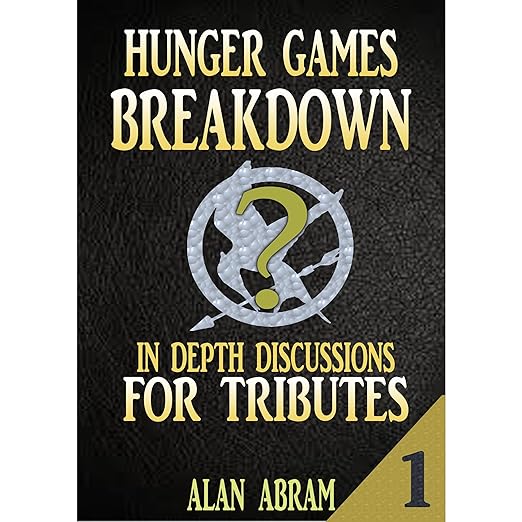
Hunger Games Breakdown Part 1 is a fan-authored discussion guide, not a literary analysis in any traditional sense. Written by Alan Abram under a clear disclaimer that it has no connection to Suzanne Collins, Scholastic, or Lionsgate, it positions itself as a companion piece for devoted readers who want to chew on the world’s deeper mechanics. That’s a reasonable niche to fill. The Hunger Games universe is genuinely rich with unexplored corners, and questions about the structure of the first Games, the psychology of tributes, and the internal logic of Panem’s dystopia have sustained entire online communities for years.
Our Take on Hunger Games Breakdown Part 1
The audiobook works best as a prompt generator. Abram surfaces some questions worth sitting with: the alternate-path scenario involving Peeta’s bread is particularly interesting because it touches on the performative versus genuine nature of Peeta’s character as Collins constructed him. Whether the burned bread was a calculated act of kindness or a desperate improvisation matters enormously to how readers understand his arc across all three books. Raising that question, even briefly, has value.
The problem is execution. Reviewers have noted the Q&A structure feels homework-like, and that’s accurate. Questions are stated, answers are given in compact bullet form, and then the subject is dropped before anything approaching genuine analysis develops. One reviewer described it as leaving her wishing for so much more and thinking there was no real point to reading it at all. That’s a little harsh, but the frustration is understandable. The premise invites depth, and the delivery offers barely a surface scratch.
Why Listen to Hunger Games Breakdown Part 1
If you are a parent or teacher looking for structured discussion prompts about the trilogy, this could serve as a jumping-off point. One reviewer found it useful specifically for informing a conversation with a teenage daughter who was actively reading the series, and that use case makes sense. At roughly thirty minutes and a low price point, it asks very little of you. You could finish it on a short commute and arrive with a handful of questions ready to toss into a book club or family dinner.
The speculative angles are the strongest feature. Questions about the first-ever Hunger Games, about alternate reaping outcomes, about what a different Peeta might have produced invite the kind of imaginative engagement that fan communities thrive on. Abram clearly loves this world, and that affection comes through even when the writing itself is thin.
What to Watch For in Hunger Games Breakdown Part 1
The Virtual Voice AI narration is worth flagging plainly. It processes text without interpretation, which means the natural rhythm of a good question-and-answer exchange is flattened. When a discussion prompt is delivered in the same deadpan cadence as a financial terms-and-conditions document, the curiosity it’s meant to spark gets dampened. This is not a narrator performance issue in the usual sense; it is an AI rendering of text, and it shows throughout.
Also worth noting: the first-part framing means this is explicitly incomplete. Abram intends a series, and some of the most interesting threads are presumably deferred to later installments. That’s fine as a serialized publishing strategy, but as a standalone audiobook experience it means you finish with the sensation of a door having been opened and then left ajar rather than actually entered.
Who Should Listen to Hunger Games Breakdown Part 1
This suits Hunger Games fans who want quick, low-stakes engagement with the world they love, particularly those who enjoy asking what-if questions. Teachers or parents looking for conversation starters for young readers will find more utility here than most adult literary fans will. Anyone expecting genuine critical analysis, narrative depth, or a satisfying standalone listening experience should lower their expectations sharply. The thirty-minute runtime is both its most defensible quality and the clearest signal of its limitations.
Frequently Asked Questions
Is Hunger Games Breakdown Part 1 an official Suzanne Collins companion guide?
No. The book includes an explicit disclaimer stating it is not authorized, approved, endorsed, or licensed by Suzanne Collins, Scholastic, Lionsgate, or any entity associated with the Hunger Games franchise. It is a fan-authored discussion guide.
How long is the audiobook, and is it worth the time?
The audiobook runs approximately 30 minutes. It functions best as a quick prompt generator for fans who enjoy speculative what-if discussions about the trilogy, rather than as a comprehensive analytical work.
Does the AI narrator affect the listening experience?
Yes, noticeably. The Virtual Voice narration delivers the material in a flat, mechanical tone that drains energy from the speculative questions the book raises. Listeners who are sensitive to AI narration may find it distracting.
Is this the full book, or do I need to buy additional parts to get the complete discussion?
This is Part 1 of a planned series by Alan Abram. Some discussion threads are left open for later installments, so the content here feels incomplete as a standalone work.