Quick Take
- Narration: Grace Conlin brings warmth and period-appropriate gentleness to Montgomery’s prose, though the collection’s tonal variety across 15 stories occasionally asks more vocal range of her than the performance sustains.
- Themes: community and social obligation in rural Prince Edward Island, the comedy and sadness of propriety, unexpected human grace
- Mood: Quietly luminous, best listened to in the kind of afternoon light that makes ordinary things seem rich
- Verdict: A genuinely better collection than its predecessor according to multiple readers, and a rewarding listen for anyone who has loved Montgomery’s longer fiction and wants more time in Avonlea.
I came back to L. M. Montgomery later in life than I had expected. I read Anne of Green Gables as a child, moved on, and did not return until a conversation with a friend who was revisiting the entire series in audiobook form while working through a difficult year. She described the experience in a way that stuck with me: she said Montgomery writes as if she believes ordinary people’s ordinary troubles matter, which turns out to be a rare and valuable quality in fiction. I downloaded Further Chronicles of Avonlea on a Sunday and let it run through the afternoon and into the evening.
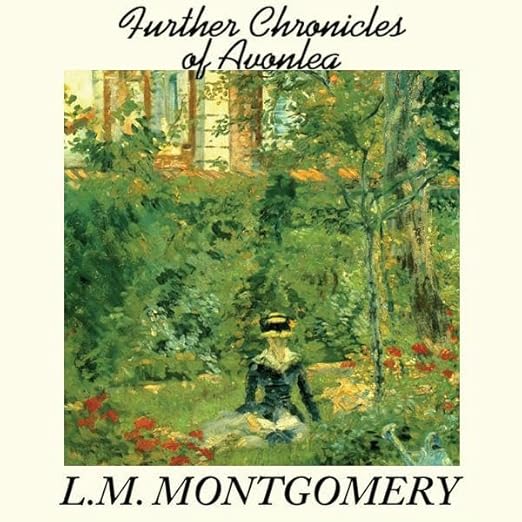
This is the 1920 successor volume to Chronicles of Avonlea, and it contains 15 short stories set in and around the fictional village of Avonlea, the Prince Edward Island community made famous through the Anne novels. Montgomery edited these pieces to include references to Anne and other characters from the Green Gables world, weaving the collection into her broader fictional universe without requiring the stories to depend on that context.
Our Take on the Collection’s Quality
At least one reviewer argues this collection is significantly better than the first Chronicles of Avonlea, finding the stories fascinating, brief and entertaining where the first volume was long-winded and uninteresting. That assessment lines up with what I observed: the stories here are economical in a way that serves them. Montgomery is working in a compressed form and she is good at it. The central conflicts, a Persian cat’s unexpected role in a marriage proposal, a young woman’s search for her father that risks her relationship with her mother, a foolish lie’s snowballing social consequences, are resolved with the kind of clear-eyed unsentimental wisdom that is genuinely hard to achieve in short fiction.
What Montgomery does exceptionally well is the texture of community judgment. These are stories about people who know each other’s business and whose social existence is governed by an intricate web of expectation and reputation. She renders that world without contempt and without nostalgia: she understands both why those expectations bind people and why people sometimes need to escape them. The result is fiction that has more moral complexity than the pastoral setting might suggest.
Why Listen to Grace Conlin’s Reading
Grace Conlin’s narration is warm and unhurried, which suits the material. Montgomery’s prose requires a reader who trusts the sentences and does not try to quicken them for modern attention spans. Conlin does not. Her pacing lets the descriptive passages, the PEI landscapes, the interiors of farm kitchens and parlors, arrive with the completeness they need. One reviewer described Montgomery making you smell the ferns and feel the sharp northern wind, and in audio that sensory precision depends entirely on a narrator who reads with patience.
Where the narration is slightly less successful is in the comic stories. Montgomery is funnier than she is often credited for, and the pieces that turn on social absurdity, the lie that grows into a local scandal, the socially disastrous cat, benefit from a slightly lighter touch and a quicker comic rhythm that Conlin does not quite find. The dramatic pieces land more consistently.
What to Watch For in Montgomery’s Moral Universe
Several reviewers note being surprised at the story endings. Montgomery does not resolve her plots in the way you would expect from a writer associated with warmth and optimism. Some stories end happily. Some end sadly. Some end with a chill. The final story in the collection, Tannis of the Flats, has been flagged by reviewers for racial stereotypes and language that reflect the period in which it was written. This is a real limitation that listeners should be aware of, particularly since it comes at the end of the collection and affects the listening experience of the final hour.
The 15 stories also vary considerably in focus and length, which is the fundamental challenge of any career anthology. Some pieces are set in Avonlea proper; others venture to nearby communities. The Anne connections are light in most stories, functioning more as ambient context than plot necessity, so listeners who have not read the Green Gables novels will not be lost.
Who Should Listen to Further Chronicles of Avonlea
This is an ideal listen for existing Montgomery fans who want to extend their time in her fictional world beyond the novels. The short story format makes it particularly well-suited to episodic listening: a story per walk, a story before bed, two stories on a commute. Each piece is complete in itself, and the 7-hour-and-21-minute total runtime passes gently.
Listeners who are new to Montgomery should start with Anne of Green Gables. The short stories are richer when you have some familiarity with the village and its social landscape. And listeners who are hoping for the sustained narrative arc of a novel will find the anthology format fragmentary, which is simply the nature of the form. Come to this knowing it is a collection, and it will give you exactly what collections are for.
Frequently Asked Questions
Do you need to have read the Anne of Green Gables novels to enjoy these stories?
Not strictly, but familiarity with Avonlea and its social world enriches the experience. Montgomery edited these stories to include references to Anne and other series characters, but the plots stand independently. New readers can follow the stories without prior knowledge.
One reviewer warned about racial content in the final story. What should listeners expect?
Tannis of the Flats, the collection’s final piece, contains racial stereotypes and language that reflect early 20th-century conventions. This is a genuine content warning. Listeners should be prepared for this when approaching the final story.
How does Grace Conlin’s narration compare to audiobook readings of the Green Gables novels?
Conlin’s approach is warm and appropriate for Montgomery’s prose style. She is particularly strong in the dramatic and quieter descriptive pieces. The comic stories are somewhat less successful in her reading, as she does not quite find the lighter tonal register they benefit from. Overall it is a solid, reliable narration.
Is this collection a good representation of Montgomery’s short fiction, or are there better collections?
Multiple reviewers suggest this is actually better than its companion volume, Chronicles of Avonlea. It represents a mature phase of Montgomery’s short fiction work and is generally considered an accurate representation of her strengths in the compressed form.