Quick Take
- Narration: Em Eldridge brings consistency and warmth to Anna’s perspective, handling the emotional range from long-held repression to tentative awakening with the right degree of restraint.
- Themes: Trauma recovery through chosen connection, found-family shifter bonds, betrayal within trust structures
- Mood: Warm paranormal romance with escalating external tension and a genuine cliffhanger
- Verdict: A second book that develops Anna’s character meaningfully and introduces Fae elements that divide series fans, best approached as part of a longer series commitment.
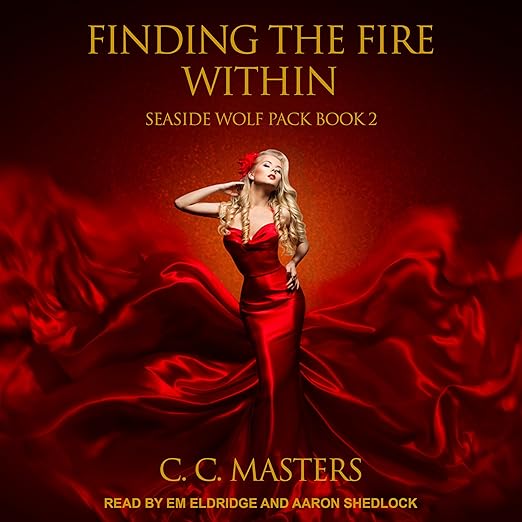
I have reviewed enough paranormal romance series to know that Book 2 is where everything gets decided. The first book establishes the world and the characters. The second book is where the author makes choices that either deepen that investment or dilute it. Finding the Fire Within, the second entry in C.C. Masters’ Seaside Wolf Pack series, makes some choices that pay off immediately and some that the series will spend several more books redeeming. That tension is both the book’s limitation and its reason for existing as a necessary step in a longer arc.
Anna returns having survived the events of Book 1, with a pack that now relies on her and an inner wolf she has been keeping suppressed. The central emotional premise is precise and resonant: Anna has spent years keeping passion itself down, not just specific feelings but the entire register of fire that makes you capable of wanting things fully. The title, Finding the Fire Within, is not a metaphor layered on top of the plot. It is the plot, and Masters treats it with enough seriousness that it carries the quieter sections between external conflict.
Anna’s Emotional Architecture and Why It Works
What Masters does well in this installment is keep Anna’s emotional repression from feeling like a character flaw to be corrected and instead frame it as a survival adaptation with real costs. Anna is not emotionally unavailable because she is broken or because she has not met the right person yet. She is unavailable because the alternatives felt dangerous in her specific history. That distinction matters enormously for how the romance develops with the pack members, because it means her opening up is not simply melting toward someone magnetic. It is choosing, deliberately, over and over, which is a different and more interesting thing to write across a series of this length.
The relationships with the pack are given genuine development in this installment, and the domestic warmth of the House scenes balances the external threat structure well. A reviewer described the series as having a main female character who is smart and strong, and that characterization is accurate for this installment. Anna is active in her choices rather than reactive to the men around her, which is a quiet distinction that changes how the romance reads and how invested the reader becomes in her specific trajectory rather than the genre plot mechanics surrounding her.
Where the Fae Thread Divides Series Readers
The most contentious element in reader feedback involves a narrative shift toward Fae content that apparently becomes more prominent as the series progresses. Several reviews, including one from a reader who genuinely enjoyed the story, note that the series moves away from shifter territory and toward Fae-centered storylines in ways that altered their relationship to the series. This reviewer went in expecting werewolves and military elements and found the recalibration did not serve her preferences, even while acknowledging the quality of the storytelling itself.
This is worth flagging because it is a real genre pivot rather than minor flavoring. Readers who come to the Seaside Wolf Pack for the shifter dynamics specifically should know that the series arc involves expanding outward from that foundation. Whether that expansion is experienced as a loss or an enrichment depends on where your preferences sit within paranormal romance’s broad taxonomy of supernatural elements and romantic configurations.
Em Eldridge and the First-Person Female Protagonist
Em Eldridge is a natural fit for Anna’s first-person narration and has the advantage of established familiarity with the character from Book 1. She handles the internal conflict between repression and desire without over-dramatizing either state, which is the right call for a character whose essential trait is that she has learned to keep the volume down as a matter of survival. The Tantor Audio production is clean, and the ten-hour-twenty-eight-minute runtime gives the pacing room to breathe through both the quiet domestic scenes and the threat sequences that build toward the book’s closing stretch.
The cliffhanger ending is real and deliberate. A reviewer noted it with specific enthusiasm because the third book was already available when she listened, which softens the abruptness considerably. New listeners should know they are committing to at least a trilogy arc if they want narrative resolution on the threads that Book 2 opens. The series is ongoing and the book’s ending functions as a continuation prompt rather than a standalone closing beat.
Something reviewers consistently note about this series that is worth putting plainly: C.C. Masters writes male characters who function as partners rather than prizes or threats. The pack dynamic in the Seaside Wolf Pack series is built around genuine collaboration and mutual protection rather than the dominance hierarchies that characterize much paranormal romance. For readers who find those hierarchies tedious or exhausting, this series offers a materially different fantasy about what belonging to a chosen group might actually feel like. That is the quiet promise beneath the surface of the paranormal mechanics, and Finding the Fire Within develops it with care across its full runtime.
Readers Who Will Stay and Readers Who Should Know the Risks
Finding the Fire Within works best for readers who enjoyed Book 1 and want deeper Anna development and expanded pack dynamics across a longer arc. The emotional premise is handled with more care than the genre average, and the domestic warmth of the pack scenes is genuinely appealing as a reason to keep listening beyond the romance mechanics. Readers who want a complete shifter-focused story arc should research the series direction before committing past the early books. Those who enjoy paranormal romance willing to grow beyond its initial premise will find a series worth following through its full arc.
Frequently Asked Questions
Does Finding the Fire Within work as a standalone, or is Book 1 of the Seaside Wolf Pack series essential?
Book 1 is essential. The emotional stakes and relationship dynamics in this volume depend entirely on context established in the first book. Starting here would mean missing Anna’s origin story and the pack dynamics that give Book 2 its emotional weight and its romance its earned quality.
Reviews mention the series shifts toward Fae content. Is that shift already visible in Book 2?
The Fae elements begin appearing in this installment, though the primary focus remains on shifter dynamics and Anna’s emotional arc. The pivot toward Fae territory is more pronounced in later books. Readers who strongly prefer pure shifter content should be aware the series expands its supernatural scope across the arc rather than staying in its original lane.
Does Em Eldridge’s narration suit a first-person female protagonist navigating trauma and romance?
Yes. Eldridge handles Anna’s interiority with appropriate restraint, capturing the suppression-and-awakening arc without melodrama. Her narration is particularly effective in the quieter domestic scenes where Anna’s gradual opening-up is most visible and where the series earns its emotional investment.
The book ends on a cliffhanger. How significant is it, and is the next book readily available?
The cliffhanger involves the pack’s safety and is genuine rather than a soft pause. The third book was already available at time of this review, so listeners do not face an extended wait for resolution. Readers who prefer to complete their arcs before committing should treat Books 2 and 3 as a unit.