Quick Take
- Narration: Luke Daniels is a strong choice for this material – his voice carries the physical presence the ex-marine protagonist demands without losing the vulnerability the PTSD arc requires.
- Themes: Combat trauma and recovery, forbidden desire, second chances
- Mood: Intense and emotionally charged with genuine sweetness underneath
- Verdict: The third entry in the Against the Cage series is its strongest according to most returning readers – Luke Daniels’ performance elevates an already well-constructed sports romance.
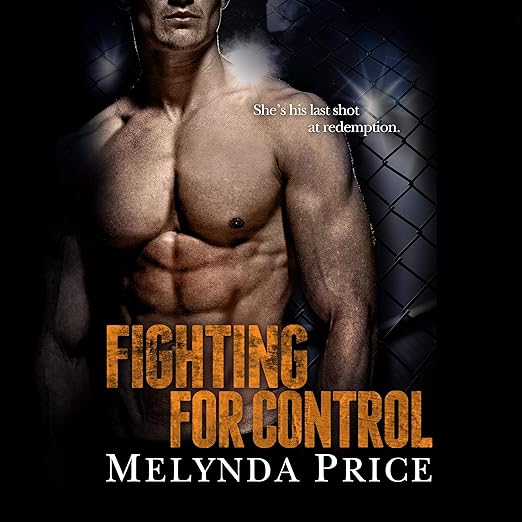
I tend to be skeptical of MMA romances that use PTSD as a dramatic accelerant – the condition is serious enough that careless handling feels like exploitation. Melynda Price earns more respect than I initially expected with Fighting for Control, the third book in her Against the Cage series. She is not using Nikko Del Toro’s trauma as mere backstory flavor. The PTSD is the engine of the conflict, the reason the fake professional distance between patient and therapist cannot hold, and the mechanism through which the character actually has to change. That is a more responsible use of the material than many genre titles manage.
Nikko is introduced as The Bull – an ex-marine turned CFA fighter whose only emotional regulation comes from either the cage or the memory of a specific one-night stand with a woman he has since lost. Dr. Violet Summers is that woman, now his assigned therapist after a PTSD episode derails his career at a press event. The ethical complication of a patient-therapist relationship is acknowledged rather than waved away, and Price uses it deliberately. One reviewer called it a true taboo story, which is accurate – but Price is working within the taboo rather than pretending it does not exist.
Our Take on Fighting for Control
The central dynamic between Nikko and Violet is constructed with more care than the synopsis suggests. Violet is not simply a romantic prize waiting to be earned. She has her own history – a nasty divorce that has made her cautious, professional commitments she takes seriously, and genuine therapeutic insight into Nikko’s darkness. The title applies as much to Violet’s internal negotiation with her own feelings as it does to Nikko’s battle with his PTSD. Price gives both characters interiority, which is what separates a functional genre romance from a mechanical one.
The MMA setting provides more than backdrop. Nikko’s relationship to the cage is genuinely psychologically developed – it is one of his few remaining tools for managing what is happening inside him, and the threat to his career is therefore an existential one rather than a merely professional problem. Price understands the culture she is writing about, and that specificity comes through in the texture of the press events, the team dynamics, and the physical reality of the sport.
Why Listen to Fighting for Control
Luke Daniels is the answer to why audio is the right format for this book. He is one of the more reliable narrators working in romance and thriller-adjacent territory, and his ability to shift between Nikko’s controlled aggression and his moments of vulnerability is exactly what this material requires. The sweet moments and steamy moments that reviewers cite land differently when performed – Daniels knows when to slow down and when to push through, and his instincts are consistently correct for this story.
At nearly thirteen hours, this is a full-length romance with room to breathe. The chemistry between Nikko and Violet develops over time rather than being declared and then filled in retroactively, which makes the eventual emotional payoff feel earned. Reviewers who have read the entire Against the Cage series consistently rank this as their favorite entry, which is meaningful at book three – series romances often peak earlier and coast on established goodwill.
What to Watch For in Fighting for Control
New readers can start here without having read books one and two in the Against the Cage series, though returning series readers will have richer context for the team environment and some of the supporting characters. The book does not require prior series knowledge to follow the central romance, and Price provides enough grounding for new listeners to orient themselves quickly.
Some readers wanted more development around specific emotional turning points – one reviewer noted they would have liked just a bit more build up to the important events in the story. That is a fair observation; Price moves through some of the therapy sessions and PTSD breakthroughs more quickly than they might have earned at full length. The romance momentum does occasionally pull against the psychological realism the premise sets up. It does not derail the book, but listeners who came specifically for the trauma recovery arc may find the balance tips toward romance slightly earlier than they would prefer.
Who Should Listen to Fighting for Control
Romance readers who enjoy sports settings, second-chance dynamics, and heroes whose emotional damage is treated as real rather than decorative will find this a satisfying listen. The Luke Daniels narration makes this a particularly good audio choice over the ebook. Those who have already read books one and two in the Against the Cage series should prioritize this one – multiple returning readers call it the best in the series. Listeners who need their therapy ethics handled with absolute clinical precision may find the patient-therapist romance premise a stumbling block, but Price handles it more thoughtfully than most comparable genre titles.
Frequently Asked Questions
Does Fighting for Control work as a standalone, or should I read the first two Against the Cage books first?
It works as a standalone – Price provides sufficient context for new readers. Returning series readers will have extra texture from knowing the team environment, but the central romance is fully self-contained.
How does Luke Daniels handle the dual demands of a physically intimidating MMA protagonist and the vulnerability the PTSD storyline requires?
Very well, according to series fans. His voice carries the physical presence the character demands while maintaining the emotional openness the therapy scenes require. Reviewers consistently note his narration as a highlight.
Is the PTSD element handled with care, or does it feel like a plot device?
Price takes it seriously as both a medical reality and a character-defining condition. It is the source of the conflict, the reason for the professional barrier, and the thing Nikko actually has to work through – not simply backstory flavor.
Is the patient-therapist ethical dimension addressed in the story, or glossed over?
It is acknowledged and used as a deliberate source of tension. Price does not pretend the ethical complication does not exist – it is part of what makes the relationship difficult and the resolution meaningful.