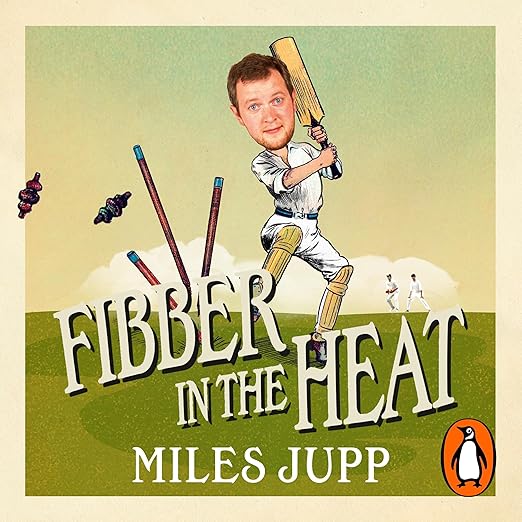
Quick Take
- Narration: Miles Jupp narrating his own memoir is a genuine pleasure. His comedic timing and self-deprecating delivery make the embarrassments feel warmly told rather than painfully relived.
- Themes: Impostor syndrome and bluffed credentials, cricket culture and press corps hierarchy, the gap between dreams and reality
- Mood: Warmly comic and slightly chaotic, like a long anecdote told by someone who still cannot quite believe it happened
- Verdict: A charming cricket memoir that works even for non-cricket fans, provided they can enjoy watching a man dig himself progressively deeper into a hole of his own making.
I am not a cricket follower. I came to Fibber in the Heat because Miles Jupp kept appearing in my podcast feed and striking me as funny and slightly catastrophically self-aware, and eventually I looked up what else he had done. This memoir, about bluffing his way into the press corps during England’s Test series in India, seemed like the kind of story that transcended its sporting context, and it does, mostly.
The setup is both outrageous and completely believable for anyone who has ever talked themselves into something they were entirely unqualified for and then realized too late there was no exit. Jupp claimed to be a cricket correspondent for BBC Scotland and secured a position with the Western Mail, and then had to sustain that fiction for an entire Test series in Indian heat while actually knowing what he was talking about, except when he was making it up.
Our Take on Fibber in the Heat
The book’s great pleasure is the texture of the press corps world Jupp finds himself in. He is not a cricket journalist, but he is around people who are, and the behind-the-scenes portrait of what actually happens on a cricket tour is genuinely illuminating. He drinks with David Gower and Beefy, has bar room exchanges with Nasser Hussain, and stumbles through the competitive hierarchy of the press box with the energy of a new boy at school who has no idea of the social rules and keeps violating them accidentally. One reviewer compared him to a cricket-obsessed Boot from Evelyn Waugh’s Scoop, which is apt: the character of the well-intentioned, hopelessly overextended outsider is recognizable from that tradition.
What the book does particularly well is locate the comedy in the gap between Jupp’s inner life and his outward performance. He is internally mortified almost constantly while maintaining a surface of assurance that the press corps mostly does not question, partly because no one imagines someone would actually lie about this, and partly because Jupp manages to project confidence even when he is entirely out of his depth. The diarrhea stories the synopsis mentions are there, and they are exactly what you would expect.
Why Listen to Fibber in the Heat
Jupp reading his own memoir is the correct choice for this material. He is a stand-up comedian, and the timing that makes his stage work effective translates directly to audio narration. The embarrassments are delivered with the cadence of someone who has rehearsed the story for dinner parties and knows exactly when the laugh should come. At just over eight hours, the book moves quickly, and Jupp’s voice keeps the energy up even during the sections that are primarily about cricket logistics. Reviewer SP noted it is very difficult to put down, and in audio form that translates to the specific quality of wanting to keep the headphones in one more chapter.
What to Watch For in Fibber in the Heat
The cricket itself does matter here more than the synopsis implies. The specific texture of what Jupp is experiencing, the games, the scores, the significance of particular days in the Test series, is woven into the narrative rather than sitting alongside it. Non-cricket listeners will follow the story entirely but may find certain sections move faster for them than for readers who can contextualize what is happening on the pitch. One reviewer honestly noted that if you are not into cricket you may find parts of it difficult to follow, and that caveat is real, though not fatal to the listening experience. The impostor subplot is self-contained and comic enough to carry those readers through.
Who Should Listen to Fibber in the Heat
Cricket enthusiasts will have an obvious advantage, but the memoir has enough going on in terms of comedy, professional embarrassment, and behind-the-scenes sports journalism to hold readers who approach it from a general memoir direction. Anyone who has read Nick Hornby’s Fever Pitch and appreciated how sports writing can be really about something else will recognize the approach. Author-narrated memoirs with strong comic sensibility are a specific pleasure, and Jupp delivers one of the better examples in this space. If the premise makes you smile, trust it.
Frequently Asked Questions
Do I need to know cricket to enjoy Fibber in the Heat?
A basic understanding of cricket helps with some sections, but the core of the book is a comedy of imposture that works regardless of sporting knowledge. The feeling of being completely out of your depth while pretending otherwise translates across any context, and Jupp is a skilled enough comedian to make the cricket-specific moments accessible even to outsiders.
Is this memoir narrated by Miles Jupp himself, and does it add to the experience?
Yes, Jupp narrates his own book, and it is a significant advantage. He is a professional comedian with excellent timing, and hearing him deliver his own embarrassments with the cadence of someone who has metabolized them into comedy adds considerable warmth and energy to the listening experience.
How does Fibber in the Heat compare to other cricket memoirs in terms of insight into the sport?
It offers genuine behind-the-scenes texture, including candid portrayals of figures like David Gower and Nasser Hussain in informal settings, and an honest picture of how the press corps operates on a tour. It is not a tactical or analytical cricket book, but as a portrait of the culture it is surprisingly revealing.
Is there a risk the comedy ages poorly given this is about a 2006 tour?
The specific figures and some references are dated, but the comedy of impostor syndrome, press corps hierarchy, and the specifically British relationship to sporting embarrassment translates well. Jupp’s timing is what carries the material, and that does not age.