Quick Take
- Narration: Don Bratschie, who is also the narrator attributed in the synopsis, delivers the locker-room voice with intensity and directness that suits the book’s refusal to be soft about competition.
- Themes: Female athletic identity, competitive mindset, mentorship and the gap between what coaches tell boys and girls
- Mood: Urgent and motivating, with a we-are-done-apologizing energy throughout
- Verdict: A purposeful listen for female athletes, their parents, and coaches of any sport who want to understand what competitive drive actually looks like when it is not filtered through gender expectation.
My niece plays club soccer, and when her coach recommended this book to her team I picked it up alongside her, curious what a 2015 audiobook about female competition still had to say in a moment when women’s athletics is more visible than ever. I finished it before she did, during a Saturday of long drives, and spent most of the next family dinner trying to explain to her what I had heard.
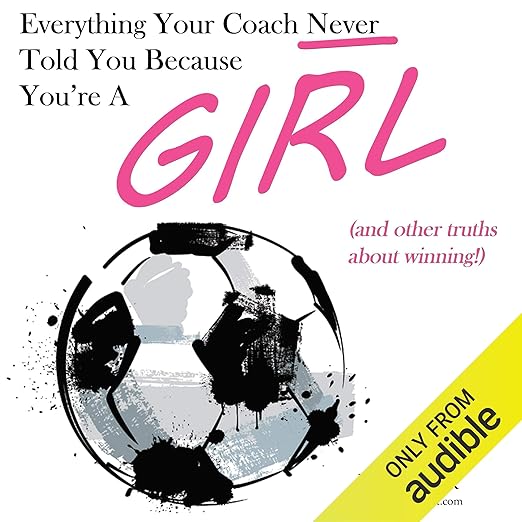
The title is deliberately provocative. Everything Your Coach Never Told You Because You’re a Girl implies a gap, a silence, a set of things routinely communicated to male athletes that their female counterparts receive in softer, more hedged forms. Dan Blank is a soccer coach, and the book follows a small-college women’s team that refused to conform, as the synopsis puts it, to the warm and fuzzy image of female athletes. The journey from doormat to champions is the narrative spine, but the book’s real argument is about what that journey requires from the inside.
Our Take on Everything Your Coach Never Told You Because You’re a Girl
This is not a soccer book. Blank states this explicitly, and the book earns the claim. The lessons are transferable across sports and, the author argues, across life, which sounds like a marketing line until you listen for a couple of hours and realize he means it structurally. The competitive psychology described here, the refusal to make excuses, the willingness to take accountability as a feature rather than a burden, applies anywhere a young woman is being told to be good rather than to win.
Reviewers range from coaches to parents to athletes across multiple sports. One parent described buying it twice, once digitally and once in print, for a ten-year-old who had the skills and drive but struggled with the mental pressure of competition. A coach who works with both boys and girls noted she found herself referencing the book on the soccer field, in the classroom, and at home. That cross-context resonance is real. Blank’s argument is not that girls need different coaching, but that they are too often receiving coaching designed to avoid making them uncomfortable, which is precisely the wrong approach.
Why Listen to Everything Your Coach Never Told You Because You’re a Girl
Don Bratschie’s narration is one of the book’s significant assets. The edgy and passionate voice described in the synopsis translates to audio with the kind of directness that makes you feel like you are actually in the locker room on game day, which is the effect the book is designed to create. Bratschie does not moderate the emotional intensity of the stories, and the result is that the competitive stakes of the narrative feel real in a way that softer narration would undercut.
The book also has genuine staying power. Published in 2015 and still generating five-star reviews in 2025, it clearly found a sustained audience among parents and coaches who return to it season after season. That longevity matters. This is not a trend book or a moment book; it is a book about something that has not changed, which is what it costs to compete seriously and how rarely female athletes are told what that cost actually involves.
What to Watch For in Everything Your Coach Never Told You Because You’re a Girl
The intensity of the book’s competitive philosophy is also its most divisive quality. Some readers will feel that the warrior framing, while appropriate for high-level competitive contexts, is too aggressive for younger or recreational athletes. The book positions itself within a specific competitive culture, and listeners whose daughters are playing for fun or community rather than advancement may find the tone more demanding than useful.
There is also very little in the book about the structural barriers facing female athletes at the organizational level, which is a conscious choice. Blank is focused on what individual athletes and coaches can control, and that focus is valuable, but readers looking for a broader analysis of gender and sports culture will need to look elsewhere.
Who Should Listen to Everything Your Coach Never Told You Because You’re a Girl
This is most directly valuable for female athletes between roughly thirteen and college age who are serious about their sport, and for the coaches and parents around them. The multi-sport applicability is genuine: reviewers from soccer, golf, basketball, and equestrian backgrounds have all found it useful. Recreational athletes or those in early developmental stages may find the competitive urgency more pressure than inspiration, but for athletes pushing toward the next level, this is one of the more honest accounts of what that transition actually requires.
Frequently Asked Questions
Is this only relevant for soccer players, or does it apply to other sports?
The book uses a small-college soccer team as its central story, but Blank explicitly frames the lessons as transferable across sports and beyond. Coaches and athletes from golf, basketball, equestrian, and other disciplines have all found the competitive psychology applicable to their contexts.
Is Don Bratschie the author or just the narrator?
Don Bratschie is the audiobook narrator; Dan Blank is the author. Interestingly, Blank credits Bratschie in the synopsis by name as the voice that makes the audio version come alive, which is a meaningful endorsement of how central the narration is to the experience.
At what age is this book most appropriate for female athletes?
The competitive philosophy is most applicable for athletes roughly thirteen and up who are making the shift from recreational to serious competition. Parents of younger athletes have found it useful for themselves even when the child is not quite ready for the full message.
Does the book address mental health or just competitive mindset?
The focus is on competitive mindset, accountability, and the psychology of winning rather than mental health in the clinical sense. The book challenges the tendency to make excuses and encourages athletes to embrace the discomfort of high-level competition, which overlaps with mental resilience but is not a therapeutic framework.