In Brief
- Narration: John Cena narrates his own story with genuine enthusiasm and a sense of performance that young listeners respond to immediately; he clearly enjoys inhabiting these characters.
- Themes: Jealousy and acceptance, inclusive friendship, working together
- Mood: Energetic and warmly encouraging
- Verdict: Parents and caregivers looking for a short audiobook that entertains young children while handling a genuinely useful emotional lesson will find this delivers on both counts.
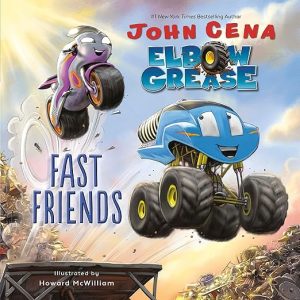
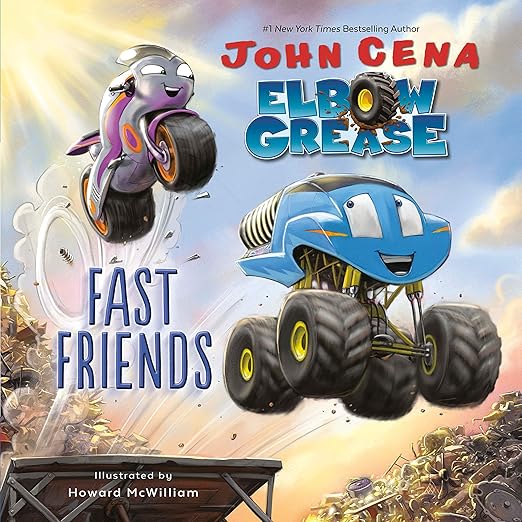
Elbow Grease has become one of those children's series that succeeds by refusing to talk down to its audience. John Cena's third installment, Fast Friends, introduces Chopper, a purple monster motorcycle with skills that leave the truck brothers genuinely impressed and eventually genuinely jealous, and the audiobook version makes this short story land harder than you might expect from a nine-minute runtime. Cena narrates his own work here, and that choice is not incidental to the experience. When a creator voices his own characters, children can sense the conviction in the performance, and it makes a difference.
Context matters for a children's audiobook like this one. The Elbow Grease series reached number one on the New York Times bestseller list, which means children coming to Fast Friends are often already attached to the characters. Cena has been transparent in interviews about writing these books with a specific intention: to help children work through competitive emotions in a context they find genuinely engaging. The monster truck setting is the vehicle, in every sense. The emotional content is the destination. Knowing that intent clarifies why the series has been so consistently well-received.
Truck Brothers Work Through Normal Jealousy
Fast Friends handles jealousy with more sophistication than most children's content aimed at the same age range. The truck brothers are not positioned as villains for feeling competitive about Chopper's talent; they are positioned as normal kids working through a normal emotion. That framing is important. Stories that tell children jealousy is simply wrong tend to produce shame rather than skill development. Stories that acknowledge jealousy as understandable while showing a path through it produce something more useful: practice at the emotional process of moving past it.
The plot mechanism that requires the brothers and Chopper to work together to save the day is classic children's narrative architecture, but Cena executes it cleanly. The moment of cooperation arrives at the right point in the story, after enough tension has built that the resolution feels earned rather than imposed. At nine minutes, there is no room for slow development, and Cena's writing is economical without feeling rushed. Every scene does exactly what it needs to do and nothing more. The restraint is genuine craft.
Cena's Self-Narration Is the Central Argument
Cena's narration is the central argument for the audiobook version. He brings a quality to this performance that a hired voice actor would struggle to replicate: the genuine enthusiasm of someone who believes in what he is doing and enjoys the characters he has built. Reviewers specifically mention children's immediate engagement with the audio, and the self-narration by the series creator is a significant factor. Young listeners who know Cena from his entertainment career arrive with an additional layer of connection to the listening experience that amplifies the story's impact.
The short runtime is a feature rather than a limitation for the target audience. Nine minutes is precisely the right length for the children most likely to love this series: ages roughly three through seven, for whom a twenty-minute audiobook would feel like a commitment but a nine-minute one can be listened to twice in a row before bed without complaint. Multiple reviewers report repeat listens as standard rather than exceptional, and Cena's performance sustains them; he delivers the story with enough energy and warmth that hearing it again feels like a new experience rather than a diminished one.
The series context also benefits new listeners. Fast Friends is the third Elbow Grease title, but it functions as a standalone. New characters can be introduced in children's series without requiring familiarity with earlier installments, and Cena handles Chopper's introduction with enough care that listeners who have not met the truck brothers before will not feel lost. The emotional arc is self-contained and fully legible on its own terms.
Howard McWilliam's Illustrations Are Missing From Audio
Adults listening to this audiobook alongside children should calibrate expectations to the format. This is a nine-minute picture book audiobook, not a feature-length listening experience. The story is precisely as long as it needs to be for its audience, and adults who approach it expecting more substantial runtime will be adjusting to the format rather than evaluating the content on its own terms. The value here is in what it does for young listeners, not in what it offers adult ones.
The audiobook works best as a complement to the print edition rather than a replacement for it. The illustrations by Howard McWilliam are a significant part of the Elbow Grease experience, and listeners who only engage through audio will miss the visual component that makes the books so beloved in their print form. Parents who read the book with their children and then listen to Cena's narration get the most complete experience of what the series has to offer.
Worth noting for gift-givers: the series has multiple titles available in audiobook format, and children who connect with Fast Friends will have Elbow Grease's earlier adventures to move on to. Building a small library of the series requires less investment than it might appear.
Ages Three to Seven Navigating Competitive Feelings
Children aged three through seven who enjoy vehicles, monster trucks, and adventure stories will take to this immediately. The series has particular traction with young children navigating competitive feelings in their own lives, whether in sports, school, or sibling dynamics, because the emotional content of Fast Friends speaks directly to that experience without lecturing about it.
Adults seeking audiobooks for their own entertainment should look elsewhere. This is a children's audiobook in every sense, designed for young listeners and optimized for repeat engagement at short runtime. Parents looking for reliable content to play on road trips, at bedtime, or during quiet time will find Elbow Grease: Fast Friends serves all three contexts effectively and consistently.