The Short Version
- Read by: The author holds the reader credit, so recipes, race reports and nutrition arguments all arrive in one continuous register with no handoffs.
- At its heart: Ultrarunning, plant-based fueling, the distance between a childhood and a career, endurance as identity
- Vibe: Driven, plainspoken, quietly evangelical
- Short version: Strong for runners and easy to admire, but buy a text edition too if you want the recipes.
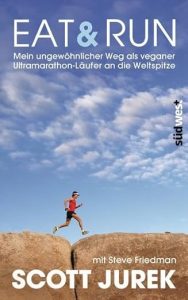
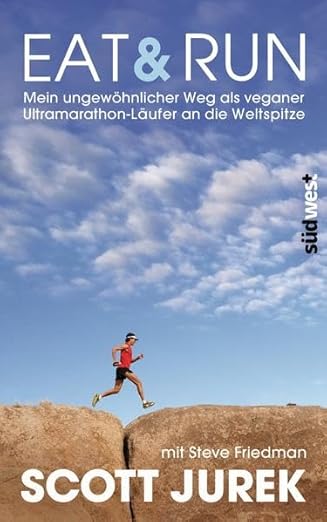
Hunting and fishing with a meat-and-potatoes family in the Midwest is where Scott Jurek's story starts, which is nowhere near where a book about vegan ultrarunning is supposed to begin. That distance is the engine of the whole audiobook, and Jurek holds the reader credit himself, which changes what the account is doing. A hired voice describing a body at the far end of a twenty-four-hour effort is reporting. The man who held the American record over exactly that span describing his own is testifying, and the two are not the same document even when the words match exactly.
A Closer Look at Eat And Run
Reluctance is where the strongest notice on this page starts, and it is the most useful one here. HaPe Franke opens by admitting the purchase felt like a mistake, on the grounds that Jurek is an ultrarunner and most people buying running books are not, then reverses the position completely: it turns out not to matter. What that notice takes away is the shape of the ascent, somebody arriving from nothing to become a figure in the sport, plus the demonstration that a vegan plate does not disqualify you from the front of a race. For a runner hunting the last small improvement, it reads as compulsory.
Jurek's structure is doing more than a career recap, and the mix is unusual. Competition writing alternates with nutritional science and practical advice, and his own recipes are folded in among them, which is a strange thing to attach to a sports memoir and a genuinely awkward thing to meet in audio. A recipe you hear is a recipe you cannot cook from. That is the format's clearest cost on this title, and nobody is going to pause a race sequence to transcribe quantities into a notes app while their heart rate is still up.
What Works
Self-narration is the reason to choose the listening edition, and the rationale here is specific rather than generic. This is a first-person account of physical suffering, and a claim about suffering is always a claim about the speaker's own body. When Jurek describes what the far end of one of these efforts does to a person, the voice making that claim either belongs to somebody who was there or it does not, and on this material the difference registers in a way it never does on a page. Endurance memoir is one of the few genres where the identity of the reader functions as evidence rather than as casting.
Angela Dries reaches for two comparisons that between them describe the book accurately: as tense as a crime novel and as instructive as a manual, wrapped around the life story of a legend told without the self-mythologizing this genre usually carries. Modest is the word that notice reaches for, and modest is not an adjective athletic autobiography earns very often or deserves. The absence of posturing is exactly what lets the nutritional argument land, because a writer who is not selling you a persona has a far easier time selling you a plant-based plate.
C. Grau's notice arrives from the most useful angle available, which is open skepticism. A first technical book written in the style of a novel, approached warily by somebody unconvinced by vegan nutrition and put off by the idea of a specialist text, finished with the diet unchanged and a stack of usable running advice acquired along the way. That is very likely the median outcome for this book, and it is a perfectly good one. You do not have to accept the thesis in order to take the training, and Jurek never demands that you do. That restraint is worth more than the argument itself, because a memoir that insists on converting you stops being a memoir.
What to Watch For in Eat And Run
This listing needs a warning before anything else gets said about it. The publisher, the ISBN, the page count and every one of the five written reviews belong to the German print edition, and all five notices were written in German by buyers in Germany, while the reader credit and the runtime belong to an audio edition nothing in that pool ever touches. The 4.6 across 293 ratings is therefore an aggregate earned by a translated paperback and not a verdict on the file you would be buying. Read it as a well-deserved verdict on the writing in another language, which is a different product from the one the credit line on this page describes.
One of those five is not about the book either. It reports that a used copy arrived in excellent condition and turned up two days after an estimated week, which is a review of a courier rather than of Jurek. That leaves four notices actually engaging with Jurek's writing, so the aggregate you are trusting rests on fewer voices than the number implies. The dates are worth reading too: the pool runs from 2014 to 2021 and describes a reading experience from end to end. For a listener the practical upshot is simple: the enthusiasm is trustworthy, the format evidence is absent, so buy for the story and treat the delivery as an open question.
Who It's For
Runners are the obvious audience, and specifically runners at the point where the training is already in place and something else has gone missing. Dr. Josef Esser's notice frames the appeal precisely, describing a physical and psychological achievement barely imaginable from the outside, next to which a marathon starts to look like child's play. That recalibration is what people actually take away from ultrarunning books, and it works perfectly well whether or not you have any intention of running further than you already do. Ambition is not really the point. What transfers is the discovery that a ceiling you had assumed was structural turns out to have been a guess.
Shoppers after a diet plan should be careful, because the recipes are the element audio handles worst and the nutritional case is threaded through a life story rather than set out as a system anybody could follow. Readers who dislike sports autobiography as a form will not be converted here either, since the races take real estate and take it early. Anyone who arrived at ultrarunning through Born to Run, where Jurek appears among the profiled athletes, will recognize this as the same world told from inside it rather than observed from the roadside.