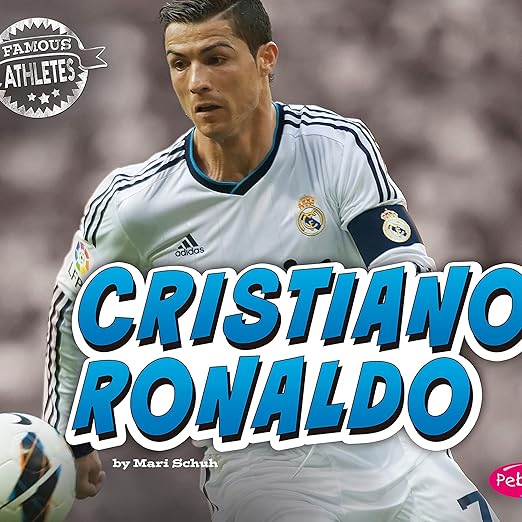
Guillem Balague spent years building the sources and the access that make his Cristiano Ronaldo the most thoroughly documented biography of its subject available in English. This audiobook edition, narrated by Peter Kenny and running 13 hours and 1 minute, covers the full arc from Funchal, Madeira, through the formative years at Sporting CP, Sir Alex Ferguson's Manchester United, the record-breaking galactico decade at Real Madrid, Juventus, the troubled return to Old Trafford, and the exit to Al-Nassr in Saudi Arabia - updated through the 2022 Qatar World Cup and the November 22 contract termination.
Where This One Lands
Balague is a Spanish football journalist working in English, and his biography of Ronaldo is not a hagiography. That distinction matters considerably in a space where authorized biographies of elite athletes frequently read like promotional materials. Balague draws on first-hand interviews and what the book describes as unprecedented access, but he follows the sources where they lead, including into uncomfortable psychological territory. The portrait that emerges is of a man genuinely extraordinary in discipline and self-construction - a player who remade his body and his technical game through a degree of systematic work that even his harshest critics acknowledge - but also one whose psychology operates at a pitch that makes sustained institutional relationships structurally difficult.
The chapter covering his second stint at Manchester United is the biography's most revealing section. What Balague reconstructs is not simply a falling-out but a fundamental incompatibility between Ronaldo's conception of his own position in the game and the institutional reality of Erik ten Hag's team-building project. The toxic standoff that ended his contract is rendered with the granularity of a journalist who had sources inside both the club and Ronaldo's camp. This is the kind of access that most sports biographies only pretend to have. The Theatre of Dreams scenario was over, and Balague does not spare either party the scrutiny that ending warranted.
The Juventus years receive somewhat less granular attention than the English and Spanish periods, which reflects the limits of Balague's source network in Italian football rather than lack of interest. What he does cover - the decision to leave Juventus, the psychology of a player who had won everything at Real Madrid and seemed to need the validation of proving himself again in an earlier home - is analyzed with the same attention to motivation that distinguishes the stronger sections of the biography.
What Makes Cristiano Ronaldo Worth Hearing
Peter Kenny's narration handles the scale of the project competently. A comprehensive career biography of a player who has competed across Spain, England, Italy, Portugal, and Saudi Arabia over more than two decades involves an enormous number of names, clubs, managers, tactical contexts, and cultural registers. Kenny moves through them with practiced fluency and without the kind of error that breaks a listener's trust in longer works. His reading is cleaner than emotional - this is not a narrator who reaches for dramatic color - but the material generates its own momentum when the access is this good.
The Ferguson years and the first Real Madrid period are the strongest sections of the book; Balague's Spanish football expertise is most visible in the Madrid chapters, where his access to the internal dynamics of the galactico project produces material unavailable elsewhere. The updated passages on the Al-Nassr transfer and the 2022 World Cup feel integrated rather than appended - a sign of genuine revision rather than a chapter bolted onto the end. Balague's Spanish football expertise shows most clearly in the Madrid chapters, where his access to the internal dynamics of the galactico project and his understanding of the Real Madrid institution as a political entity as much as a football club produces material that purely English-language football coverage rarely captures.
What Gives Us Pause
The sections covering Ronaldo's early years in Madeira and his time at Sporting CP before the Manchester United move are worth particular attention. Balague traces the psychological architecture of Ronaldo's competitiveness to specific early experiences: the poverty, his father's alcoholism, separation from his family to pursue football at an academy in Lisbon at age twelve. This is careful biographical work; Balague is attentive to the difference between formative experience and deterministic cause. But the portrait of a young player who learned that nothing was guaranteed and who built a near-mechanical approach to self-improvement as a response gives the rest of the biography a coherent foundation.
The Portugal captaincy thread is worth following across the full biography. Ronaldo's relationship with the national team - the weight he placed on winning UEFA Euro 2016, the first major international silverware in Portuguese football history - is one of the places where Balague shows a Ronaldo who cares about something beyond individual achievement. The Euro 2016 win, earned while Ronaldo was injured and watching from the sideline for much of the final, is rendered as one of the most complicated victories in the book.
Who Should Pick Up Cristiano Ronaldo
This audiobook is built for serious football listeners who want something more rigorous than a career highlight summary. If you follow the sport and want a sourced, psychologically honest account of how Ronaldo became who he is - and why his career ended the way it did at its established clubs - Balague's biography delivers. General sports biography listeners will find it accessible without needing deep tactical knowledge. Listeners who follow European football closely will get more from the club politics sections, particularly the Real Madrid and Manchester United chapters. Skip it if you want an uncritical celebration of Ronaldo's achievements; Balague's portrait carries too much psychological honesty for that kind of read.
In Brief
- Performance: Peter Kenny delivers Guillem Balague's densely sourced text with clear authority, managing a large cast of clubs, managers, and countries without losing momentum across 13 hours.
- What it covers: Relentless ambition and self-construction, the psychology of elite competition, football as a global cultural force
- Feel: Energetic and probing, occasionally unsettling in its psychological honesty
- Our call: Balague's updated biography remains the most thoroughly sourced portrait of Ronaldo available in audio, covering everything from Madeira through the Al-Nassr transfer.
Does the Cristiano Ronaldo audiobook cover his exit from Manchester United and move to Al-Nassr?
Yes. This is the fully updated edition. The Manchester United standoff with Erik ten Hag, the November 2022 contract termination, the 2022 Qatar World Cup, and the Al-Nassr transfer are all covered in detail and feel integrated rather than appended.
Is this audiobook balanced in its treatment of Ronaldo, or does it read as either promotional or overly critical?
Balague maintains a journalist's distance. He acknowledges Ronaldo's extraordinary discipline and physical gifts while tracing the psychological patterns that created friction at every club after Real Madrid. It is sourced biography, not hagiography and not a takedown.
How does Peter Kenny's narration handle the multilingual football context across Spain, England, Italy, and Portugal?
Kenny manages names and cultural contexts with practiced fluency, which matters across a 13-hour career biography. He does not attempt regional accents or character voices, which is the correct call for densely sourced nonfiction. The narration is consistent and clear throughout.
Do you need to follow football closely to get value from this audiobook?
Balague provides enough context that casual football followers can track the narrative. The biographical and psychological dimensions work independently of tactical knowledge. Listeners who follow European football closely will get more from the club politics sections, particularly the Real Madrid and Manchester United chapters.