The Short Version
- Voice: Elena Campbell navigates both Aisha's guarded practicality and Gage's unraveling with clear vocal separation, and the quieter emotional beats are where her performance earns its keep.
- Big ideas: forbidden love, addiction and recovery, family secrets
- Atmosphere: Intense and emotionally raw, with stretches of genuine warmth
- Worth it?: If you want a romance that puts its characters through serious darkness before the reconciliation, Aisha and Gage deliver exactly that.
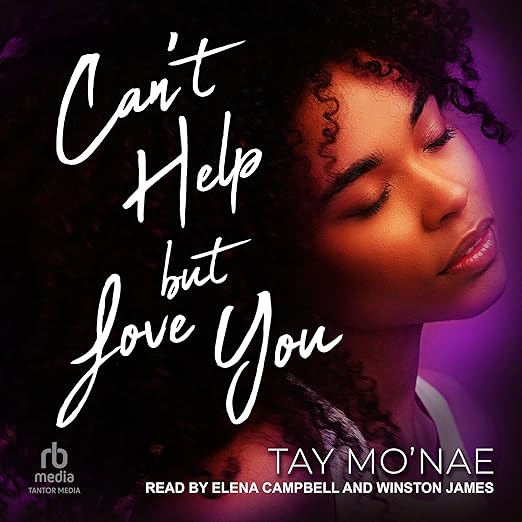
Tay Mo'nae's audiobook Can't Help but Love You, narrated by Elena Campbell and part of the Want You series, opens with a setup that sounds familiar on the surface: two people from the same world, a past that fractured them, a reunion neither planned. But Mo'nae complicates that template almost immediately. The forbidden element here is not merely social disapproval; it is structural. Aisha and Gage started something when she was fourteen and he was seventeen, and he was her brother's closest friend. That origin shapes everything that follows: why Aisha built walls, why she never fully let another man in, and why the secret she carries is the kind that does not get disclosed over dinner.
Gage Is Sinking, Not Just Regrouping
Mo'nae constructs her dual-POV narrative with patient attention to damage. Gage's arc is not simply the reformed player finding his person. His professional basketball career has stalled after an injury, and he has been coping in ways the novel does not sanitize. The reviews mention addiction and anger management alongside the romantic reconciliation, and Mo'nae earns that difficult combination by keeping both threads active rather than resolving one before introducing the other. Gage arrives home already in the process of sinking, not just regrouping. That distinction matters for how the romance reads: he is not a man who needs Aisha to complete him in some abstract sense. He genuinely needs to find a reason to stay afloat, and she complicates that as much as she clarifies it.
Aisha, for her part, is more than the emotionally guarded woman waiting to be opened up. She runs her own printing company, making custom shirts, mugs, and promotional goods, and that professional identity is not decorative. Mo'nae uses Aisha's entrepreneurial independence to establish that her reluctance around Gage is a decision, not a limitation. She chooses caution. When Bailey's existence becomes impossible to conceal, that choice becomes the crisis the novel has been building toward. One reviewer described the secret about Bailey as detonating, and structurally that is accurate. The reveal lands at roughly the point where most romance novels would be moving toward resolution, which forces Mo'nae into a harder third act than the genre typically demands.
Campbell Finds Warmth Under Aisha's Guardedness
Elena Campbell's narration is the right fit for this material. She does not play Aisha as brittle or performatively tough. There is warmth under the guardedness, and Campbell locates it without telegraphing it. The chapters from Gage's perspective require a different register: more exposed, more volatile, and Campbell makes the shift without the kind of over-dramatization that can make male POV narration feel like a caricature. The most effective passages are the ones where both characters are circling the same conversation from different emotional positions. Campbell keeps those exchanges taut rather than melodramatic, which is the appropriate choice for a story with this much structural tension built in. At nine hours and seven minutes, the pacing is substantial enough to give the darker material room without feeling padded.
The African American romance tradition that Mo'nae writes within takes seriously the weight that history, family expectation, and community loyalty place on individuals who are also trying to figure out their own wants. Can't Help but Love You operates in that tradition carefully. The secrets here are not just personal betrayals; they are connected to Aisha's protective instincts toward Bailey and her complicated grief over a relationship that was never supposed to happen at all. Mo'nae does not offer easy absolution. The forgiveness the novel reaches is earned through confrontation, not sentiment. The Want You series framing suggests further stories in this world, but this audiobook delivers a complete arc without requiring any prior context.
Readers Know Before Aisha and Gage Do
The novel's tension depends heavily on information the reader holds before the characters do, which means the pacing in the second half requires patience. There are sections where the emotional consequence of the Bailey revelation is processed slowly, with both characters retreating into their respective damages before coming back toward each other. Some listeners will find that rhythm satisfying; others may want the confrontation to arrive sooner. Mo'nae's structure in this part of the book prioritizes emotional accuracy over propulsion, which is a legitimate creative choice but worth knowing in advance. The novel carries a mature themes designation. The content involving Gage's coping mechanisms and the couple's shared history is frank in ways that suit listeners who are not looking for a sanitized take on second-chance romance.
A Complete Story Inside the Want You Series
Listeners who follow African American contemporary romance and are prepared for a story that takes addiction and family secrets as seriously as the romantic reconciliation will find plenty to engage with here. Mo'nae does not reduce Gage's problems to character quirks that the right relationship will cure. Readers who prefer their second-chance romances lighter in tone or quicker to resolve should know what they are choosing. Campbell's narration rewards listeners who want to follow the emotional interiority rather than just the plot mechanics. The nine-hour runtime gives the material appropriate space, and Mo'nae does not rush the resolution into the final twenty minutes. Listeners who value audiobooks that refuse to smooth over complicated emotional terrain will find this one rewarding. This entry reads as a complete story whether or not you continue into the rest of the Want You series, with enough closure on the central questions to satisfy as a standalone.