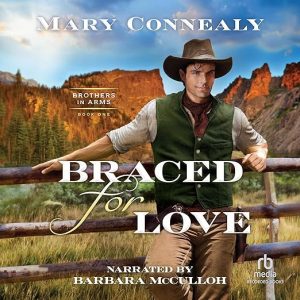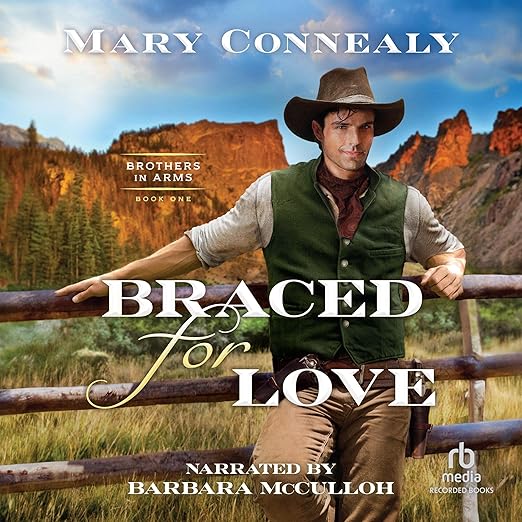
I came to Braced for Love on a long Sunday afternoon, the kind of afternoon that calls for something with momentum and a clear moral center. Mary Connealy has been writing Christian historical romance for years, and this launch of her Brothers in Arms series has the practiced confidence of a writer who knows her genre's conventions and knows when to honor them and when to surprise. What surprised me here was the genuine complexity of the family situation at the heart of the book.
Kevin Hunt discovers that his supposedly dead father led a secret life, one that produced not one but two other sons from other women. All three half-brothers, Kevin among them, converge on a Wyoming ranch they have jointly inherited from a man none of them fully knew. The setup sounds like a soap opera premise but Connealy handles it with restraint, centering the emotional core on what it means to become family with strangers you have reason to distrust and possibly fear. Someone is trying to kill people along the way, and the question of which brother might be behind the attacks hangs over the early chapters productively.
The Review
The faith element is present throughout but Connealy integrates it more naturally here than in some Christian historical fiction, where spiritual content can feel like a layer applied over the surface rather than woven into the characters' thinking. Kevin's trust in God comes up when he is genuinely in danger and genuinely uncertain, which makes it feel like a resource rather than a posture. Reviewers who noted watching the brothers "rely on their faith in God" as He leads and protects them were pointing to something real in the texture of the book: faith functions here as an active orientation toward uncertainty rather than as reassurance that everything will be fine.
Winona Hawkins, the schoolmarm who stands between the feuding brothers, is the most carefully drawn character in the book. She has a prior loyalty to Wyatt, the established brother who resents the newcomers, but finds herself drawn to Kevin, the earnest newcomer who is as confused as anyone about the situation he has inherited. Connealy resists making this a simple love triangle, though the triangle structure is there. Winona's position is genuinely precarious, and that precariousness gives the romance its tension.
What Makes Braced for Love Worth Hearing
Barbara McCulloh's narration is well-suited to the material. She navigates the period setting without going into stagey frontier-speak, and she handles the ensemble cast of brothers clearly enough that you never lose track of who is speaking during the dialogue-heavy confrontation scenes. The suspense sequences land with appropriate urgency. At just under nine hours, the pacing is generous without feeling padded, which is appropriate for a first book establishing a trilogy's world and character dynamics.
This is the kind of audiobook that rewards sustained listening rather than short bursts, because the family dynamics need time to develop. Several reviewers mentioned not being able to stop once they started, which I think reflects how well Connealy has calibrated the cliffhanger rhythms at chapter ends. Nothing feels artificially withheld, but enough is always unresolved to pull you into the next section.
The Caveats
The Western historical setting is atmospheric but not deeply researched in the way literary historical fiction tends to be. Readers who come to this expecting detailed period immersion will find the setting more backdrop than subject. Connealy is interested in her characters' moral and emotional situations, not in the granular texture of Wyoming ranch life in the late nineteenth century, and the book is better understood on those terms.
The suspense plot, while effective at sustaining momentum, resolves in ways that are fairly predictable within the genre. The villain's identity is not a major surprise by the time it is revealed, and the resolution of the brothers' mutual suspicion moves quickly once the central threat is identified. For readers whose primary investment is in the mystery, this may feel slightly rushed. For readers whose primary investment is in the romantic and family dynamics, the pacing will feel just right.
Who Should Listen to Braced for Love
This is a natural fit for readers of Christian historical romance who want more narrative tension than typical Amish fiction provides, and who respond well to ensemble casts with multiple relationship threads developing in parallel. The series format means the full story of all three brothers plays out across multiple books, so go in knowing that book one is a beginning rather than a complete resolution of everything introduced.
Readers with no patience for faith content woven into romantic fiction should look elsewhere. But if you are comfortable with Christian fiction that treats belief as a genuine orientation toward hard circumstances rather than a shortcut to happy endings, this is above average for the genre.
Quick Take
- Voice: Barbara McCulloh handles the Western setting and period dialogue with confidence, keeping the suspense beats clean and the romance convincing.
- Big ideas: Unexpected inheritance, family secrets, faith under pressure
- Atmosphere: Warm and propulsive, with genuine tension threaded through the romance
- Worth it?: A solid opener for a Christian Western series that delivers on both the suspense and the faith elements without letting either overwhelm the other.
Questions Listeners Ask
Do I need to read Braced for Love before the rest of the Brothers in Arms series?
Yes, this is book one and it establishes the central situation - the three half-brothers discovering each other and their shared inheritance - that the subsequent books develop. Each book focuses on a different brother's romance, but the overarching family story threads through the series. Starting here is the right move.
Is Barbara McCulloh's narration strong enough to carry the suspense sequences?
Yes. McCulloh handles the ensemble cast clearly and the suspense beats with appropriate urgency. The brothers are differentiated well enough in her reading that you can follow dialogue-heavy scenes without confusion, which is important given how much of the early conflict plays out in confrontation scenes at the ranch.
Is the villain's identity a genuine mystery or is it fairly telegraphed?
Fairly telegraphed by the standards of literary suspense, but that is characteristic of the genre rather than a flaw specific to this book. Connealy's primary interest is in the emotional dynamics among the brothers and the developing romance, not in constructing an elaborate whodunit. Readers who come primarily for the mystery element may find the resolution predictable; readers who come for the romance and family dynamics will find the pacing satisfying.