In Brief
- Performance: Lorelei King is the definitive voice of Mercy Thompson, precise and grounded in a way that carries even the bloodiest sequences with dry authenticity.
- What it covers: Supernatural obligation, autonomy under pressure, the cost of old debts
- Feel: Tense and propulsive, with dark humor running beneath the danger
- Our call: A stronger second entry than most urban fantasy series manage, with a narrator who understands exactly what register this material requires.
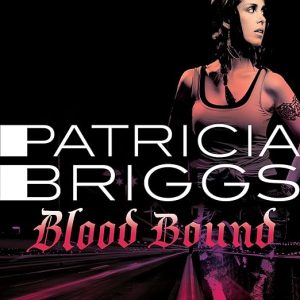
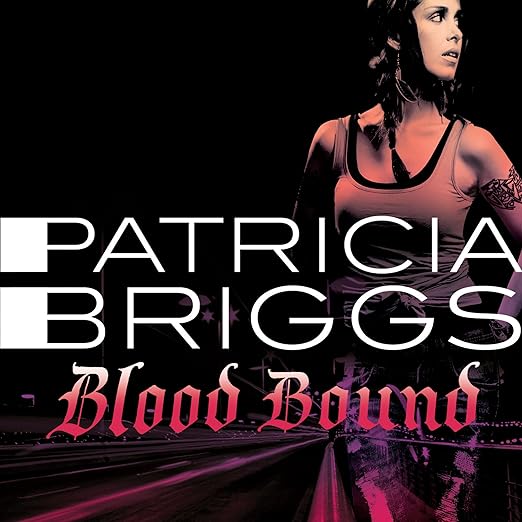
Mercy Thompson is woken at 3:00 a.m., and from that first moment of obligation, Blood Bound by Patricia Briggs, narrated by Lorelei King, establishes itself as the entry in the series where everything clicks. This audiobook is the second Mercy Thompson novel, and it moves with more sureness and darker consequence than the first, deploying the rich supernatural ecosystem Briggs built in Moon Called and demonstrating what it looks like when that ecosystem genuinely fails to contain what it is supposed to contain. King's narration is central to why this works as an audiobook. Her voice has become inseparable from Mercy as a character across the series, and by this second entry the inhabitation is already complete and entirely convincing.
The Review
The setup is elegantly compressed. A vampire calls in a debt. He needs a shapeshifter witness for what he presents as a routine message delivery, someone inconspicuous enough to observe without attracting supernatural attention. Mercy fits because her coyote nature reads differently than werewolf or vampire to most supernatural parties. The delivery goes catastrophically wrong almost immediately, and what Mercy witnesses is not just a murder but evidence of something considerably more powerful and more destabilizing than a rogue vampire. The demon possessing the killer is a threat the established supernatural hierarchy is poorly equipped to address, partly because of internal politics and partly because the specific nature of a demon-possessed vampire falls outside most factions' established protocols and accumulated experience.
Briggs writes political intelligence into her supernatural world in ways most urban fantasy avoids. The vampires have their hierarchy and their rules, the werewolves have their chain of command, and the relationship between the two communities is governed by agreements that this crisis stresses nearly to breaking. Mercy's position as someone who exists between these factions without fully belonging to either makes her both vulnerable and, eventually, essential. This is not a protagonist who becomes central because the plot requires a hero. She becomes central because her specific combination of abilities and relationships is the only workable angle the situation allows. Briggs earns the resolution in a way that makes narrative sense rather than convenience sense, which is one of the series' consistent strengths.
King's narration carries all of this with a first-person voice that is dry without being cold, capable without being invulnerable. The series depends on Mercy being a credible agent who is also genuinely at risk, and King's pacing reflects both sides of that balance consistently across the full ten hours. When Mercy is managing fear, King conveys the management without erasing the fear. When Mercy is being direct with someone who outranks her in supernatural terms, King gives the directness exactly the controlled tension it requires.
The audiobook format rewards Briggs' structural choices in ways the print version does not fully match. The novel's tight first-person perspective means every revelation arrives through Mercy's immediate experience, and King's delivery maintains the pace of that experience without letting narrative anticipation tip into suspense manipulation. The supporting cast benefits enormously from King's differentiation work. Stefan the vampire has a courtliness and a particular form of old-world restraint that sounds nothing like Adam's alpha-werewolf authority or like the older vampires who carry centuries of calculation in their speech patterns. These distinctions are not performed in a theatrical way. They emerge from King's handling of pace and weight, which is the more demanding and ultimately more effective approach.
The romantic thread between Mercy and Adam advances in this volume through circumstance rather than declaration, which is exactly how Briggs has always written it. Listeners invested in that relationship will find this volume gives it more pressure and more definition than Moon Called managed. The relationship earns its tension because both characters are genuinely occupied with survival during most of the novel, and the rare moments between them carry weight precisely because they arrive between actual life-threatening crises rather than in moments of narrative convenience.
Weak Spots in Blood Bound
The specific sequence of events that forces Mercy to become proactive rather than reactive is the inflection point the novel builds toward, and Briggs handles it with more moral complexity than the genre typically offers. Mercy's decision to act without permission is not triumphant. It has costs that Briggs refuses to wave away, and the relationship dynamics that follow from that choice are more interesting and more honest than a conventional resolution would have permitted. The Tri-Cities supernatural community's response to the demon problem, the specific ways various factions reveal their priorities under pressure, rewards close listening. Briggs has built a world where the supernatural community's self-interest is as much of an obstacle as the external threat, and this volume makes that clearer than any other entry in the series.
The creature at the center of this crisis is genuinely frightening in a way that is difficult to achieve in paranormal fiction without tipping into camp. Briggs manages it because she grounds the threat entirely in what it costs specific named characters rather than in abstract descriptions of power or horror. That grounding is also what makes the climactic confrontation feel earned rather than spectacle.
Who It's For
Listeners who have already read or heard Moon Called should need no further encouragement. Blood Bound is where the Mercy Thompson series fully commits to its own voice and demonstrates the full range of what Briggs has built. Newcomers to urban fantasy who prefer their paranormal fiction grounded in personality and consequence over spectacle will find this series in general, and this audiobook specifically, a strong and rewarding entry point into the genre. At just over ten hours, the audiobook is a reasonable investment in a series that has built a substantial and loyal readership for entirely justifiable reasons. Listeners who want explicit romance heat should know this is slow-burn territory; the emotional tension is real and the payoff is genuine, but it develops over books rather than chapters.