Quick Take
- Performance: Joseph Nguyen reading his own poetry collection brings intimate authority to the work - the sparse, unhurried delivery suits short verse perfectly, and at thirty-five minutes the audiobook functions as a single sustained meditative session.
- What it covers: Release from self-judgment, the relationship between thought and suffering, unconditional self-love and present-moment grounding
- Feel: Still and spacious, designed to be heard slowly and returned to repeatedly
- Our call: A short, sincere collection of healing poetry from the author of Don't Believe Everything You Think - most effective as a standalone meditative session rather than a conventional audiobook listen.
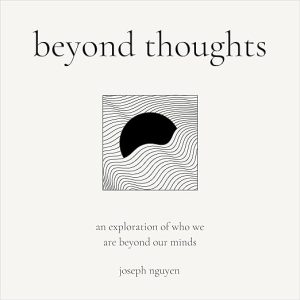
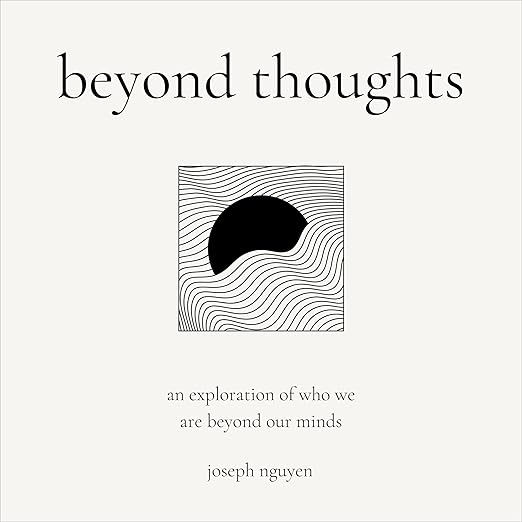
Joseph Nguyen's Beyond Thoughts, the second book in his Beyond Suffering series and narrated by the author himself, is a poetry collection in the healing tradition - thirty-five minutes of verse oriented toward the reader who is carrying anxiety, depression, guilt, shame, or the weight of their own self-criticism. Nguyen narrates his own work, and the intimacy of that choice is central to how the audiobook lands: this is not performed poetry but spoken verse, delivered at the pace of someone who means every line and wants you to have space to receive each one before the next begins. The format itself enacts the book's central argument - that stillness and space are not passive but transformative.
Poetry Extends the Argument of Nguyen's First Book
Nguyen's first book in the series, Don't Believe Everything You Think, developed a significant following for its argument that psychological suffering originates not in external circumstances but in the process of compulsive thinking about them - and that peace arrives not by fixing or controlling thought but by understanding its nature and loosening one's identification with it. Beyond Thoughts extends that framework into verse, which is a natural expansion of the approach: poetry is the literary form most equipped to create pauses, to resist explanation, to allow a truth to land without being argued into acceptance. The move from prose to poetry is not a departure from the first book but a deepening of its method.
The collection covers territory familiar from the wellness poetry tradition - letting go of negative thinking, holding space for difficult emotions, healing from the past, trusting yourself again - but Nguyen's specific contribution is the precision of the framing around thought itself. Where much healing poetry addresses feelings and circumstances, this collection is specifically about the cognitive layer: the judgment, the story-making, the vicious cycle of self-evaluation that sits between an event and the suffering it generates. That specificity is what gives the book its coherence and distinguishes it from more diffuse collections that gesture at healing without naming what they are healing from. Reviewers describe the experience as like "cool, refreshing water on a hot day" - simple, profound, and calming. Another notes it as one of the most calming and enlightening books they have encountered, specifically crediting how Nguyen explains that peace does not come from controlling thoughts but from understanding them.
Nguyen's Unhurried Voice Turns Verse Into Meditation
At thirty-five minutes, this is not a conventional audiobook by runtime, and approaching it as one will produce a mismatch between expectations and experience. The correct frame is a single meditative session: Nguyen reading his own poems in sequence, his voice low and unhurried, with the book functioning less as content to be absorbed and more as a space to be entered. The author's narration is instrumental to this effect. His delivery is not polished performance but genuine presence, and the combination of short verse and present voice creates a listening experience that reviewers consistently describe as calming and clarifying rather than simply informative.
The series context adds dimension for returning listeners. Those who came to Beyond Thoughts through Don't Believe Everything You Think will find the poetry deepens and personalizes ideas they already engaged with conceptually in the first book. The verse format makes the same insights available through a different cognitive channel - less argument, more direct experience - which is a genuine addition to the series rather than a repetition of it. The invitation at the end of the synopsis - "Welcome home" - is not accidental; the collection positions itself as a return to something the listener already knows but may have lost contact with, and Nguyen's narration enforces that quality of recognition over discovery throughout the thirty-five minutes.
Spare, Declarative Lines Chase Eleven Big Goals
The collection's breadth of intention is more ambitious than thirty-five minutes can fully address. The synopsis lists eleven distinct outcomes the book claims to help with, from letting go of anxiety to becoming conscious of the subconscious. The poetry gestures at each of these rather than working through any one at depth, which is appropriate to the form - healing verse works through accumulation and resonance rather than through linear argument - but first-time listeners expecting systematic guidance on any specific topic should understand that the format will not provide it in the way a structured self-help book would.
Nguyen's writing aesthetic is spare and declarative - short lines, direct address, minimal metaphor. This is not ornamental poetry in the tradition of complex imagery and layered allusion. Listeners who want the linguistic richness of longer contemporary collections or the structural ambition of poets working in more formally demanding traditions should adjust their expectations accordingly. The aim here is clarity and presence, not literary sophistication, and the collection achieves what it is trying to achieve with consistency across its brief runtime.
Familiar Readers Will Feel the Deepening Here
Listeners who are familiar with Nguyen's first book and want to extend that work into a different register will find Beyond Thoughts a natural and rewarding companion that gives the ideas a different form of life. People who respond to healing poetry as a format - short verse read at a meditative pace, designed to create stillness rather than to inform - will find the thirty-five minutes a genuinely useful session worth returning to. Those who want a comprehensive self-help guide, extensive psychological analysis of thought patterns, or a longer audio commitment should look to different resources. This is a collection for people who want to sit with something brief and honest rather than to study something thorough.
Does this audiobook require listening to Don't Believe Everything You Think first?
No. Beyond Thoughts stands alone as a poetry collection and is fully accessible without the first book in the Beyond Suffering series. That said, readers who have engaged with the first book's conceptual framework around the nature of thought and suffering will find the poetry takes on additional depth and specificity with that context in place.
At thirty-five minutes, is this audiobook long enough to be worth purchasing?
That depends on how you intend to use it. As a one-time linear listen it is very short. As a meditative session to return to repeatedly, with Nguyen's voice providing the pacing and the poetry providing the content, the value scales with repeated use. Reviewers who describe returning to it multiple times find the brevity appropriate to the format rather than a shortcoming.
How does Joseph Nguyen's self-narration of this poetry audiobook affect the listening experience?
Significantly and positively. His delivery is unhurried, present, and without performance affectation - the voice of someone who means the lines rather than someone reading them for effect. For healing poetry specifically, that sense of genuine presence rather than polished performance is the correct register and contributes substantially to the calm the collection aims to produce.
Is Beyond Thoughts audiobook a self-help guide or a poetry collection, and does the distinction matter for deciding to listen?
The distinction matters considerably. This is a poetry collection in the healing tradition, not a structured self-help guide with frameworks and action steps. It works through resonance, accumulation, and the specific way verse can deliver insight without argument. Listeners expecting systematic guidance will find the format wrong for that need; those open to the meditative poetry format will find it well-executed within its own terms.