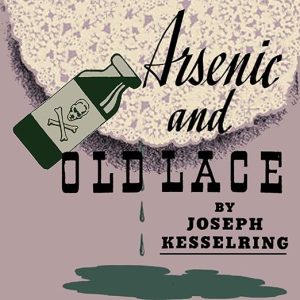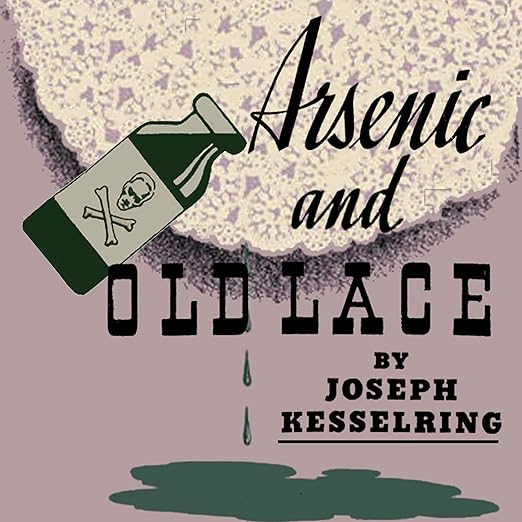
Joseph Kesselring's Arsenic and Old Lace is one of those plays where the premise arrives fully formed in a single sentence: a drama critic discovers that his sweet, gentle aunts have been poisoning lonely gentlemen callers and burying them in the cellar. That sentence contains the entire tonal architecture of the work. This audiobook edition narrated by Joseph Kent runs two hours and forty-four minutes and gives you Kesselring's original text with the compression that theater demands - every exchange earns its place, every revelation adds another layer of cheerful horror to what the aunts consider a humanitarian service to lonely older men.
Teddy Digs the Panama Canal in the Basement
Kesselring's genius, visible from the synopsis onward, is treating multiple simultaneous forms of insanity as the domestic normal. The aunts, Abby and Martha Brewster, do not believe they are doing anything wrong. Their brother Teddy believes he is Theodore Roosevelt and is digging the Panama Canal in the basement - which helpfully provides space for the bodies. The drama critic protagonist, Mortimer Brewster, is the only person in the household who recognizes the situation for what it is, and his sustained inability to do anything effective about it is the engine of the comedy. He is the sanest person in a fully insane family, which makes him more helpless than anyone else in it.
This title carries only a brief synopsis and a genuinely limited amount of reviewer content to draw on, but what Kesselring's play still has going for it is eight decades of continuous production evidence to fall back on. Staged by professionals, community theaters, and high school drama programs since its 1939 premiere, the play's durability speaks to both the playability of the text and its accessibility across audiences of different ages and theatrical backgrounds. One reviewer described it as "witty, funny and a tad disturbing," noting that the play concerns a family "where mental illness (insanity) is rampant" treated almost entirely as comedic material. Another called it "an enduring classic comedy" that has been revived at every level of theatrical production for generations.
Kent's Timing Turns Comedy Into Immersion
Audio performance is not, on its face, the obvious format for a play text - theater works best in physical space, with visual staging providing half the context. But Kesselring wrote primarily in dialogue, and his dialogue is so well-constructed that the verbal comedy survives the absence of staging. The running gag structure - each new revelation topping the last, each character's delusion intersecting with every other character's delusion - works through accumulation that audio can sustain effectively. By the time the full scope of the household's dysfunction becomes clear, the listener has been primed for the escalation through the comedic buildup of the earlier scenes.
Joseph Kent's narration understands that the material requires the timing of comedy rather than the gravity of drama. The play's jokes are dark - the aunts are serial killers by any objective measure - but Kesselring never allows moral weight to settle long enough to kill the laughs. Kent matches that tonal instruction, keeping the delivery crisp and the pacing at the speed the text demands. His handling of multiple characters in a single narrator format requires the kind of consistent tonal management that distinguishes a competent narration from an immersive one, and he achieves the latter.
Cary Grant's Shadow Falls Over This Recording
The Cary Grant 1944 film adaptation is so beloved that listeners who know it first will inevitably hear Grant's Mortimer Brewster while listening to the text. The film and the play diverge in some specific ways - notably around the ending, which director Frank Capra modified - but the tonal DNA is consistent enough that prior film familiarity enhances rather than confuses the audio experience. Listeners coming to the text after the film will recognize the material and may find new appreciation for the specifics of Kesselring's original dialogue versus what Capra selected and adapted.
The play's humor involves some period-specific elements - its treatment of mental illness as primarily comic material, its resolution through institutionalization - that contemporary listeners will register with varying degrees of friction. None of this obscures the comedy, but listeners sensitive to vintage treatments of mental health as comedic subject matter should know what they are encountering. The darkness is never malicious in Kesselring's handling, but it is persistent and structural rather than incidental to the plot.
The radio drama tradition is worth invoking here as a frame for how this audiobook operates. Plays were among the first theatrical forms to adapt well to audio transmission precisely because they were already built around dialogue. Kesselring's text belongs to a generation of playwrights who understood that the laugh must come from what is said and how it is said - staging, costume, and visual gag are supplements rather than foundations. Kent's solo narration inherits that theatrical DNA, delivering the Brewster household's escalating chaos as Kesselring wrote it: verbally, rhythmically, and with the sense that the comedy is one revelation away from becoming horror at any moment, though it never quite gets there.
Solo Kent Still Leaves Room for a Full Cast
Classic American comedy and theater enthusiasts will find this essential. Listeners who loved the 1944 film and want the source text will find it both faithful in spirit and illuminating in its differences from the adaptation. Those new to Kesselring entirely will need only a tolerance for dark comedy with a very light touch - the barrier to entry is genuinely minimal. Complete newcomers who would prefer the full theatrical experience should seek out a cast recording or production, since Kent's solo narration is strong but the play's ensemble dynamics naturally favor full-cast realization. For the text itself in audio form, this edition delivers what the material requires at exactly the length Kesselring intended.
Common Questions
How does the audiobook compare to the classic 1944 Cary Grant film adaptation?
The play and the film share the same premise and much of the same dialogue, but differ in plot details - notably the ending, which Capra altered from Kesselring's original. Familiarity with the film is a comfortable entry point for the play text; the audio version rewards listeners who already love the story by showing where Capra diverged and what Kesselring originally wrote.
Is this a full-cast audiobook production or a single narrator reading the play text?
Joseph Kent narrates as a single reader. This is not a dramatized production with separate voice actors for each character. Kent handles character distinctions through voice variation and tonal shifts. Listeners who want full theatrical staging with distinct cast performances should seek out a recorded stage production instead.