The Short Version
- Read by: Yareli Arizmendi is credited, and unusually for any listing, a trade magazine has published a verdict on the reading itself.
- At its heart: Cartel violence and forced migration, motherhood under threat, the ethics of who gets to tell a story
- Vibe: Sustained peril with quiet pockets, closer to a thriller than to reportage
- Short version: Powerful, genuinely contested, and best heard before you read the argument about it.
Acapulco, a bookstore, and a customer who comes to the register holding two of the owner's own favorite novels. Lydia Quixano Pérez runs the shop, stocks books she knows will never sell, and enjoys the conversation. Javier is erudite, charming, and the jefe of the newest cartel in the city, a fact she learns only when her husband's tell-all profile of him goes to print. The audiobook that follows runs sixteen hours and forty-three minutes, and almost none of it happens in that shop.
The Massacre the Product Page Never Shows
Jeanine Cummins builds the whole engine of this novel in a room where nothing violent happens. Two readers meet over a shelf, one of them recognizes the other's taste, and the intimacy that grows out of it is what makes the reprisal personal rather than statistical. K. Yahner, writing in November 2024, puts the effect plainly: "Cummins' storytelling is unflinching, blending suspense and compassion in every page," and "Her characters feel achingly real, their resilience both inspiring and heartbreaking." The bookstore is why that lands.
Notice what the product description skips: the scene the novel actually opens on. One reviewer supplies it. Henry Harris opens an August 2022 notice by pointing out that the book "begins with the horrific setting of a family massacre; committed during a birthday celebration at the home of Lydia and Sebastian." Lydia and eight-year-old Luca survive because "They hid themselves in a bathtub while listening in terror as gunshots rang out in the front yard, where family were barbequing chicken." Fifteen dead, including her mother and her husband. Know that before you press play.
Everything after that is the road north. La bestia, the freight trains people ride on top of, carries mother and son toward the only territory Javier's reach does not cover, and the copy poses the question the book keeps returning to: everyone on those trains is running from something, but what are they running to? Cummins answers it person by person rather than thematically, which is the choice that makes a sixteen-hour crossing bearable.
Arizmendi's Fierce Tenderness Holds Two Languages Together
This is the rare listing where somebody has actually graded the reading. Inside the product description sits a review from AudioFile Magazine stating that "Narrator Yareli Arizmendi illuminates the humanity and individuality of Latin American migrants as they flee toward refuge in the North" and, more usefully, that "it is Arizmendi's voicing of Lydia, so full of fierce tenderness, that will stay with listeners after the story's close." Take it for what it is, a notice the publisher chose to reprint rather than a listener speaking unprompted, but the praise is specific and it is aimed at the right thing: one woman's interior life held steady for the length of an escape.
Casting matters more than usual here because the prose is bilingual on its face. The epigraph arrives first in Spanish and then in English, and Spanish runs through the prose as vocabulary rather than as decoration: jefe, la bestia, el norte, and a protagonist whose full name is Lydia Quixano Pérez. A reader who has to reach for those words breaks the surface every time. A reader who does not can let the two languages sit in one voice, which is precisely what the novel is arguing for.
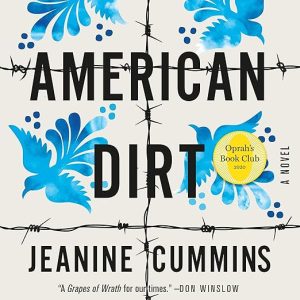
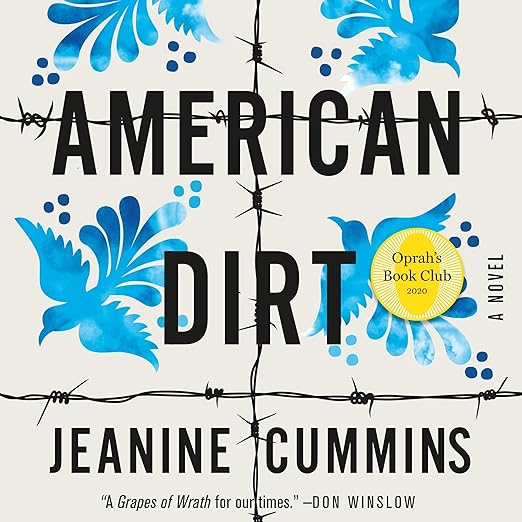
Publicity attached to this edition runs unusually heavy. Oprah's Book Club selected it, it went to number one on the New York Times list, Stephen King's contribution is the single word "Extraordinary," and Sandra Cisneros calls it "the great novel of las Americas." The Boston Globe named it one of the best books of 2020. Whatever you make of the argument that followed, this is a novel that arrived with the machinery of a major literary event behind it, and the audiobook inherits all of it.
Wallace's Objection Gets a Fair Hearing Anyway
That argument is unavoidable, and one reviewer on this page tackles it head on. Schuyler T Wallace, who withheld a star in December 2020, frames the objection as the charge that "a white woman could write such an invasive opinion piece about Latino immigrants when she has no actual experience in their actual hardships," and observes that "Latin American critics are the most vociferous" among the objectors, adding: "They seem to feel underrepresented in the literary publishing field." The review recommends the novel anyway. That combination is worth more than either verdict alone.
Timing is the other thing this book cannot escape. A five-star notice from April 2025 opens with genuine admiration and then admits "it's a strange time to be reading a novel about migrants coming to the US in today's time," which is an honest description of what listening to this in a car actually feels like. The novel was published into one political weather system and is being heard in another. That is not a flaw, but it is a condition of use.
Consider the register too. The one response filed from outside the United States, posted from Brazil in April 2021, lists what it found: "a bit of Mexico, a bit of the US, thriller and an engaging story to bring life to this difficult journey!" Thriller is the operative word. The suspense apparatus is real, the peril is close to continuous, and across a long crossing the mechanism can start to feel like a mechanism. Anyone who needs documentary restraint from migration writing should know the book is not built that way.
Book Clubs Get a Question With No Answer
Book-club listeners are the natural audience, and not only because of the selection that put this on so many nightstands. The novel supplies exactly the things a group needs: a moral question with no comfortable answer, a reception history that is itself a subject, and characters concrete enough that disagreement stays specific. Pair it with the December 2020 dissent and you have an evening's argument before anyone mentions the ending.
Skip it if suspense built on a child in danger is something you avoid, because Luca is eight and the threat never fully lifts. Anyone approaching this as reportage on migration should also adjust expectations: 182 ratings have settled at 4.6, and the readable responses grade it as a novel, praising pace, characters and emotional force rather than accuracy of witness. It was written to move you, and it is extremely good at that.
Listening first and reading the argument afterward is my instinct with heavily contested books, and I would hold to that here. Arizmendi has been credited with making Lydia a person rather than a case, and a person is what you need in order to have any useful opinion about the controversy at all. Come to the debate having spent the crossing with her, and you will at least be arguing about the right book.
Does the American Dirt audiobook handle the Spanish in the text well?
The publisher's description reprints a trade review crediting Yareli Arizmendi with illuminating the humanity and individuality of the migrants she voices. Spanish appears throughout as ordinary vocabulary rather than as flavor, so casting a reader fluent in both languages is the single most consequential production choice on this listing.
How graphic is the violence in the opening chapters?
Very. One reviewer describes the novel opening on a family massacre during a birthday celebration, with mother and son hidden in a bathtub while gunfire hits the yard, and fifteen people killed including her mother and husband. The threat then continues across the journey north.
Is this audiobook a good book-club pick?
Unusually good. It supplies a moral dilemma without a tidy answer, a reception history worth arguing about on its own terms, and characters concrete enough to keep disagreement specific rather than abstract. Sixteen hours and forty-three minutes is a realistic month for most groups.