Before You Press Play
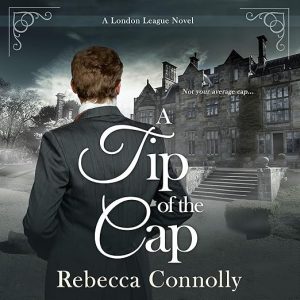
- Narrator: Jessica Elisa Boyd carries a period romance where most of the tenderness lives in what nobody says out loud.
- Subjects: A marriage of convenience, a widower's four children, secrets kept on both sides of a new marriage
- Tone: Warm, mannered, quietly suspenseful
- Bottom line: A satisfying third London League entry that works alone, with one repeated word that audio makes harder to ignore.
Third in a series, and the listing says so in plain type: The London League, book three. A numbered romance is always a slight gamble for anyone new to an audiobook series, since publishers rarely say whether the number is a courtesy or a requirement. I went looking for the answer and found it in an unexpected place. Here the answer sits in the review pool rather than in the marketing, which is where a buyer least expects to find it and most needs to look.
The setup itself is efficient. Malcolm Colerain, Earl of Montgomery, needs a wife. He has four children, a peerage and a demanding secret occupation as a member of the London League, and a proper marriage of convenience is the whole of his ambition. Elizabeth Owens accepts him while wanting considerably more than the arrangement offers. Then distance becomes difficult, convenience turns inconvenient, and his exciting life as a spy flips over.
What the publisher's description leaves out is the reason any of this is happening. Read that summary and you learn the earl has four children and requires a wife, but never why. SL K(The Flipped Page) supplies the missing piece: Malcolm went looking for someone to help his children after the death of his first wife, and he is still mourning her while watching those children remain affected by the loss of their mother. That single fact reframes everything, turning a convenience plot into a grief plot, and a reader had to supply it because the publisher did not. The same review also calls this a "series but stand alone read", which is the answer to the numbering question.
Pattizona describes the same book from the other direction, opening with a line that sets the tone exactly: "Cap, the Earl of Montgomery has a problem, well, several problems". Distracted by his mission to serve the crown, he has failed the needs of his family. Beth then "has taken charge of a set of heartbroken children and their moody, distant papa", finds her footing with a friend's advice, and loses it again when "the solid ground beneath her feet gives way" as disaster strikes. That is a sharper account of the book than any category label on this page provides.
Sandra Congdon speaks to reliability instead of plot, describing an author who pulls you into her tales and keeps you enthralled to the very end, and a book that pulls at the heartstrings hard enough to make putting it down difficult. Reviews of that kind are less useful for deciding on a single title, but across a series they tell you what the repeat readership expects and keeps getting.
What Makes A Tip of the Cap Worth Hearing
Names are the production problem here, and they are documented rather than guessed at. The review that supplied the widower backstory also lists the cast by nickname: Beth and Bitsy for the heroine, Malcolm and Monty and Cap for the hero. Five names for two people. On a page a nickname is a visual cue you absorb without effort. In a recording, Jessica Elisa Boyd has to make each one land as the same person, in whatever register the speaker uses, and the shift from Malcolm to Cap has to carry the change in intimacy that a nickname always implies.
Period dialogue is the second argument, and it is the stronger one. A marriage of convenience runs entirely on what people cannot bring themselves to say. Beth knows her husband has secrets and cannot ask how many. He knows what he feels and has told her the arrangement forbids it. Spoken performance does more with that material than type ever manages, because hesitation, a sentence left unfinished and the beat before a polite answer can all be heard, while none of them survives being set in type.
At nine hours and twenty-nine minutes this makes a comfortable week of listening at romance scale, and the London League material supplies a plot engine most convenience stories go without. The secrets belong to both parties rather than to one, which keeps the second half from settling into a single question waiting to be answered.
Things to Know Before Starting A Tip of the Cap
One complaint in this pool matters far more in audio than it did in print. WINDY PEACOCK, at four stars, disliked the author's repeated use of a single word, saying it was used over and over and left a terrible visual behind. The word is unmanned. A reader who has noticed a verbal tic on the page can let the eye slide over it. A recording grants no such mercy: every instance arrives at full volume, in somebody's voice, at whatever pace the reading sets. If that sort of repetition gets under your skin, this is the specific risk to weigh before buying.
Timing is the second consideration. Four written responses carry dates running from December 2024 to July 2025, all of them ahead of the January 2026 release of this recording, so most of what you can read on this page comes from a print readership. Only one response arrived afterward. The 4.6 average across 365 ratings is a substantial and encouraging number, but it is overwhelmingly a verdict on the writing rather than on the performance.
The heat level, meanwhile, is never stated in the description at all. The tag on the listing reads Clean and Wholesome, and one reviewer opens with the words romance, sweet, period and suspense. Between them, that is the only guidance available, because the publisher's summary discusses secrets, spies and a peerage while saying nothing whatsoever about how explicit the marriage becomes.
Who Should Pick Up A Tip of the Cap
Regency romance listeners who want an actual plot underneath the courtship should start here, since the spy occupation is not decorative and the secrets run in both directions. It suits anyone who enjoys children in a romance rather than tolerating them, given that four grieving ones are central to the premise. And the single review filed after release points at the author's range, expressing surprise at how many completely different plots keep arriving and singling out the female protagonist for particular praise.
Heat seekers should shop elsewhere, because everything on this page points toward restraint. So should anyone whose enjoyment collapses under a repeated word, since the single critical voice here has already flagged that exact hazard. Series order is the last worry to let go of: this is the third London League entry, and the reader best placed to judge says it stands perfectly well on its own.
Frequently Asked Questions
Is A Tip of the Cap a safe entry point, or should I start the London League audiobooks earlier?
You can start here. It is the third title in the sequence, and one reviewer describes it explicitly as a series entry that reads standalone. The premise, an earl with four children seeking a marriage of convenience while working secretly for the crown, is introduced from scratch rather than assumed.
How many names does the cast carry, and who reads the audiobook?
Jessica Elisa Boyd narrates, and the name question is a real one. A reviewer lists the heroine under two forms of address and the hero under three, which means five variants attached to two people. The reading has to keep every one of them anchored without a page in front of you.