In Brief
- Read by: Virtual Voice handles dialogue and domestic scenes adequately, though human narration would add considerably more depth to Rose's interior emotional life
- At its heart: Marriage of convenience, grief and remarriage, faith as healing, community judgment and belonging
- Vibe: Gentle and emotionally patient, with a slow warmth that builds carefully across nearly ten hours
- Short version: A well-constructed Christian historical romance that earns its resolution through accumulated domestic reality rather than dramatic shortcuts
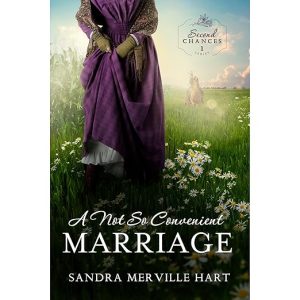
Christian historical romance operates within a specific set of understood conventions, and Sandra Merville Hart's audiobook A Not So Convenient Marriage works best when evaluated within those parameters rather than against the broader secular romance market. This is book one of the Second Chances series, and Hart uses the marriage-of-convenience trope with a historical setting that gives it genuine emotional weight: a widower with two grieving children, a spinster teacher forced to sell her childhood home, and a community that never quite lets her forget she came second. For listeners who enjoy this subgenre, the emotional architecture is recognizable and delivers exactly what it promises, without shortcuts and without the kind of dramatic confrontations that resolve tension artificially before it has fully developed.
The Verdict, Briefly
Rose Hatfield has loved Samuel Walker since their school days, which makes his marriage proposal both a dream and a wound arriving simultaneously. He doesn't love her. He needs a mother for Peter and Emma. He's still living inside the grief of his first wife, and that ghost is everywhere in his life, in his home, in how the townspeople look at Rose when she tries to settle in. Hart doesn't soft-pedal this dynamic. Samuel is, as one reviewer put it, "a bit of a dunderhead for a good portion of the story," and that honest assessment reflects how deliberately Hart lets the tension accumulate across the nearly ten-hour runtime. Rose must navigate the emotional labor of loving someone who is absent even when present, of caring for children who are grieving a woman she never replaced, and of building a life in a community that measures her against a ghost she can never become. The slow-burn resolution is earned through accumulation of small domestic moments rather than a single dramatic turning point. Hart's historical setting adds the practical dimension of farm work bringing the two characters into close daily contact, creating the kind of proximity that eventually makes emotional distance unsustainable. The internal conflict, particularly Rose's discipline in suppressing her feelings while honoring the terms of a marriage that wasn't meant to include them, is handled with genuine patience and without the shortcuts that would cheapen what the story is trying to build.
What Makes A Not So Convenient Marriage Worth Hearing
Virtual Voice narration is used here, which is the practical reality for a significant portion of independently produced Christian romance titles. AI-narrated audiobooks vary considerably in quality depending on the complexity and emotional register of the source material, and listeners who are sensitive to synthetic vocal performance may find the experience less immersive than a human narrator would provide. For a story where interior monologue and emotional subtext carry much of the weight, that limitation is real and worth naming. That said, for dialogue-driven scenes and the practical exchanges of daily farm life that structure much of the narrative, the narration handles the material adequately. The children, Peter and Emma, receive enough attention across the full runtime that they feel like distinct characters with their own grief arcs rather than props, and their gradual acceptance of Rose adds genuine complexity to what could easily have remained a two-person story about adult romantic complications.
Points to Consider
The faith element here is central and structural, not decorative. Hart's resolution invites spiritual surrender as part of both characters' emotional journeys, and that framework shapes how the crisis point is handled and resolved. The synopsis specifically notes that "only God can put these pieces back together," and Hart means this literally. Listeners who prefer their romance's emotional resolution to come entirely from character agency, from conversations and choices and the natural progress of developing attraction, may find the terms of the ending less satisfying. Those who are comfortable with Christian fiction will find the integration of faith natural and appropriate to the period setting. The community dynamics, where Rose must overcome the town's collective memory of Samuel's first wife rather than just his private grief, add social texture that enriches the conflict considerably. The 4.6 rating from over 300 listeners is a reliable signal that the audiobook connects with its intended audience consistently.
Hart also handles the children's perspective with care that keeps the story grounded in something more realistic than pure romance. Peter and Emma are not simply obstacles to Rose's romantic happiness but characters with their own needs, their own grief, and their own timelines for acceptance. That attention matters because it keeps the emotional logic honest. Samuel's slowness to recognize Rose's value makes more sense when you see how thoroughly he's been living inside his grief and how the children's attachment to their late mother has reinforced his own refusal to fully engage with the present. Hart lets all of these pressures accumulate before releasing them, which is why the resolution, when it finally arrives, carries real weight rather than feeling arbitrary.
Who Should Pick Up A Not So Convenient Marriage
This audiobook suits listeners who enjoy clean Christian historical romance with a slow-burn second-chance premise and family-centered emotional stakes. The series begins here, so first-time readers of Hart's work can start without prior commitment. Listeners expecting secular romance pacing, fast romantic development, or overt physical tension should look elsewhere. Those who appreciate stories about grief, remarriage, and the patience required to build something real from an arrangement that started without love will find Hart's approach quietly affecting. The interest reviewers express in continuing the series suggests Hart establishes enough investment in these characters to sustain genuine forward momentum into subsequent installments of the Second Chances series.
Questions Listeners Ask
Is this audiobook appropriate for listeners who prefer clean, faith-based romance without explicit content?
Yes. A Not So Convenient Marriage is Christian historical romance with faith as a central element. The romantic content is completely clean, and the resolution is rooted in spiritual growth alongside emotional development. It is written specifically for readers who want romance within an explicitly Christian framework.
Does the Virtual Voice narration significantly affect the listening experience for this audiobook?
Virtual Voice delivers functional narration for dialogue and domestic scenes, but listeners who strongly prefer human narrators will notice the synthetic quality, particularly during interior monologue passages where emotional nuance matters most. The near-ten-hour runtime makes the limitation more apparent over extended sessions.
Do I need to have read earlier Second Chances series books before listening to this audiobook?
No. A Not So Convenient Marriage is book one of the Second Chances series and functions as a complete entry point. Rose and Samuel's full story arc is told within this single title, and no prior series knowledge is required to engage with it fully.
How prominent is the grief storyline compared to the romance in this audiobook?
Samuel's grief over his deceased wife runs through a substantial portion of the audiobook and directly delays the romantic development. The children's grief receives real attention as well. This is a story about emotional healing running in parallel with romantic possibility, so listeners who want lighter emotional stakes may find the grief element heavier than they anticipated.