In Brief
- Narration: Anthony Palmini handles the dual male/female perspectives and the Winter King's chapters with a brooding weight that suits the fae setting; his delivery of the romantic tension holds the enemies-to-lovers arc well.
- Themes: Enemies-to-lovers, fated mates, cursed immortality and grief
- Mood: Dark and atmospheric, with a slow burn that ignites in the final third
- Verdict: The second entry in Anya J. Cosgrove's Curse of the Fae series raises the emotional stakes of the first, with a cursed Winter King whose grief makes the romance more than a competition setup.
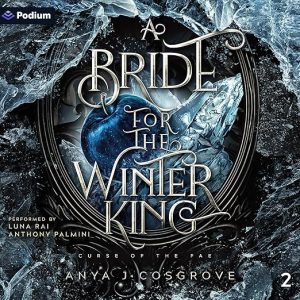
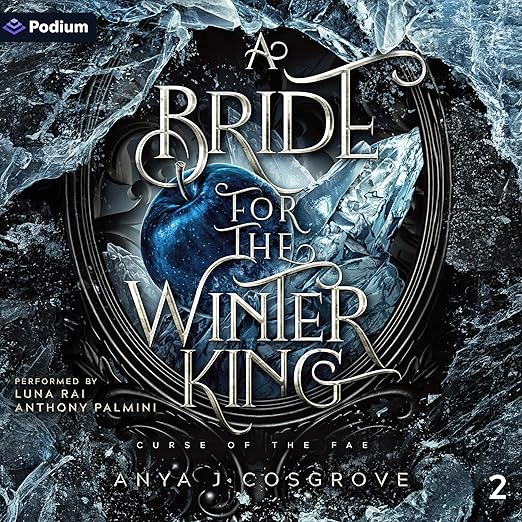
Anthony Palmini narrates A Bride for the Winter King by Anya J. Cosgrove, the second audiobook in the Curse of the Fae series, and the dual-perspective structure immediately establishes what makes this entry distinct from a standard romantasy competition narrative. At 12 hours and 54 minutes, the audiobook carries two parallel storylines: a shadow huntress who enters a Yule pageant under the belief she is just a spy for a Fae prince and will not have to win, and a Winter King who has been forced to marry and lose a queen every year by a curse that denies him both love and death. Palmini holds both registers simultaneously, and the contrast between the huntress's tactical voice and the King's centuries-old grief is one of the audiobook's primary pleasures.
The Curse of the Fae series opened with A Deal with the Shadow King, and Cosgrove explicitly recommends listening to that first, noting that A Bride for the Winter King contains spoilers for book one and is more fully rewarding with the world-building already in place. That is a fair warning. Series newcomers who jump directly to book two will follow the plot without confusion but will miss context for specific relationships and the broader mythology of the interconnected world Cosgrove has built. The audiobook is self-contained enough in its central romance to deliver satisfaction regardless, but the full investment pays better dividends.
How A Bride for the Winter King Holds Up
What distinguishes this romantasy from a straightforward enemies-to-lovers competition story is the King's chapters. Elio is not simply an intimidating obstacle; he is a figure of genuine tragedy, a ruler who has watched a version of his wife die every year for centuries, each time losing his first love all over again. Palmini brings a measured weight to those passages that keeps the character from collapsing into pure brooding archetype. When the shadow huntress Lori appears, apparently a double for that first queen, the fated mates dynamic is complicated by grief in a way that gives the romance more texture than the pageant premise would suggest.
One reviewer summarized it simply: a wild ride, but they were happy that Elio and Lori got their story, and Sara was one of their favorites. That mixture of satisfaction with the central pairing and investment in the supporting character Sara reflects how well Cosgrove manages the ensemble. The audiobook rewards listeners who pay attention to the secondary characters because they carry more weight than is initially apparent.
Cosgrove's worldbuilding in the Curse of the Fae series has a specificity that sets it apart from generic fae romantasy. The Yule pageant has its own rules, political stakes, and social codes that Palmini's narration tracks carefully, and the Winter Court aesthetic, cold architecture, seasonal imagery, and the particular weight of a curse that has been running for centuries, is developed with enough detail to feel inhabited rather than decorative. The romance benefits from the setting because the environment keeps reinforcing the stakes: this is not a comfortable world, and the choices the characters make within it carry genuine consequence.
Why A Bride for the Winter King Works as an Audiobook
The winter fae aesthetic is one of the better-realized settings in recent romantasy audiobooks, and Palmini's delivery supports the atmospheric specificity. The Yule pageant competition provides a familiar competition structure but the stakes are genuinely higher than they initially appear, and the audiobook peels those stakes back slowly enough that each revelation has impact. The enemies-to-lovers trajectory follows a recognizable path but the curse mechanics give it a complication that keeps the resolution from feeling predictable.
The steamy content is described by Cosgrove as mature and it earns that designation. Palmini handles those sections without either underplaying or overperforming them, which keeps the audiobook's tone consistent. One reviewer noted they devoured the book and immediately moved to the third installment, which is perhaps the best indicator of how well the audiobook functions as a delivery mechanism for the series as a whole.
What to Watch For in A Bride for the Winter King
The Fae prince who recruited the shadow huntress on the premise that she would not have to win the pageant or marry the King is not simply a plot device. His motivations are more layered than his initial framing suggests, and the audiobook develops that complexity through the competition sequences in ways that matter to the larger series arc. Listeners who have read book one will recognize threads Cosgrove is pulling forward; those new to the series should pay careful attention to his scenes.
The climax of the audiobook hinges on Lori's decision between the mission she was sent to complete and what she has become during the pageant, and Palmini's delivery in those final sequences is where the performance earns its keep. The emotional stakes are clear and the resolution does not take shortcuts. The audiobook ends in a place that opens toward the third installment without withholding the satisfaction of this specific romance arc.
The Right Listener for A Bride for the Winter King
Listeners already invested in the Curse of the Fae series should prioritize this audiobook; it advances the mythology significantly while delivering a central romance that stands as one of the series' more emotionally complex entries. New listeners to romantasy who enjoy winter fae settings, enemies-to-lovers dynamics, and steamy content alongside genuine worldbuilding will find this rewarding, ideally after starting with book one. Skip it if you want romantasy without explicit content or if competition/pageant setups do not hold your interest; the format is central to how the story is structured and cannot be separated from the emotional payoff.